Minggu, 03 November 2013

Recommendation: Gravity


I had originally planned to write this post as soon as I got home from seeing Alfonso CuarĂ³n’s Gravity. Aha, thought I, in the dramatic way one always claims to have spoken their internal monologue when recounting its content to others, I shall deliver a post not only on time, but early, and thereby redeem myself in the eyes of my readers! Then I actually saw the film, and those plans changed.

Watching Gravity is an intense experience; I spent a solid couple of hours on something of an adrenaline high after the credits rolled. Most of that time was spent gushing about the film’s many strengths -- stunning visual effects, strong characterization, and tight plotting among them. What really stuck with me, though, was the fact that the character that all of this was built around was a woman.

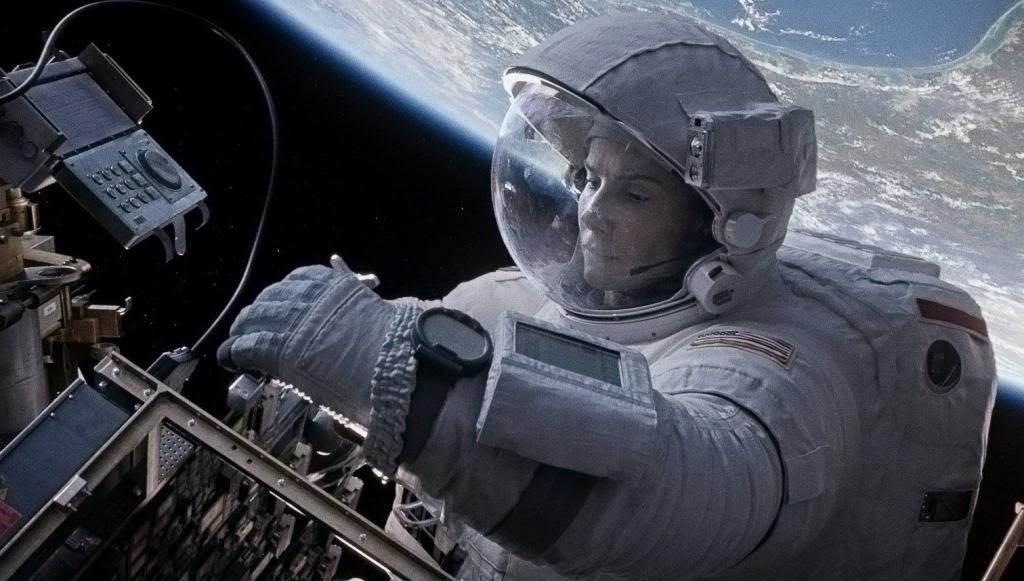
Gravity tells the story of a space mission that goes disastrously awry when a freak accident knocks out communication with ground control, kills the majority of the mission’s crew, and leaves first-time astronaut Dr. Ryan Stone (played by Sandra Bullock) stranded in the vacuum of space. The rest of the film focuses on the remaining crew members’ fight for survival in, as the film’s opening title card describes, the harshest environment possible.

There’s a lot to say about the character of Dr. Ryan Stone, and it took me very little time to decide to dedicate a full post to her when the film is released on Blu-ray. For now, however, I want to stick to a fascinating and relatively spoiler-free aspect of her treatment: her point-of-view character status. Unlike Alien, which leaves the reveal of its protagonist until pretty late in the game, this sci-fi thriller lets you know very early on that you’re supposed to identify with its female lead. Even before the audience receives confirmation of the deaths of just about everyone else in the movie, we are quite literally aligned with Dr. Stone’s perspective. We see her surroundings through her eyes, through the plastic of her helmet. We don’t just identify with her; we are her. Even beyond the literal point-of-view shots, this character-audience alignment is built into the structure of the film itself. At one point, Dr. Stone is running out of oxygen and on the verge of passing out, madly scrambling to get into a space station just to take a breath. We feel her barely controlled panic, just as we feel cathartic relief when she manages to get inside. The film takes a moment to ease the audience’s tension as well as hers, and we take that first breath with her.

In a recent interview, Sandra Bullock said, “I’d like to think at some point instead of it being a woman’s film or a man’s film, it is just a great story, and both sexes can go and get the same enjoyment out of it. It’s entertainment, you’re not curing cancer. And I would love for it to get to a place where it’s not about the gender of the actor. With Gravity we get as close as you can to that, because there’s nothing about my character that screams female.” While I agree with her main point, I actually think there is something about Ryan Stone that “screams female”: Bullock herself. Sandra Bullock is largely known for her roles in romantic comedies, and there is no genre as implicitly and explicitly feminine-coded as the rom-com. Far from disproving Bullock’s point, however, I think this history supports it. What better way to prove that women can and should be the lead in films in traditionally masculine genres than to make an excellent sci-fi film that crushes box office records starring a woman who made her name in “chick flicks”?

Senin, 28 Oktober 2013

Dear readers,

Lately it seems that half the things I post are apologies for not posting. This is, admittedly, more of the same. I’ve had an incredibly busy couple of months, and as the winter holidays loom, I don’t foresee any changes. As such, I’m formally announcing a switch to posting every ten days to two weeks. This way I’ll be able to give the analyses the time that they (and you) deserve.

Now on to some better news. I’m seeing Gravity tomorrow and will likely be able to post some of my thoughts about it this weekend. Just in time for Hallowe’en (or at least some rather late Hallowe’en parties), I’ll also be discussing Jessie’s role in Toy Story of Terror. After that, it’s time for Winter’s Bone, one of the films that we recommended last November. If you haven’t seen it yet, you might want to consider doing so before the post goes up. It’s well worth your time. Rounding out the rest of November will be posts analyzing Black Widow and the women of James Cameron’s Avatar.

I’m not going to tell you what I have planned for December, though you may rest assured that a review of Frozen will be kicking things off. That accursed snowman is already haunting my dreams.

    Sincerely,

                                       The Management

Jumat, 18 Oktober 2013

Evelyn Carnahan O'Connell


(Note: This post will focus on The Mummy and The Mummy Returns. As far as I’m concerned, there is no third movie.)

Between the trip to Disneyland and a selection of concerts featuring the most influential artists of my childhood, the past few months have been a bit of a whirlwind of nostalgia. Just when I thought I could escape its pull, I checked out the next request and promptly gave up any hope of surfacing.

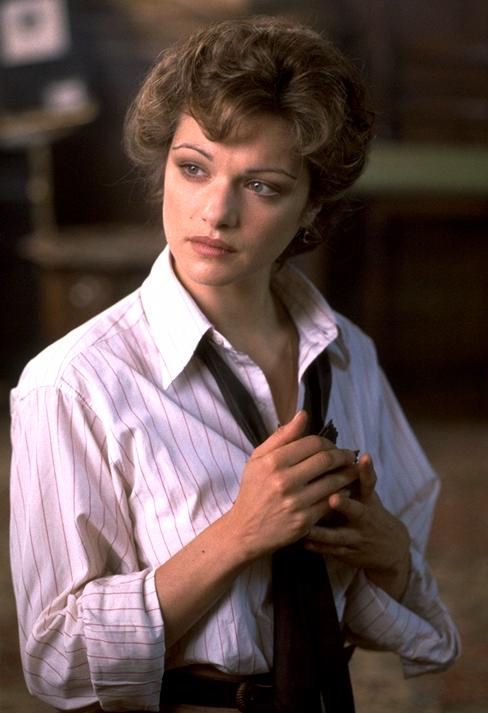
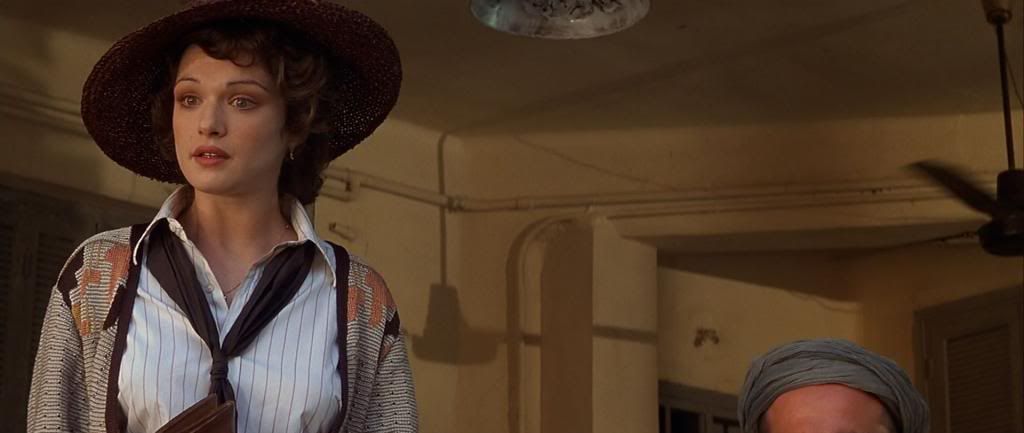
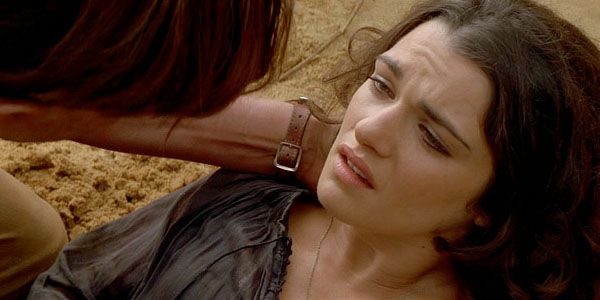
When I recount the formative narratives of my childhood, The Mummy rarely gets a mention. It’s all superheroes and princesses and cats who eat pizza before and after doing martial arts. Still, whenever I adopt a zombie pose, I get the urge to to chant “Imhotep! Imhotep!” instead of “Brains!” When I thank people for their hospitality, I have to bite back the words, “And your eyes, and your tongue.” I even have the film to thank for my short-lived desire to become an Egyptologist. Looking back now, however, I see that it was also the source of one of the most important strong female characters of my childhood: Evelyn “Evie” Carnahan O’Connell. Although the marketing department clearly thought that Rick O’Connell was the film’s hero, I would argue that Evelyn is the actual protagonist. It is her quest, her dream, her mistake, and her decision to set it right.

First, some background: the eponymous mummy is Imhotep, a high priest who falls in love with the Pharaoh’s mistress, Anck-su-namun. When the Pharaoh discovers her infidelity, the two lovers murder him. When his guards arrive, she kills herself, confident that Imhotep will resurrect her. Just before he restores her to life, however, he is discovered; for his crime, he is cursed and buried alive to be eaten by insects. The curse is less a punishment for Imhotep than a punishment for the people who awaken him, as he comes back with the ability to conjure not only the plagues of Egypt, but sandstorms in the shape of his face.

Screencaps: fight-tomorrow.net
Thousands of years later, Evelyn’s brother, Jonathan, finds a key and a map to the lost city of Hamunaptra, a place that Evelyn has researched extensively. When they decide to locate the city, they take as their guide Rick O’Connell, a former Colonel of the French Foreign Legion and obvious leading man. In Hamunaptra, they find Imhotep, the Book of the Dead, and a whole heap of trouble.

Evie is introduced as a fascinating combination of ultra-competence and utter hopelessness, the kind of woman brilliant enough to understand multiple forms of ancient languages, yet clumsy enough to demolish an entire library’s worth of shelves while replacing a single book. She owes her job at the library not to her own talents, but to her late parents’ patronage of the institution. Her application to join the Bembridge scholars has been rejected multiple times, always with the explanation of a lack of field experience. She’s a woman with something to prove, and The Mummy is the story of how she does it.

While Rick gets the big action-filled set pieces, it is Evie who controls most of the plot. She saves Rick’s life soon after meeting him, and he later mentions this as the only reason he has chosen to return to Hamunaptra. The quest itself is intended as a search for the Book of Amun-Ra, the artifact that first interested Evelyn in Egypt, the hunt for which she calls her “life’s pursuit.” When they find the Book of the Dead, it’s Evie who decides to read from it, saying, “It’s just a book. No harm ever came from reading a book.” When this ostensibly harmless bit of reading leads to the release of an ancient evil, Rick plans to make it someone else’s problem. Evelyn refuses to run away, takes ownership of her mistake, and vows to set things right. Even her eventual capture is proof of her agency; she chooses to go with Imhotep in order to save her companions. In almost every situation, Evelyn is the one making the decisions and dealing with the consequences.

One of the things that I most appreciate about her is the fact that the narrative allows her to make mistakes. She’s introduced doing something foolish that ultimately causes significant damage and prompts her boss to compare her unfavourably to the Egyptian plagues. Later, she resurrects a being with potentially apocalyptic power. Where the film succeeds is in not condemning her -- or even judging her too harshly, really -- for these decisions. She combats her boss’s assertion of her ineptitude with proof of her competence. Instead of claiming ignorance as an excuse to get out of dealing with the Imhotep problem, she assumes the responsibility to vanquish him.

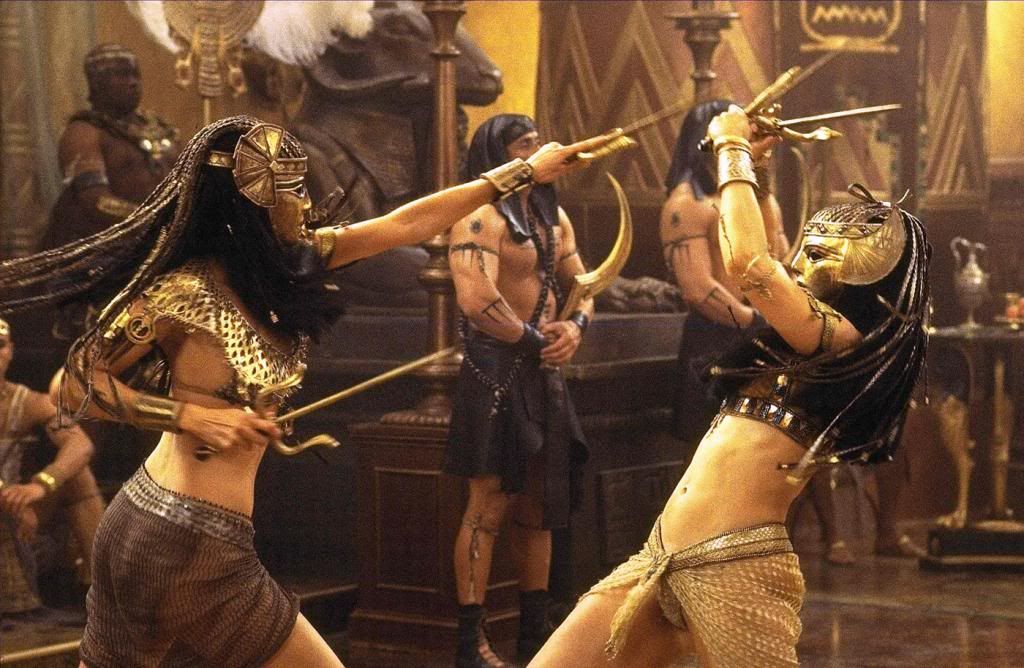
The way she goes about doing this sets her apart from many of the strong female characters that populate action films today. Evelyn is basically all brains and very little brawn. When she has to fight other characters, her first reaction is not to launch into a perfectly choreographed battle, but to shove a lit candle into her attacker’s eye. In the climactic scene, when the leading lady would usually fight the villain’s girlfriend or female partner in crime, Evie spends most of her time running away from Anck-su-namun. She’s the anti-Action Girl.

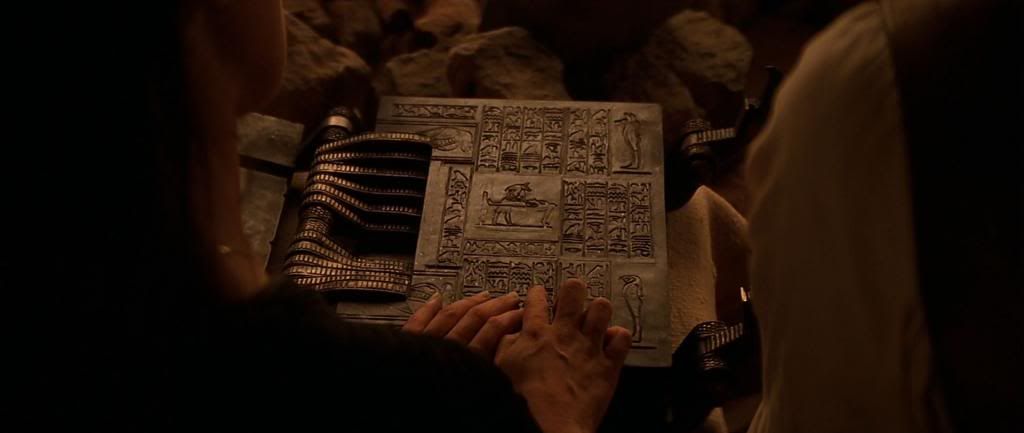
Evelyn prefers to lay an intellectual smackdown. In Hamunaptra, one of the members of the rival expedition observes, “They are led by a woman. What does a woman know?” As it turns out, basically everything. The characters’ survival and their progress through the plot often relies on Evie’s deductive skills as well as her ability to translate ancient Egyptian hieroglyphs in high stress situations. It is her translation skills that allow Jonathan to gain control of the Pharaoh’s guards, who rob Imhotep of his immortality. Without her, Rick couldn’t have killed him. While Rick performs all the swashbuckling antics, Evie does all the intellectual heavy lifting.

Even as Evelyn plays an integral role in defeating Imhotep, the film gives her another victory: intellectual superiority over the Bembridge scholars. They claimed that the two incantation books were in Hamunaptra, the Book of Amun-Ra at the base of the statue of Anubis and the Book of the Dead hidden in the statue of Horus. Evie discovers that they mistranslated the source of this information, and in her own translation, she finds that the two locations should be switched. Upon finding this, she exclaims, “Take that, Bembridge scholars!” Even with an army of zombified people and a nearly restored mummy outside, urging the plot onwards, you still want to take a moment to bask in her joy at being better than the people who rejected her.

What makes Evie’s portrayal in the first film even more extraordinary is the fact that she is canonically biracial. Unsurprisingly, her actor isn’t. The film’s treatment of race tends to be quite dubious, painting most of its characters of colour as villains, greedy, immoral cowards, or cannon fodder. The Medjai warrior, Ardeth Bay, manages to defy this characterization, but he still sacrifices himself to save the white and half-white people (even if his death doesn’t stick). Setting aside the casting issues, the fact that Evie is biracial makes her an even more progressive character. In American cinema, where the smartest guy in the room is almost always white and male, it is very cool to see that distinction go to someone like Evelyn.

Unfortunately, all of this changes in The Mummy Returns. The sequel takes place ten years after the original, in 1933, when the reincarnation of Anck-su-namun and the curator of the British Museum decide to resurrect Imhotep to fight a new Big Bad, the Scorpion King. Evie and Rick get involved when their eight-year-old son, Alex, gets his hand stuck in an artifact that the villains need and is therefore kidnapped. Then it’s a race against time to save Alex and stop the Scorpion King from conquering the world with his supernatural army.

For my purposes, there are two things that matter in this movie: the reincarnation storyline that turns Evelyn into an Action Girl, and her fridging. In this film, Evelyn gets all those choreographed fight scenes that were conspicuously and gloriously missing from the first one. While she explains that she’s picked up some combat moves from Rick, it’s revealed that most of her new tricks are remnants of her past self. It turns out that she was once Nefertiri, the daughter of the Pharaoh who was killed by Imhotep and Anck-su-namun. Her issues with them therefore date back thousands of years, when she witnessed them killing her father.

The Evelyn of the first film was refreshing partially because she wasn’t a badass fighter who could hold her own against men in combat. Too often, that kind of character displays the appearance of power with none of the agency that should accompany it. The same is true of this new Evie. She’s controlled by the memories of her past life, to the extent that she almost falls out of a flying dirigible. She’s driven by the need to protect the Bracelet of Anubis and the boy who wears it, and her duties as both the ancient guardian of the artifact and a mother supersede the thirst for knowledge that defined her character in the first film. It eventually turns out that Rick and Evie are just playing predetermined parts in the defeat of the Scorpion King. The agency of a clever librarian is replaced by the destiny of a warrior princess, and Evelyn’s character suffers a tremendous loss.

As is often the case in stories of destiny, the focus is on the men. Evie’s brilliance is transplanted into her son, and he gets to shine as one of the principal characters. Rick takes centre stage as a father who saves his son and the whitest Medjai ever, destined to kill the Scorpion King. When Alex stands up to Imhotep, the mummy says, “You have strength, little one. You are your father’s son.” Apparently Imhotep forgot that it was Evie, not Rick, who most often defied him and tried to trick him.

Evelyn’s destiny, it appears, is to be killed. Out of the blue, Anck-su-namun stabs her, and Evelyn dies. I don’t mean to be repetitive, but there is so much wrong with this moment that it’s like my brain gets stuck on it. Evelyn, who was the protagonist in the first film, gets fridged in order to fuel Rick’s manpain. She lacks narrative value beyond her role as Alex’s mother and Rick’s wife, and this is confirmed with her last words, with which she tells Rick that she loves him and that he has to take care of Alex. With the possible end of the world looming, the woman who was willing to face an ancient evil on her own because it was the right thing to do doesn’t even mention it? I might understand this scene if she were heroically sacrificing herself to save the world, but she really does just get randomly stabbed out of nowhere before the job’s done. Even her resurrection can’t make up for this.

All you really need to know about Evie is summed up in one of her own lines: “Look, I may not be an explorer, or an adventurer, or a treasure-seeker, or a gunfighter … but I am proud of what I am! … I am a librarian.” In the first film, this is the greatest thing about her: she is a knowledge-seeker, and she doesn’t need fighting skills to be awesome. The second film feels like a betrayal of the essence of Evelyn, replacing her agency with an ostensibly cool backstory that seems to make her stronger even as it weakens her character.

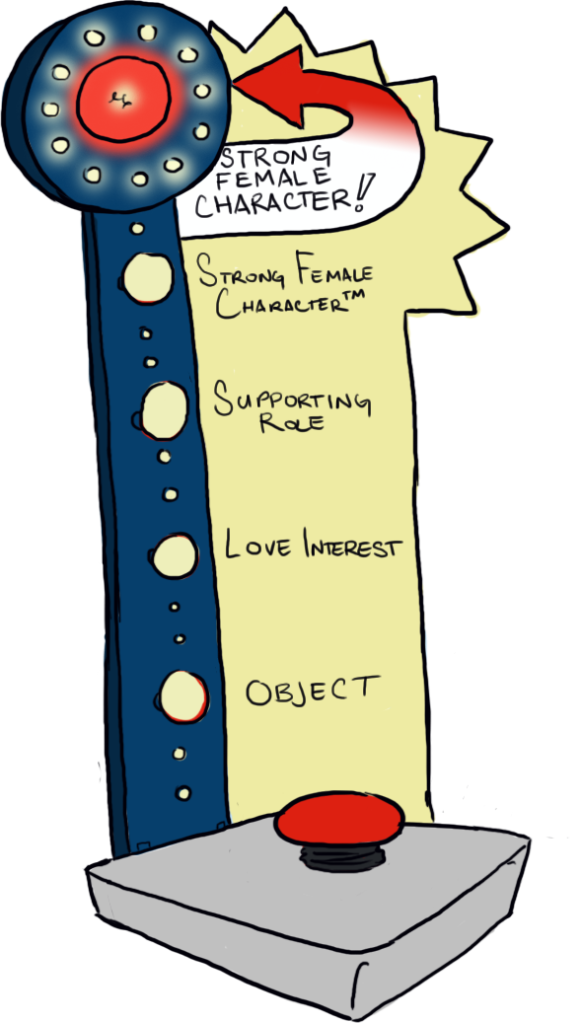
Verdict: Actual strong female character who devolved into a Strong Female Character™ in the sequel


Sabtu, 12 Oktober 2013

Disneyland


I’d like to kick off this post with an assurance that I will be publishing the next installment of Reader Request Month: 2 Fast 2 Furious in the next day or two. I foolishly thought that I could keep up with my blogging even when, over the course of a week, my niece was born, I started a new job, and I departed for “the happiest place on Earth.” When I returned from Disneyland, I needed some time to settle into my new routine, but I should be on track to resume my regular schedule of weekend posts.

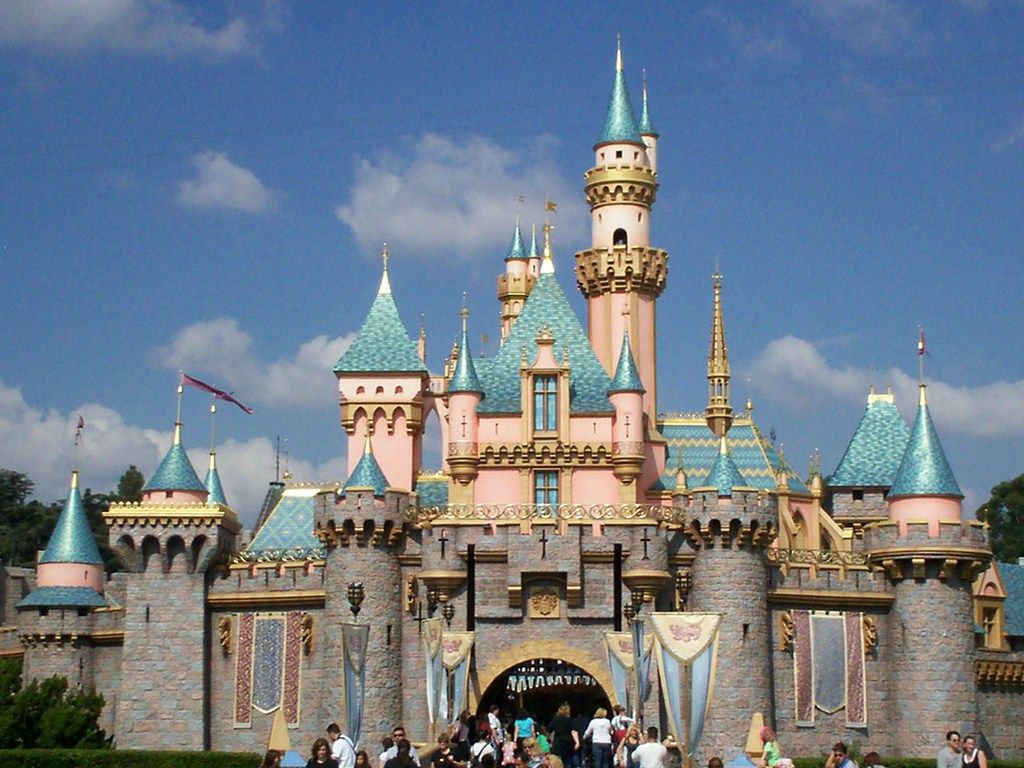
Back when I was a kid, I used to watch a commercial for Disney World on our Lion King VHS. As a five-year-old, I didn’t really understand the irony that made the ad funny, but I did know that I wanted to go to that park… or maybe the other one. I wasn’t sure at the time whether Disneyland or Disney World was actually closer. Not that it mattered; all I knew was that one day, I was going to visit Mickey and my beloved princesses.

Nineteen years later, that day arrived. I was initially worried that going to Disneyland for the first time as an adult would ruin my experience. This seemed even more likely in light of the fact that I’ve analyzed the very same princesses that I grew up blindly idolizing. Faced with the Disney machine, would I be able to enjoy the magical kingdom populated by characters I’ve loved for decades, or would I see only the money-making ploys of a corporate giant cashing in on manufactured nostalgia? The answer, it turns out, was both. Often at the same time. (In the interest of staying on topic, I’ll talk about only those things that relate to the characters we’ve discussed here on the blog.)

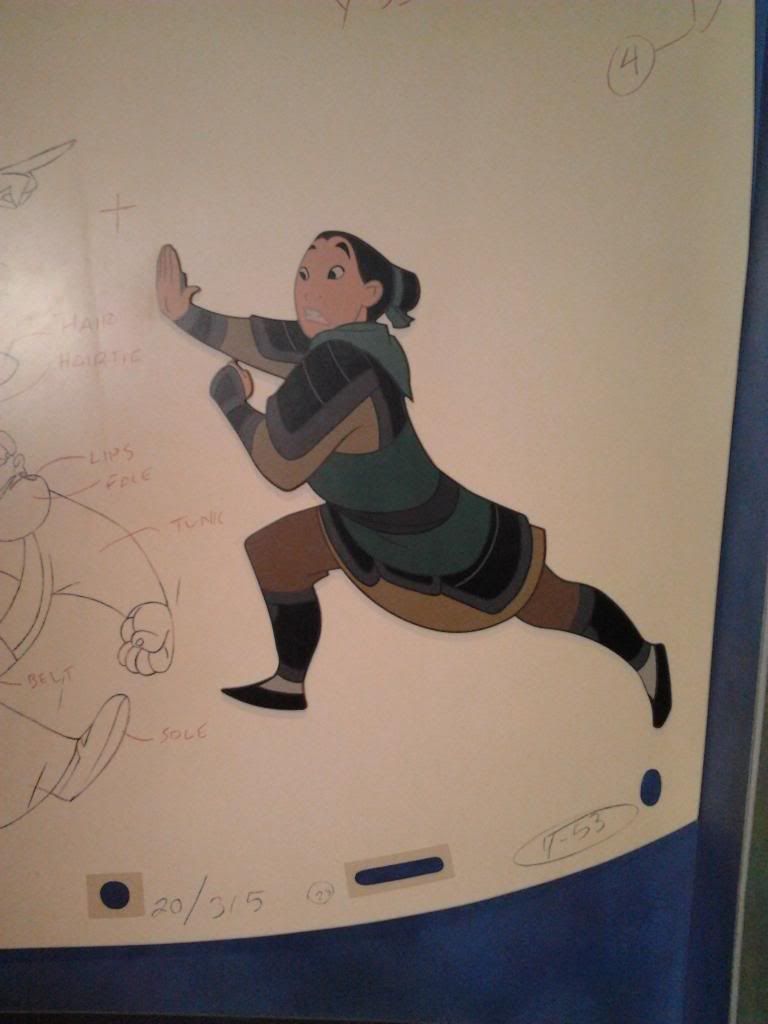
When I arrived at my hotel, one of the first things that caught my attention was a framed picture of the first six princesses: five white women and Jasmine. That proved to be the case throughout the park; most products only acknowledged the existence of eight princesses, invariably excluding Pocahontas and Mulan. Merida, having debuted after the success of Tangled made Rapunzel a necessary addition to any group photo, was left out, but still featured on a lot of Brave-specific merchandise. I knew that I would be leaving with some of it. But from the time I walked into the World of Disney store on the first day, I also knew that I was going to make it my mission to find things relating to Mulan and Pocahontas. When it came to merchandise, I was largely unsuccessful. Even in the land of imagination, it seems that no one can imagine people wanting products depicting all the princesses.

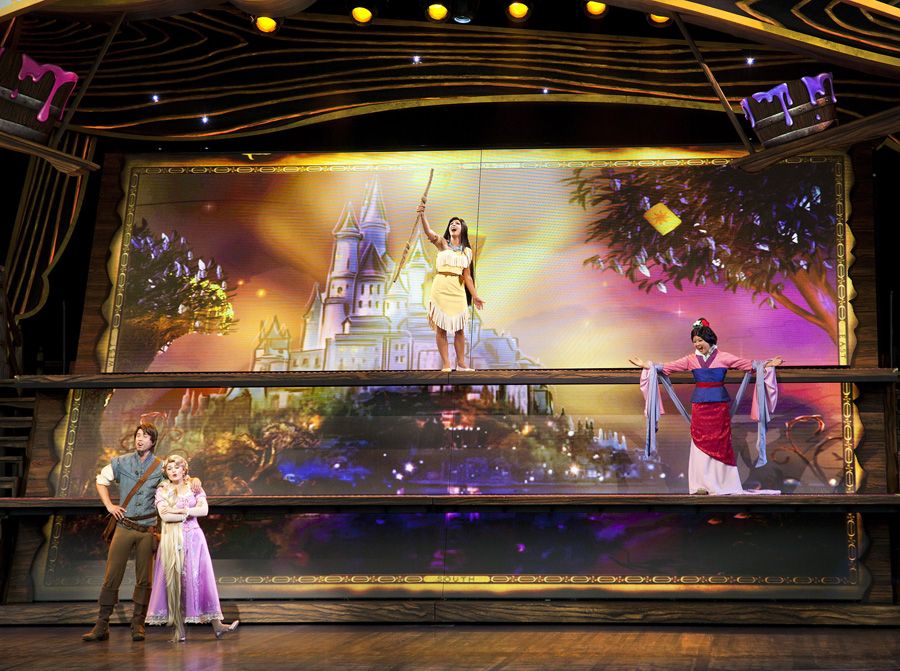
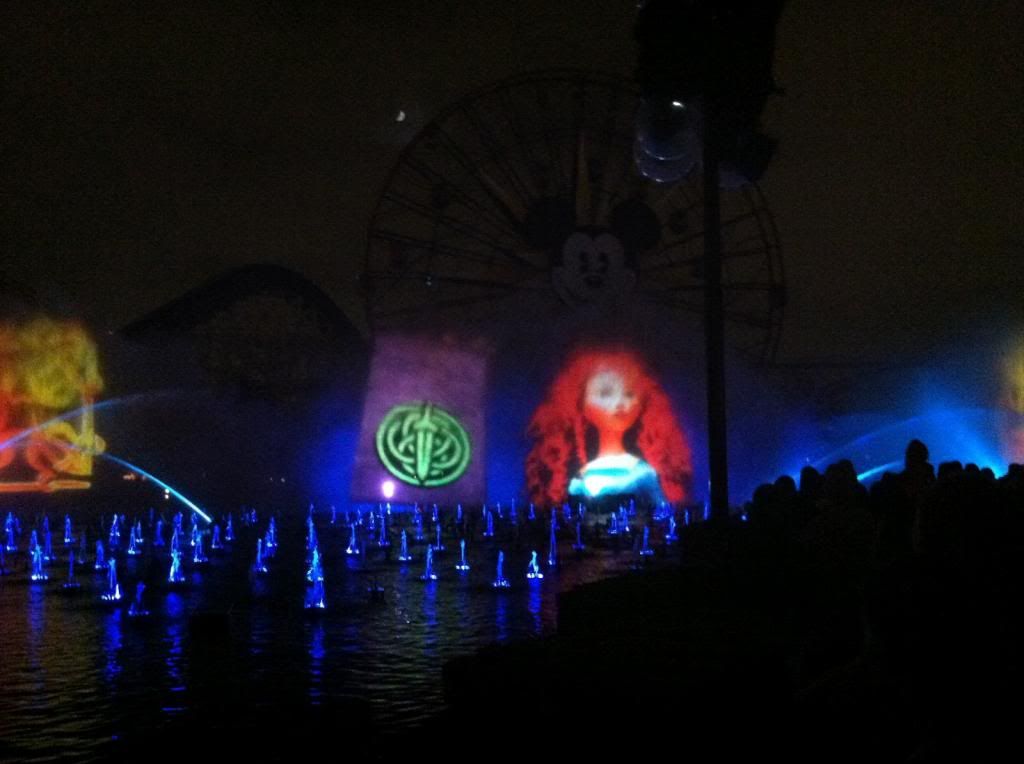
In the park’s major shows, however, I managed to find an interesting trend. In Mickey’s Soundsational Parade, Tiana gets her own float. In the abbreviated live musical version of Aladdin, Jasmine has a solo, “To Be Free”. Pocahontas has a featured segment in the World of Color show. She, Mulan, and Tiana all make an appearance in Mickey and the Magical Map. Disney is fine marketing an overwhelmingly white set of princesses to the masses, but when it comes to the parks, it seems that the company feels a need to stand by its claims of diversity and imagination. Sort of.

Mickey and the Magical Map involves Mickey, a mapmaker’s apprentice, trying to fill in an unfinished spot on said map. The dot jumps around the world, taking Mickey to the locations of several Disney films. After King Louie finished telling the audience how much he wanted to be like us, the dot took Mickey to the setting of Pocahontas… and Mulan… and Tangled… simultaneously. Having seen only a few items of merchandise featuring Mulan and absolutely no mention of her otherwise, I was willing to ignore the seeming collapse of time and space in order to hear “Reflection,” one of my all-time favourite Disney songs. Then Rapunzel and Flynn showed up, and both Mulan and Pocahontas were suddenly incorporated into a love song and lost in a sea of lanterns. Mickey’s final destination was Hawaii, where Stitch appeared without Lilo or Nani, despite the fact that they, and not he, are native to the area. It’s a bit of a mess, and it proves that even in a show intended to illustrate Disney’s diversity, they still prefer to feature the popular characters that are already featured elsewhere.

Yet I found that some of my favourite memories of the trip came as a result of Disney’s marketing machine. All around the park, I saw hundreds of little girls wearing princess costumes. Those who wore Tiana’s outfit reminded me that, despite the film’s flaws, Tiana herself is worth looking up to. One particularly memorable group of girls stood in front of me in the line to meet Merida, each one sporting dyed red hair and an official dress, clearly excited to meet their favourite character. I myself made a Build-a-Bear and named her after the princess of the Clan Dunbroch.

My favourite memory, however, is of standing in the audience for World of Color, watching scenes from the films of my childhood, when suddenly there was the image of a red-haired girl and dozens of little voices exclaiming, “Merida!” As an adult, I connected to Merida immediately, but I found her more compelling the more profoundly I considered the critical work being performed by her story. Hearing a bunch of kids express such utter joy at seeing her made me remember what it was like to love Belle, simply because she was awesome. Like the older brother said in that commercial, it really brought out the kid in me.

Selasa, 24 September 2013

Dear readers,

This is Ashley, dropping in to let you know that Megan is in the Happiest Place on Earth, which just so happens to have the Worst WiFi Connection. As such, Reader Request Month has been delayed and will now extend into October. Thank you for your patience!


Sincerely,
                           The Management

Jumat, 13 September 2013

Mako Mori


(Note: This post will focus primarily on the theatrical release of Pacific Rim. There is a significant amount of supplementary material available, and I will be discussing some of it, but I think that it’s important to address the world and characters as portrayed on the screen. Significantly fewer people are going to read the prequel comic, the novelization, Guillermo del Toro’s interviews, and Travis Beacham’s blog. And now, without further ado, the first entry in Request Month: 2 Fast 2 Furious.)

When I first saw the trailer for Pacific Rim, I, like many others, thought it looked like the love child of Transformers, Godzilla, and a particularly colourful neon glow stick: the product of a summer Hollywood blockbuster breeding program. Despite the involvement of Guillermo del Toro and Idris Elba, I had no intention of seeing the film. But that all changed when the Fire Nation attacked.

In this case it wasn’t Azula and her ilk who invaded my corner of the Internet, but another Japanese woman associated with the colour blue. Mako Mori was suddenly everywhere, and I knew immediately that I would not only be seeing Pacific Rim but writing about it.

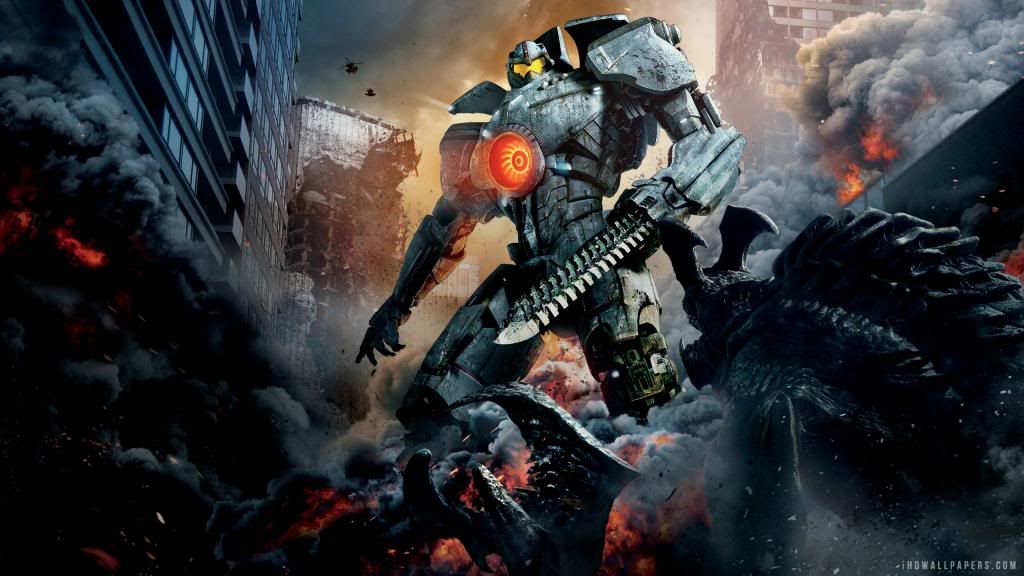
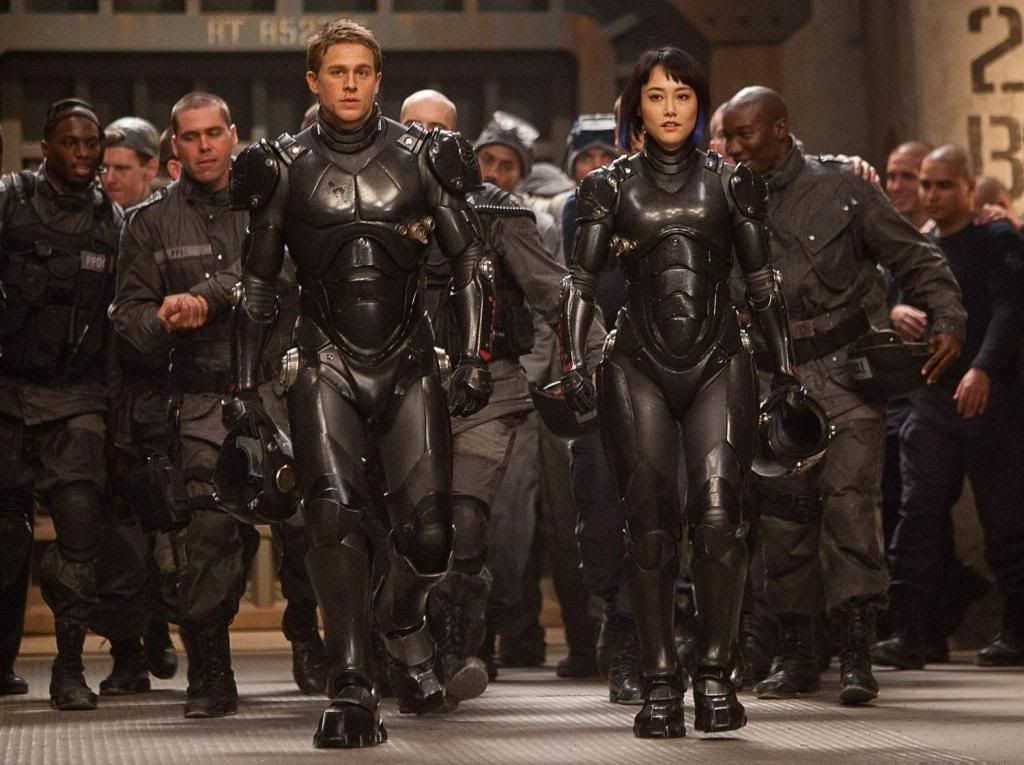
Set in the near future, Pacific Rim takes place in a world where gargantuan monsters called Kaiju emerge from an interdimensional portal under the ocean, known as the Breach, to wreak havoc on a global scale. When traditional weapons prove ineffective against the Kaiju threat, the nations of the world come together to find another solution. That solution is the Jaeger, a massive, nuclear-powered Rock ‘Em Sock ‘Em Robot, piloted by a two-person team whose minds are linked through a neural handshake. One such team is comprised of the Becket brothers, Raleigh and Yancy, the latter of whom is killed during a mission. Raleigh is left without a co-pilot or a Jaeger, and he leaves the program. As the frequency of Kaiju attacks increases, more and more Jaegers fall. Governments turn to ostensibly Kaiju-proof walls to protect their coasts, but these prove useless. With the end of human civilization looming, it is up to Marshal Stacker Pentecost and the pilots of the world’s last four Jaegers to destroy the Kaiju and seal the Breach.

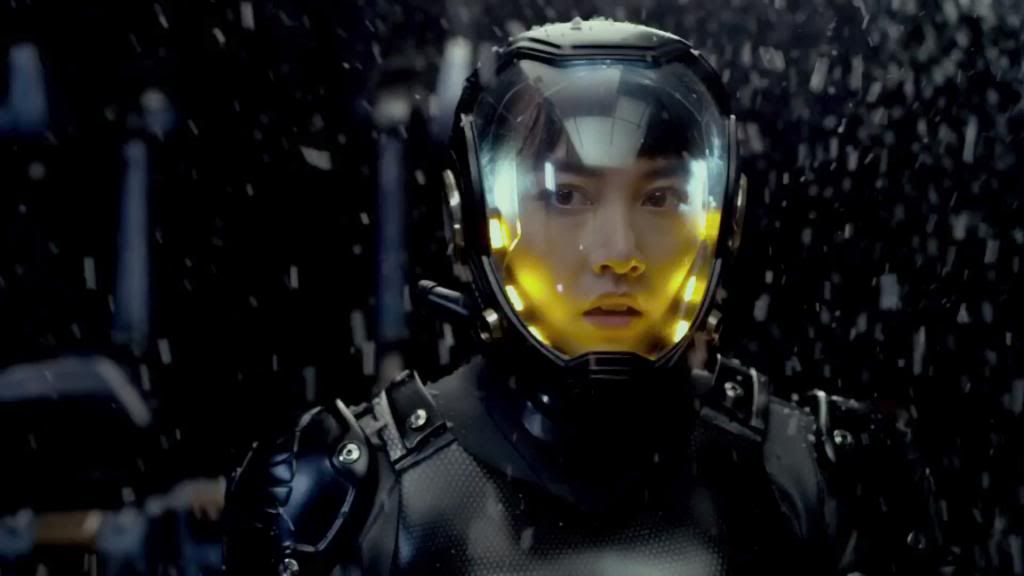
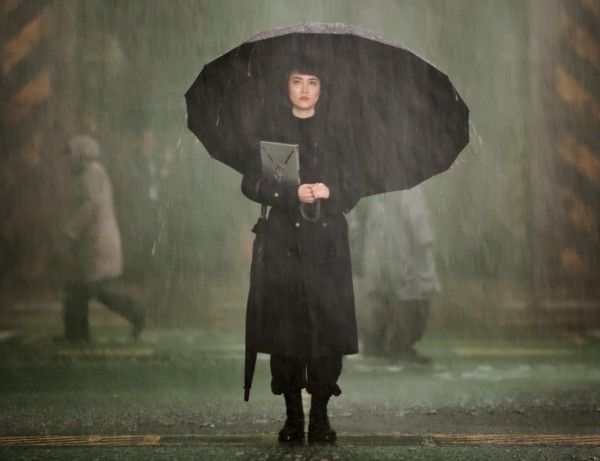
Mako Mori’s strong female character credentials are established in her first few minutes of screentime. She is introduced as “one of [Pentecost’s] brightest.” While Raleigh, the white male protagonist, has only just learned about the plan to seal the Breach, Mako has already played a major part in the mission. She oversaw the restoration and upgrade of the Becket brothers’ Jaeger, Gipsy Danger, and she compiled the list of candidates for the co-pilot position. She has an intimate understanding of the inner workings of both the machines and their pilots, whose number she wishes to join. To that end, she has completed fifty-one simulator missions with fifty-one kills: a perfect record. To put this in some perspective, the prequel comic compares piloting a Jaeger to “trying to solve a Rubix Cube in the middle of a boxing match.” Doing that successfully a hundred percent of the time is astounding.

It is this level of expertise that qualifies her to judge Raleigh’s own record. She calls him out on all the usual traits of the white, male hero: “I think you’re unpredictable. You have a habit of deviating from standard combat techniques, you take risks that injure yourself and your crew. I don’t think you’re the right man for this mission.” Of course, we know that he will prove to be the perfect person for the mission, but it’s still notable that Mako is willing to point out that the qualities that make him a good Hollywood hero also make him a potential liability in the field. It is equally notable that Raleigh himself respects her opinion, even though she’s basically telling him that she thinks his redemption arc is going to get people killed. She is intelligent, competent, and unafraid to do and say what she thinks is right.

Because Pacific Rim was marketed as a Hollywood blockbuster, we think we know how this will turn out: Raleigh will engage in reckless behaviour that saves the world and proves Mako wrong. She will exist only to serve his storyline, likely as his love interest and the prize he earns for said reckless behaviour. At best, she will become his sidekick. We need look no further than The Wolverine for examples of both possible paths, conveniently -- and tellingly -- also portrayed by Japanese women whose only function is supporting the real hero, a white man. We’ve seen it before, and we think we’ll see it again in Pacific Rim.

Then the film disappoints our expectations in the least disappointing way possible: Mako becomes the deuteragonist. Instead of serving Raleigh’s arc, she is given a separate, complementary storyline; boiled down to its bare essence, he is the has-been, she is the rookie, and they both need Gipsy Danger’s help to exorcise their demons.

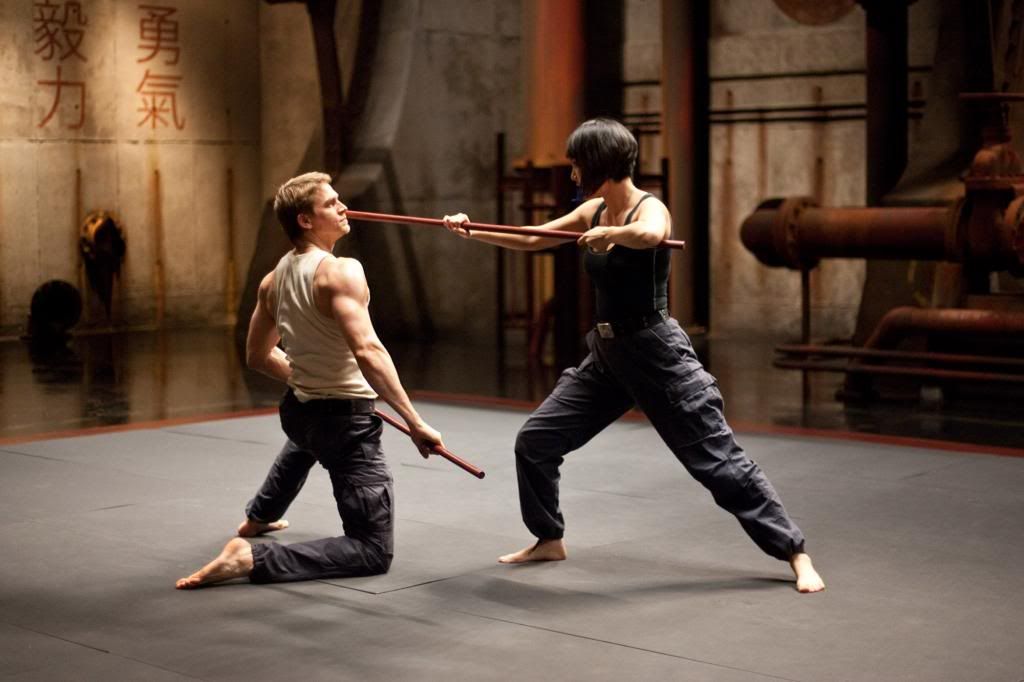
In order to gain entry to the Jaeger, Mako must demonstrate her compatibility with Raleigh, both mental and physical. To prove the latter, she must fight Raleigh using a specialized form of martial arts termed “Jaeger Bushido.” Pentecost is initially reluctant to let her try out, but after Mako tells Raleigh that he’s not trying hard enough and Raleigh challenges her to a match, he concedes. Raleigh tells her that he’s “not gonna dial down [his] moves,” and Mako assures him, “Neither will I.” What follows is a battle between equals, as they match each other point for point, until Mako has Raleigh on the floor.

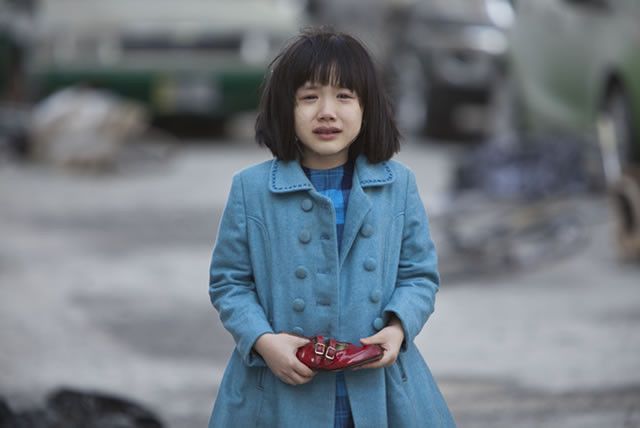
What has thus far prevented Mako from piloting a Jaeger is Stacker Pentecost. In a Drift-produced flashback, we learn that Mako survived a Kaiju attack in Tokyo when she was a child. She witnessed the battle between Coyote Tango and Onibaba, as the Jaeger, piloted by Pentecost, destroyed the Kaiju that killed her parents. Afterwards, Pentecost adopted her, trained her, and raised her in the Shatterdomes; he became her superior officer, her sensei, and her adoptive father. When she leaves the combat arena, certain that she will be denied the position of co-pilot, Raleigh tries to get her to fight back, claiming, “You don’t have to just obey him.” “It’s not obedience,” she responds. “It’s respect.”

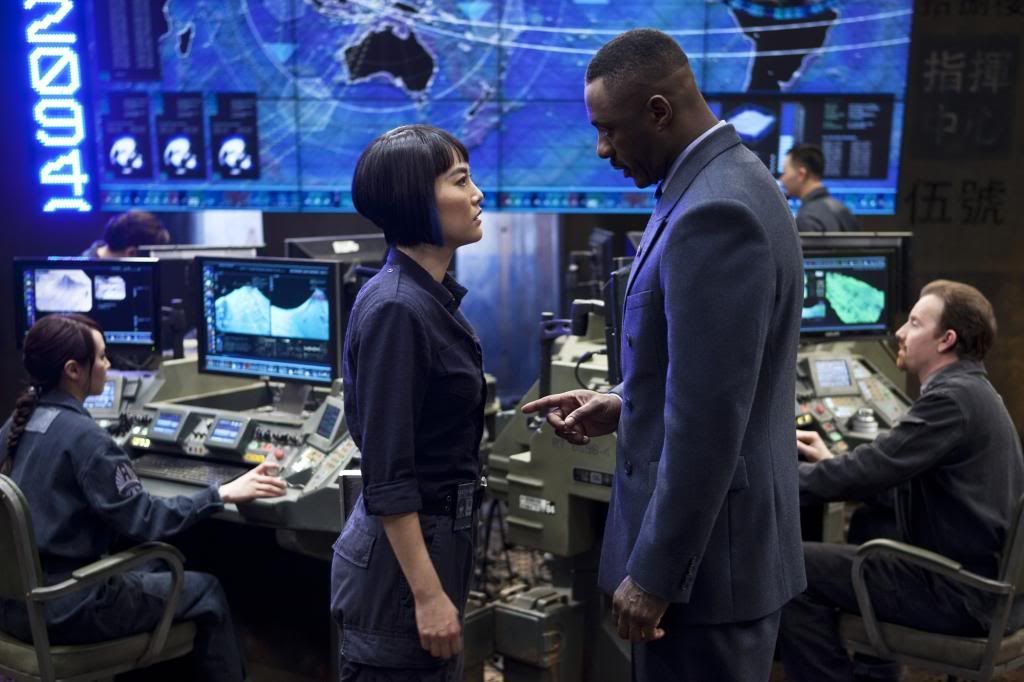
The film does a lot of subversive work using these two relationship dynamics. Mako’s relationship with Pentecost revolves around respect, but it is important to note that this respect goes both ways. While Mako obeys Pentecost’s orders, she doesn’t do it out of hero worship. She knows that he is a good leader, and she does what he asks not just because he asks it, but because she trusts that he has good reason to ask it. This doesn’t mean that she stays quiet when she takes issue with his orders, confronting him in person and (in the novelization) going so far as to “strenuously object” with his rulings in official documents. He, in turn, shows respect for her culture, her personal space, and her accomplishments. Later, when Pentecost decides to pilot a Jaeger, knowing that it is a suicide mission, he asks Mako to protect him. When he dies, she calls him “sensei” one last time. Despite the power imbalance, their mutual respect makes them equals.

The film’s equalizing project is particularly subversive in the case of the relationship between Mako and Raleigh. The whole concept of the two-pilot system and the neural handshake is compatibility; your ideal partner is the person who drives you to excel, and who then matches you in excellence. The neural handshake enables two people to become one incredibly powerful entity. Making Mako, an Asian woman, the perfect match for the white, male hero, suggests that she is his equal. In the summer blockbuster, where no one is more important than the white, male hero, this is a big deal.

In light of Hollywood’s long history of portraying Asian women as subservient, submissive, sexualized objects, Mako’s treatment is especially subversive. In addition to the equal status suggested by her Drift compatibility with Raleigh, the film supports her power and importance through more subtle devices. She is always fully dressed; there are no Star Trek-style underwear shots to appease the male gaze. In fact, there is a scene in which she watches Raleigh removing his shirt through a doorway and then through the peephole in her own door, explicitly assuming the gaze herself. Still, Raleigh’s gaze does play a role in Mako’s treatment, in the sense that he gazes at her like she’s the greatest person in the world. He fights on her behalf, always in an attempt to ensure that others acknowledge her brilliance and treat her with the kind of respect that he believes she deserves. The film essentially uses the audience’s identification with its white, male hero to convince them that Mako is the best character in the movie.

What I find particularly impressive is the film’s ability to balance Mako’s characterization; while she is intelligent and competent, she is also a rookie, and rookies make mistakes. Mako’s major error occurs during the first neural handshake test. When she and Raleigh link minds, he gets distracted by memories of his brother; this, in turn, causes Mako to “chase the rabbit” into the Drift and relive her own traumatic experience. While she inhabits her own terrified eleven-year-old mind, she subconsciously charges up Gipsy Danger’s plasma cannon, putting everyone and everything in the Shatterdome in danger. Although they manage to power down the Jaeger and avoid disaster, Mako is deemed unfit as a pilot. By grounding her, Pentecost prevents her from taking advantage of what may be her last opportunity to avenge her family.

Earlier, when Mako confronted Pentecost about taking part in the co-pilot trials, he informed her that “vengeance is like an open wound. You cannot take that level of emotion into the Drift.” Ironically, Mako’s single-minded mission to get revenge on the Kaiju stands in the way of her ability to use the one weapon with which she can take this revenge. While some people have criticized this scene and the final showdown -- in which, at the last moment, Mako’s oxygen feed is damaged, she passes out, and Raleigh saves her by jettisoning her in an escape pod -- I think that there are sound reasons for both moments of weakness.

The former is basically a matter of putting Bruce Wayne back in that alley with Joe Chill, and giving eight-year-old Bruce a gun that will stop him from ever having a reason to become Batman. In this case, however, Joe Chill is a 2500-tonne, city-destroying monster, and the gun responds to thought commands. Mako gets distracted, but, given the enormity of her trauma, it would be unrealistic if she didn’t. In some ways, this moment is actually a subversive triumph: Mako’s emotion and subjectivity fly in the face of the emotionless, inscrutable Asian stereotype. Furthermore, it’s a woman who, while experiencing a moment of apparent powerlessness, finds the power to fight back. It’s the wrong time and place, sure, but it’s a little inspiring just the same.

As for the later scene, Tumblr user Spider-xan has capably explained its subversive meaning: 
“Even though my personal preference would have been for Mako and Raleigh to do the final moment together, I will forever appreciate that we got a scene where a white man thought an Asian woman’s life was worth more than his and actually made sure she would survive for sure while he went on a suicide run where survival was uncertain, but unlikely, even if he did survive in the end.

Which is also why it annoys me when I see people in Mako’s tag say that it would have been more ‘feminist’ (and I guess ‘anti-racist’, though not like these people every acknowledge that Mako isn’t white) if she had saved him and ejected him from the pod and even died herself, because do you know how damn often in white man/Asian woman pairings especially, the Asian woman is supposed to nobly die for the white man while he moves on? And the whole ‘stoic Asian who dies so the white man can live as he accepts his death with honour~’ crap.”

It’s important to remember that every race is portrayed in mainstream media using a different set of stereotypes and tropes. Just because an Asian female character doesn’t conform to the ideal that has been established with white women in mind doesn’t mean that the Asian woman’s portrayal is inherently unfeminist or regressive. In many ways, not adhering to the criteria of a Strong Female Character is actually a testament to Mako’s strength as a character.

I defy anyone to call Mako weak after seeing her first outing in a Jaeger. When Cherno Alpha and Crimson Typhoon are destroyed and Striker Eureka is paralyzed during the first double event, Mako and Raleigh get their chance to redeem themselves following their disastrous test run. Not only do they kill both Kaiju, they vanquish the second one mid-air while it’s flying Gipsy Danger into the stratosphere. While Raleigh exclaims that they’re out of options, Mako deploys one of her personal additions: a chain sword, designed to honour her sword maker father. She slices the Kaiju in half, claiming the kill for her family, thereby satisfying her need for vengeance and completing her character arc. Although she goes on to play a major role in the final battle, this is the climax of her story. She has redeemed herself, avenged her family, and looked mighty cool doing it.

The biggest problem with Mako Mori is not a problem with her, but with her environment. While Pacific Rim generally does a good job of representing a global conflict that actually involves the entire world, it’s difficult to ignore the fact that the “entire world” seems to be just as dude-heavy as it is in any other blockbuster. Of the principal characters, only two are women: Mako and the Russian pilot of Cherno Alpha, Sasha Kaidonovsky, who gets a few lines, a little screentime, and an unpleasant death. As in every modern discussion of the feminist value of a given film, critics have highlighted the gender disparity in Pacific Rim through the use of the Bechdel test. It fails; Mako interacts more with the Hansens’ bulldog, Max, than she does with her fellow female pilot.

Regardless, it is difficult to dismiss a film as unfeminist when it features a character like Mako Mori. To that end, Tumblr user Chaila has proposed the Mako Mori test, which is passed if the movie has “a) at least one female character; b) who gets her own narrative arc; c) that is not about supporting a man’s story.” Chaila suggests that it be used alongside the Bechdel test; while passing either test (or both) does not necessarily make the film feminist, it does indicate that the female characters are being treated at least a little like actual people.

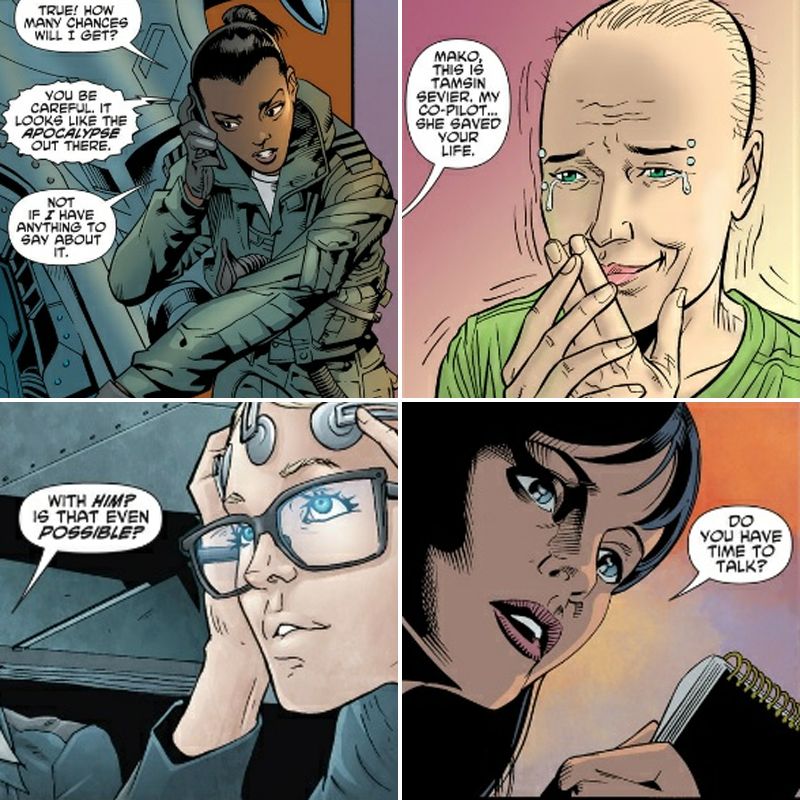
Personally, what bothers me is that the world of Pacific Rim does have a number of compelling women; they just didn’t make it onto the silver screen. The prequel comic, Pacific Rim: Tales from Year Zero, written by Travis Beacham, features four women who easily could have been included in some way, and whose inclusion would have improved the film. The first is Luna Pentecost, Stacker’s sister and a fighter pilot with the RAF. She volunteered to take on the first Kaiju when it struck San Francisco, ostensibly to repay the Americans for their help during the Blitz. Stacker points out that she really just wants to slay a dragon. She dies in the battle, but her influence is apparent in the way that she inspires Stacker. The second is her friend and fellow pilot, Tamsin Sevier, who went on to join the Jaeger program as Stacker’s co-pilot. She also gave her life for the cause, dying of cancer from exposure to the Jaeger’s nuclear core. The third is Naomi Sokolov, a journalist and former “Jaeger-fly”. As a teenager, she was attracted to the Jaeger pilots’ celebrity; as an adult, she turns an assigned puff piece into an examination of the political reasons for the shift from offensive weapons to defensive coastal walls. She goes from being drawn to the glamour of the celebrity heroes to understanding and advocating for the program itself.

Finally, there is Dr. Caitlin Lightcap, the inventor of the Pons, the technology that allows for the neural link between two pilots and their Jaeger. We meet Dr. Lightcap, one of the world’s leading experts in brain-machine interfaces, when a deep depression has interrupted her work at DARPA. While her former professor creates the machines, she makes them work. She is also responsible for discovering the need for two minds to share the neural load, having saved one of the test pilots by linking up to the Pons. She then goes on to join this test pilot in the first Jaeger prototype and log the first Kaiju kill without the aid of nuclear weapons. Describing this event, her scientific partner says, “I know one thing for sure: it felt pain. And half of what hurt it -- maybe more -- was that mouse of a girl from Pittsburgh. The message was clear -- we are far bigger than we look.” The fact that this woman doesn’t even get a mention in the movie is an absolute travesty.

Still, given time constraints, I can understand why these specific characters didn’t make the cut. That doesn’t mean that others couldn’t have been created. In fact, there is nothing in their characterization that would prevent Stacker Pentecost, Herc and Chuck Hansen, or Hermann Gottlieb and Newt Geiszler from being women (or, in the case of those last four characters, people of colour). In a more perfect world, we might even see Raleigh Becket himself replaced by a female version.

Pacific Rim is a subversive film, and it uses the audience’s expectations about Hollywood blockbusters to challenge these same expectations. It questions the concept of the individual white, male hero and makes its hero’s compassion his strength. It puts a working class Black man in command, and then, through the judicious application of a halo, a meaningful last name, and a death scene in which he sacrifices himself so the world can live, makes him a Christ figure. It codes the two scientists whose work enables the pilots to collapse the Breach as having two different disabilities. It has Mako Mori in it.

Unfortunately, it isn’t perfect. In using the trappings of the blockbuster, Pacific Rim perpetuates some of its more dubious traditions. (If I never see another film in which the only person who can save the world is a white, cisgender, straight dude, it will be too soon.) I like to think of it in terms of an Animorphs cover: the goal is to turn into a wolf, but the werewolf-like creature in the middle is still pretty cool.

Verdict: Actual strong female character
Senin, 09 September 2013

Request Month: 2 Fast 2 Furious 2 Late

Dear readers,

As you've probably noticed, last week's post is late, so late in fact that it's encroaching on this week. Real life has temporarily gotten in the way of blogging, but I will have the post up ASAP. Thanks for your patience.

Sincerely,
                           The Management