Tampilkan postingan dengan label reader appreciation. Tampilkan semua postingan

Jumat, 18 Oktober 2013

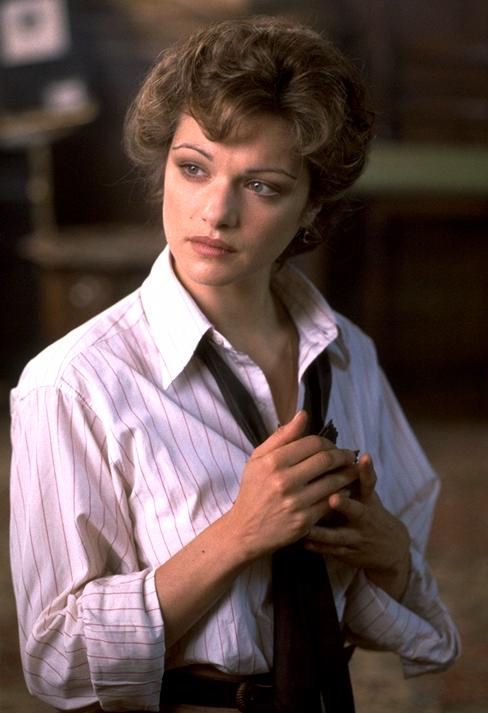
Evelyn Carnahan O'Connell


(Note: This post will focus on The Mummy and The Mummy Returns. As far as I’m concerned, there is no third movie.)

Between the trip to Disneyland and a selection of concerts featuring the most influential artists of my childhood, the past few months have been a bit of a whirlwind of nostalgia. Just when I thought I could escape its pull, I checked out the next request and promptly gave up any hope of surfacing.

When I recount the formative narratives of my childhood, The Mummy rarely gets a mention. It’s all superheroes and princesses and cats who eat pizza before and after doing martial arts. Still, whenever I adopt a zombie pose, I get the urge to to chant “Imhotep! Imhotep!” instead of “Brains!” When I thank people for their hospitality, I have to bite back the words, “And your eyes, and your tongue.” I even have the film to thank for my short-lived desire to become an Egyptologist. Looking back now, however, I see that it was also the source of one of the most important strong female characters of my childhood: Evelyn “Evie” Carnahan O’Connell. Although the marketing department clearly thought that Rick O’Connell was the film’s hero, I would argue that Evelyn is the actual protagonist. It is her quest, her dream, her mistake, and her decision to set it right.

First, some background: the eponymous mummy is Imhotep, a high priest who falls in love with the Pharaoh’s mistress, Anck-su-namun. When the Pharaoh discovers her infidelity, the two lovers murder him. When his guards arrive, she kills herself, confident that Imhotep will resurrect her. Just before he restores her to life, however, he is discovered; for his crime, he is cursed and buried alive to be eaten by insects. The curse is less a punishment for Imhotep than a punishment for the people who awaken him, as he comes back with the ability to conjure not only the plagues of Egypt, but sandstorms in the shape of his face.
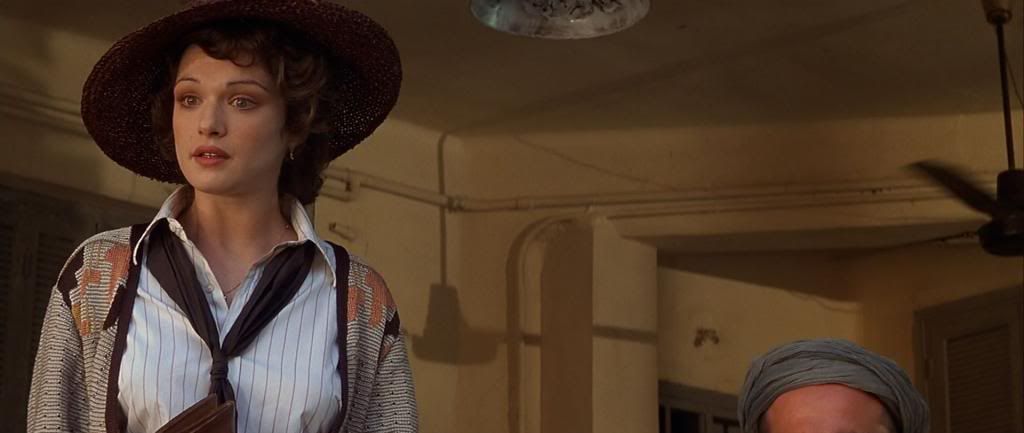
Screencaps: fight-tomorrow.net
Thousands of years later, Evelyn’s brother, Jonathan, finds a key and a map to the lost city of Hamunaptra, a place that Evelyn has researched extensively. When they decide to locate the city, they take as their guide Rick O’Connell, a former Colonel of the French Foreign Legion and obvious leading man. In Hamunaptra, they find Imhotep, the Book of the Dead, and a whole heap of trouble.

Evie is introduced as a fascinating combination of ultra-competence and utter hopelessness, the kind of woman brilliant enough to understand multiple forms of ancient languages, yet clumsy enough to demolish an entire library’s worth of shelves while replacing a single book. She owes her job at the library not to her own talents, but to her late parents’ patronage of the institution. Her application to join the Bembridge scholars has been rejected multiple times, always with the explanation of a lack of field experience. She’s a woman with something to prove, and The Mummy is the story of how she does it.

While Rick gets the big action-filled set pieces, it is Evie who controls most of the plot. She saves Rick’s life soon after meeting him, and he later mentions this as the only reason he has chosen to return to Hamunaptra. The quest itself is intended as a search for the Book of Amun-Ra, the artifact that first interested Evelyn in Egypt, the hunt for which she calls her “life’s pursuit.” When they find the Book of the Dead, it’s Evie who decides to read from it, saying, “It’s just a book. No harm ever came from reading a book.” When this ostensibly harmless bit of reading leads to the release of an ancient evil, Rick plans to make it someone else’s problem. Evelyn refuses to run away, takes ownership of her mistake, and vows to set things right. Even her eventual capture is proof of her agency; she chooses to go with Imhotep in order to save her companions. In almost every situation, Evelyn is the one making the decisions and dealing with the consequences.
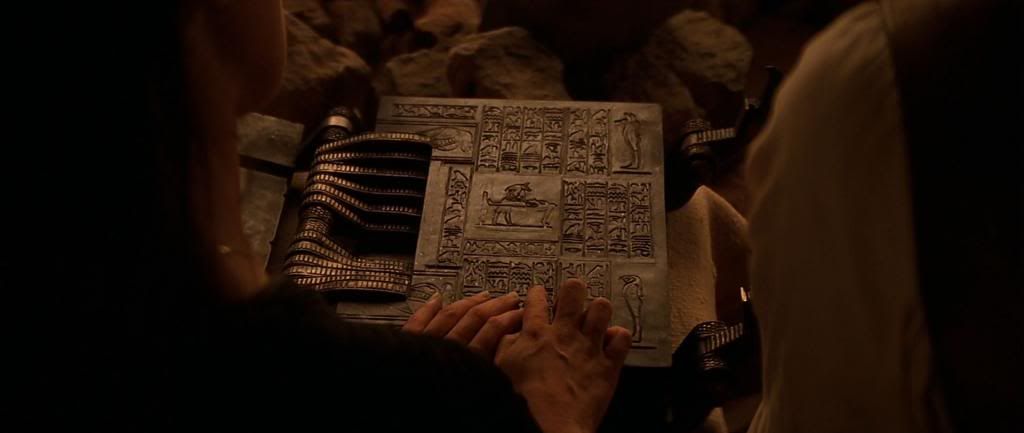
One of the things that I most appreciate about her is the fact that the narrative allows her to make mistakes. She’s introduced doing something foolish that ultimately causes significant damage and prompts her boss to compare her unfavourably to the Egyptian plagues. Later, she resurrects a being with potentially apocalyptic power. Where the film succeeds is in not condemning her -- or even judging her too harshly, really -- for these decisions. She combats her boss’s assertion of her ineptitude with proof of her competence. Instead of claiming ignorance as an excuse to get out of dealing with the Imhotep problem, she assumes the responsibility to vanquish him.

The way she goes about doing this sets her apart from many of the strong female characters that populate action films today. Evelyn is basically all brains and very little brawn. When she has to fight other characters, her first reaction is not to launch into a perfectly choreographed battle, but to shove a lit candle into her attacker’s eye. In the climactic scene, when the leading lady would usually fight the villain’s girlfriend or female partner in crime, Evie spends most of her time running away from Anck-su-namun. She’s the anti-Action Girl.

Evelyn prefers to lay an intellectual smackdown. In Hamunaptra, one of the members of the rival expedition observes, “They are led by a woman. What does a woman know?” As it turns out, basically everything. The characters’ survival and their progress through the plot often relies on Evie’s deductive skills as well as her ability to translate ancient Egyptian hieroglyphs in high stress situations. It is her translation skills that allow Jonathan to gain control of the Pharaoh’s guards, who rob Imhotep of his immortality. Without her, Rick couldn’t have killed him. While Rick performs all the swashbuckling antics, Evie does all the intellectual heavy lifting.

Even as Evelyn plays an integral role in defeating Imhotep, the film gives her another victory: intellectual superiority over the Bembridge scholars. They claimed that the two incantation books were in Hamunaptra, the Book of Amun-Ra at the base of the statue of Anubis and the Book of the Dead hidden in the statue of Horus. Evie discovers that they mistranslated the source of this information, and in her own translation, she finds that the two locations should be switched. Upon finding this, she exclaims, “Take that, Bembridge scholars!” Even with an army of zombified people and a nearly restored mummy outside, urging the plot onwards, you still want to take a moment to bask in her joy at being better than the people who rejected her.

What makes Evie’s portrayal in the first film even more extraordinary is the fact that she is canonically biracial. Unsurprisingly, her actor isn’t. The film’s treatment of race tends to be quite dubious, painting most of its characters of colour as villains, greedy, immoral cowards, or cannon fodder. The Medjai warrior, Ardeth Bay, manages to defy this characterization, but he still sacrifices himself to save the white and half-white people (even if his death doesn’t stick). Setting aside the casting issues, the fact that Evie is biracial makes her an even more progressive character. In American cinema, where the smartest guy in the room is almost always white and male, it is very cool to see that distinction go to someone like Evelyn.

Unfortunately, all of this changes in The Mummy Returns. The sequel takes place ten years after the original, in 1933, when the reincarnation of Anck-su-namun and the curator of the British Museum decide to resurrect Imhotep to fight a new Big Bad, the Scorpion King. Evie and Rick get involved when their eight-year-old son, Alex, gets his hand stuck in an artifact that the villains need and is therefore kidnapped. Then it’s a race against time to save Alex and stop the Scorpion King from conquering the world with his supernatural army.
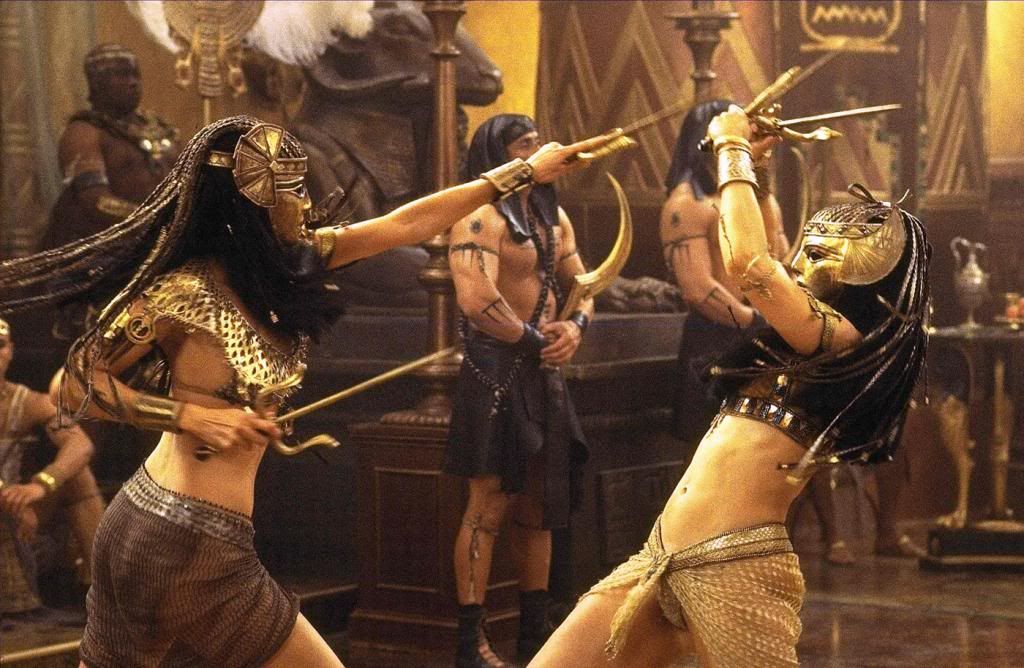
For my purposes, there are two things that matter in this movie: the reincarnation storyline that turns Evelyn into an Action Girl, and her fridging. In this film, Evelyn gets all those choreographed fight scenes that were conspicuously and gloriously missing from the first one. While she explains that she’s picked up some combat moves from Rick, it’s revealed that most of her new tricks are remnants of her past self. It turns out that she was once Nefertiri, the daughter of the Pharaoh who was killed by Imhotep and Anck-su-namun. Her issues with them therefore date back thousands of years, when she witnessed them killing her father.

The Evelyn of the first film was refreshing partially because she wasn’t a badass fighter who could hold her own against men in combat. Too often, that kind of character displays the appearance of power with none of the agency that should accompany it. The same is true of this new Evie. She’s controlled by the memories of her past life, to the extent that she almost falls out of a flying dirigible. She’s driven by the need to protect the Bracelet of Anubis and the boy who wears it, and her duties as both the ancient guardian of the artifact and a mother supersede the thirst for knowledge that defined her character in the first film. It eventually turns out that Rick and Evie are just playing predetermined parts in the defeat of the Scorpion King. The agency of a clever librarian is replaced by the destiny of a warrior princess, and Evelyn’s character suffers a tremendous loss.

As is often the case in stories of destiny, the focus is on the men. Evie’s brilliance is transplanted into her son, and he gets to shine as one of the principal characters. Rick takes centre stage as a father who saves his son and the whitest Medjai ever, destined to kill the Scorpion King. When Alex stands up to Imhotep, the mummy says, “You have strength, little one. You are your father’s son.” Apparently Imhotep forgot that it was Evie, not Rick, who most often defied him and tried to trick him.
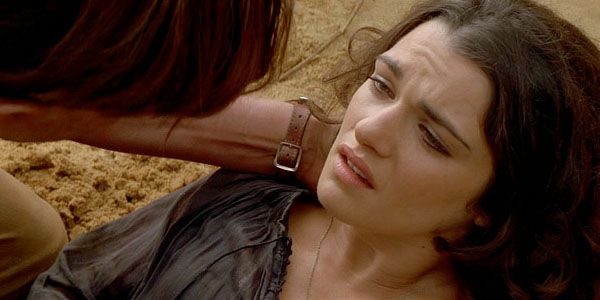
Evelyn’s destiny, it appears, is to be killed. Out of the blue, Anck-su-namun stabs her, and Evelyn dies. I don’t mean to be repetitive, but there is so much wrong with this moment that it’s like my brain gets stuck on it. Evelyn, who was the protagonist in the first film, gets fridged in order to fuel Rick’s manpain. She lacks narrative value beyond her role as Alex’s mother and Rick’s wife, and this is confirmed with her last words, with which she tells Rick that she loves him and that he has to take care of Alex. With the possible end of the world looming, the woman who was willing to face an ancient evil on her own because it was the right thing to do doesn’t even mention it? I might understand this scene if she were heroically sacrificing herself to save the world, but she really does just get randomly stabbed out of nowhere before the job’s done. Even her resurrection can’t make up for this.

All you really need to know about Evie is summed up in one of her own lines: “Look, I may not be an explorer, or an adventurer, or a treasure-seeker, or a gunfighter … but I am proud of what I am! … I am a librarian.” In the first film, this is the greatest thing about her: she is a knowledge-seeker, and she doesn’t need fighting skills to be awesome. The second film feels like a betrayal of the essence of Evelyn, replacing her agency with an ostensibly cool backstory that seems to make her stronger even as it weakens her character.

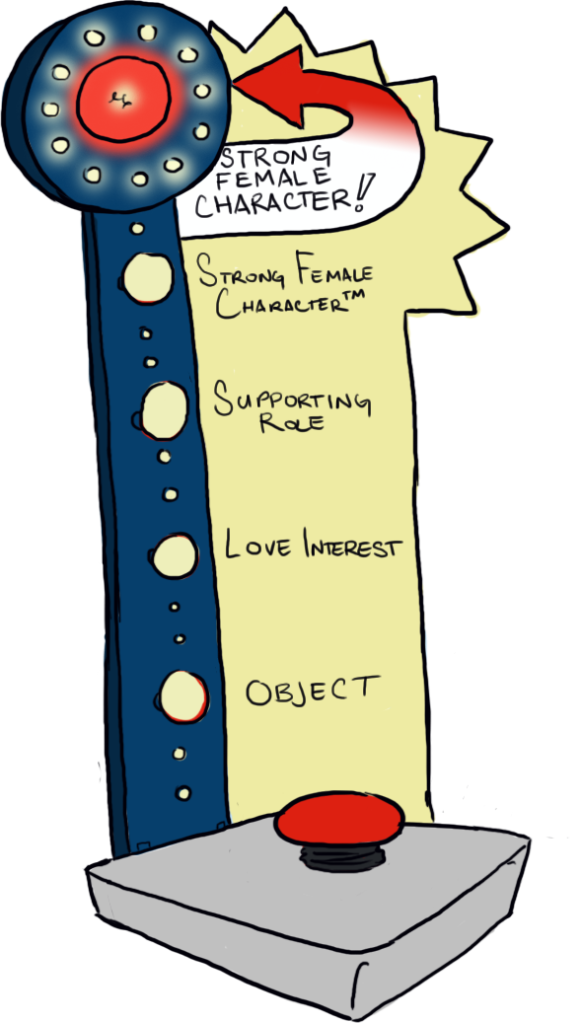
Verdict: Actual strong female character who devolved into a Strong Female Character™ in the sequel

Jumat, 22 Maret 2013

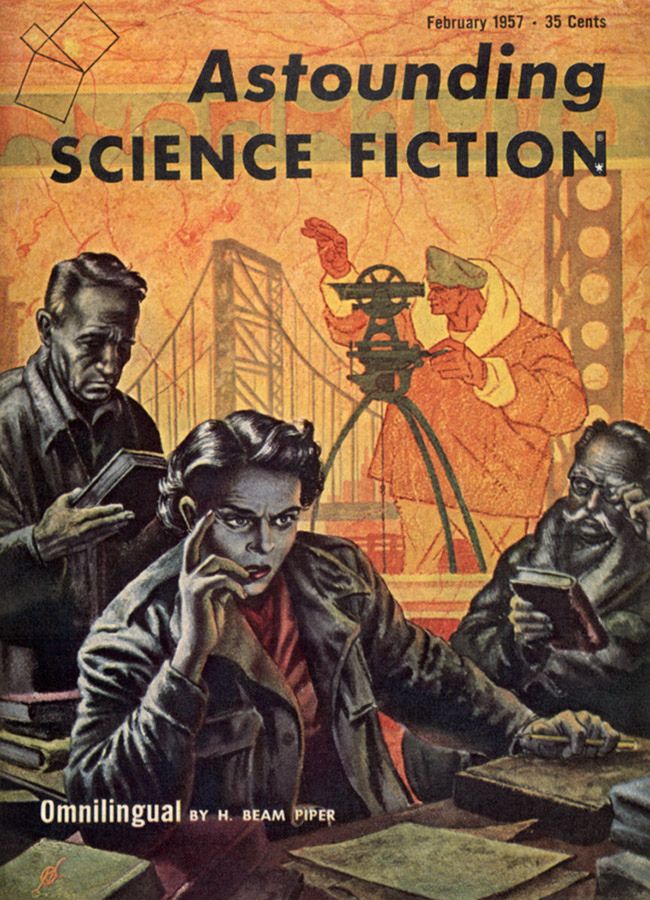
Omnilingual


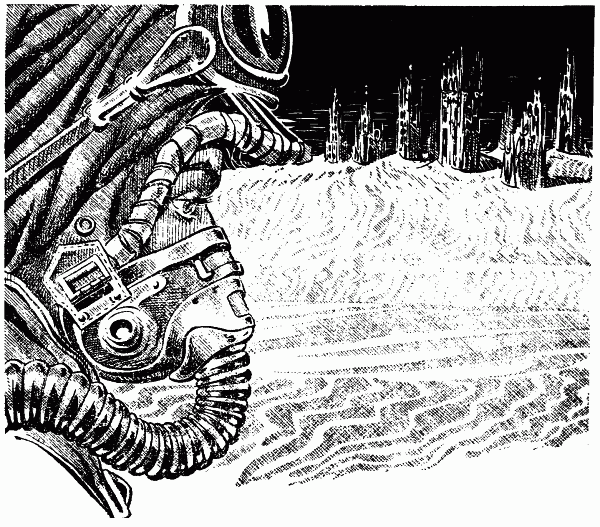
H. Beam Piper’s short story, Omnilingual, first appeared in the February 1957 issue of Astounding Science Fiction. It focuses on Dr. Martha Dane, an archaeologist on a mission to Mars to study the remnants of Martian civilization fifty thousand years after its demise. A linguistic specialist, Martha makes it her goal to read Martian, defying skeptical colleagues, the probability of the loss of her reputation, and the fact that this could very well prove to be an impossible task.

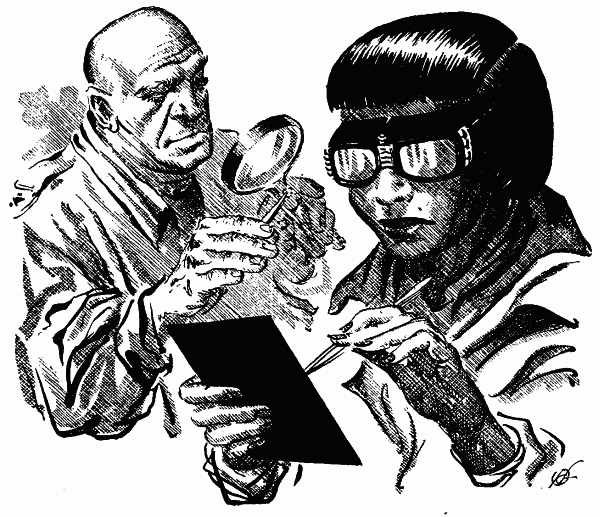
Martha is, first and foremost, a consummate professional. She is ultra-competent, creating almost single-handedly an entire system of Martian pronunciation based on sounds that both humans and Martians could make. She appreciates the work done by her helpers and doesn’t allow herself to take the bait left by one of the other archaeologists, who is trying to undermine her efforts. The senior archaeologist on the mission hand-picked her, and he tells her that her standing is better than his was at her age. This is no small compliment, considering his reputation as a much lauded academic at the top of his field.

So it’s a big deal when she decides to risk her own reputation on a potentially career-ending wild goose chase. The main antagonist, Tony Lattimer, constantly reminds her of that fact. He invites her along on an exploratory mission, if she “can tear herself away from this catalogue of systematized incomprehensibilities she’s making long enough to do some real work.” He belittles the value of her efforts, trying to bring the attention of the on-site reporters to physical artifacts of the kind that attract his focus. Eventually, it turns out that his derision came not from his confidence that Martha would fail, but his fear that she would succeed and steal the limelight from him.

Kelly Freas
The two are pitted in opposition due to their conflicting goals: Tony wants fame and recognition, while Martha seeks knowledge for knowledge’s sake. One of their colleagues sums it up: “Tony wants to be a big shot. When you want to be a big shot, you can’t bear the possibility of anybody else being a bigger big shot, and whoever makes a start on reading this language will be the biggest big shot archaeology ever saw.” Martha, somewhat naively, asserts in the narration that she doesn’t want to be a big shot; she just “wanted to be able to read the Martian language, and find things out about the Martians.” She has no interest in preserving or building her reputation; instead, she sets out to take chances, make mistakes, and get messy. (Valerie Frizzle would be proud.) Her work, while clearly more important than Tony’s -- even his discovery of the desiccated bodies of a group of Martians -- doesn’t have the same kind of viewer friendliness or immediate payoff; the result is fewer workers assigned to her quest for knowledge and more attached to his search for ratings.

Although this conflict is not explicitly figured in terms of gender and power, it’s hard to resist applying that lens. Tony makes himself the face of the mission, recording voice-over for their broadcasts. He ensures that he will be the one sent home to bring news of their accomplishments, as seen from his perspective. He gets to shape the narrative as he sees fit. Martha, meanwhile, does the heavy lifting with no thought of glory. Even when she manages to start the translation process, she does so with the help of a man’s knowledge, and she is only assured credit for her work when two men step forward to defend her right to it. It’s a subtle reminder of the story’s original postwar audience and the reality of a social climate that persists to this day, in which women who make monumental discoveries enjoy a smaller write-up in history or science textbooks than their male counterparts.

That doesn’t mean that the story isn’t remarkably progressive. Not only is Martha Dane an intellectual titan, she is an intellectual titan who pulverizes the Bechdel test within five pages of existence. Her co-worker, Sachiko Koremitsu, discusses her work with her and assists her with it, often seeming to be the person most supportive of Martha’s ambitions. Sachiko is, herself, a highly competent worker, restoring books in such a way that “every movement was as graceful and precise as though done to music after being rehearsed a hundred times.” One of the other female characters, a professor of natural ecology at Penn State, is the one who identifies their most important find as a university, drawing from her own experience of working in one. Unlike, say, the most recent Star Trek film, the story features multiple women in different roles contributing to a common goal. Also unlike that film, it allows them to speak to each other about that goal.

Kelly Freas
Now, before I make my ruling on this character, I want to acknowledge something. Martha Dane is not the kind of character who inspires intense fannish devotion, sending readers into paroxysms of delight at her badass antics. In terms of science fiction heroes, she’s no Sarah Connor or Ellen Ripley. In terms of archaeologists, she’s no Indiana Jones (though she may have made Kingdom of the Crystal Skull more bearable). What she is is evidence that a protagonist can be a woman for no other reason than “just because”.

Could this have been the story of a man who overcomes the opinions of his colleagues to make the greatest discovery in archaeological history? Of course. In fact, had that been the case, it would have been one of several very similar narratives. Had it been written according to many of our ostensibly modern sensibilities, it might have featured a hackneyed plot focused on Martha’s guilt over choosing her career over a life with a husband and children, giving us yet another reminder that women can never “have it all.” Instead, it is the story of a woman who has no children and no love interest, and the narrative never takes a moment to mention either. Martha cares about her work, and the story cares about her work, and, because of this, we care about her work. We don’t even get the hinted-at distraction of a potentially haunted university and a final third of the story spent learning Martian from ghostly apparitions. What we have is the portrait of a woman, who is damn good at her job, trying to get important stuff done despite the reservations of her many critics, and succeeding... in space. She may not fight robots or Nazis, but she is certainly an important character to know.

Verdict: Actual strong female character


Jumat, 01 Maret 2013

Reader Submission: She-Hulk!

To kick off our Reader Appreciation Month we have a submission from Jai (resident artist and all-around excellent person), extolling the virtues of She-Hulk:
Art by Adi Granov.

SHE-HULK. As Jen Walters, she's a really smart, well educated lawyer, but she's always been in the background of everything; once she gets a blood transfusion from her cousin Bruce Banner, she becomes She-Hulk - which affords her the chance to finally be the centre of attention!

I started reading She-Hulk is when there was a revival of her solo series; I bought (and still buy, when I have the money) the trades. At that point in Marvel 'verse, she was part of the Avengers. We're introduced to her through a party - a really big party - and then her waking up with a random dude the next morning. She's large and in charge and she takes every advantage of it; but the rest of the Avengers are worried it's taking a toll on her Superhero-ing. So they tell her they're worried about her, and think she should take some time off. The dude she was sleeping with tells her she's shallow. (He's an underwear model.)
Around the same time, she gets an offer at a Law firm - apparently one of the best in New York. So, given the suggestions of her teammates and this new opportunity, she decides to go for it. But there's a catch: she can't do it as She-Hulk. She has to do it as Jen.

For the most part that's played super well - it's about her learning to have confidence in herself and her awesomeness and the fact that she's a really good lawyer, even when she's not this super hot super strong super hero babe.
To top it all off, the law firm she ends up working for has a specific division of its company they want her for: the Super Human Law division. Where people who've just gained super-human powers can sue the companies that left the radioactive waste just out and about. Or villains can sue heroes for excessive force. It's pretty great, and doesn't take itself too seriously at all. The best story in the first trade (I think it's in the first trade) is when Spider-Man decides to sue J. Jonah Jameson for slander. Jameson eventually ends up saying "Well, shouldn't you be including Peter Parker in on this?! He's the one who sells me the photos!" And so Spider-Man (who is Peter Parker, of course) can't realistically say "Nah I don't wanna sue that guy, just you," without giving a really good reason. So he settles out of court.

What they end up settling on?

J. Jonah Jameson and Peter Parker have to stand right outside the Daily Bugle offices holding signs saying (I think) “I'm Sorry” and handing out leaflets about how they were wrong.
While wearing Chicken Suits.

The series does have its serious spots, as well, but overall it's a super well crafted fun romp with a really strong female lead learning to love herself FOR HERSELF and no one else, it's got lovable background characters who have character arcs of their own, the stories and well written, the art is great... All in all, I'm pretty in love with it.

Selasa, 19 Februari 2013

Call for Reader Submissions

George Perez
 
Dear readers,

We just want to remind you that March is Reader Appreciation Month, an opportunity for us to say thank you and for you to give us your opinion about the characters you love. While we welcome you to sit back and enjoy the posts, we need your help to make this happen. If you want to request a character for us to analyze, leave a comment on this post. If you want to write a paragraph or two telling us about your favourite female comic book character, send us an email. We'll post your messages during the weekend of the Emerald City Comicon (March 1-3). This blog could do with some more voices; make yours heard!

Sincerely,
                           The Management

Rabu, 06 Februari 2013

Reader Appreciation Month

To celebrate our first six months at the end of February, we will be doing a month of reader appreciation.

We’ll be kicking things off with some reader-generated content. As the first Friday of March is also the first day of the Emerald City Comicon (which I will be attending), we’ve decided to dedicate the entire weekend to your picks for your favourite female, female-identifying, or genderqueer comic book characters. Just send us an email with a paragraph or two about your favourite four-colour female and we’ll prepare a three-day comic celebration.

For the other four Fridays in March, we’ll be writing posts based on your requests. If you have a character you’d like to see us cover, just leave a comment on this post. Remember, if your request isn’t written this time ‘round, it’s probably because we already have something planned for them.