(Note: In order to keep this post to a manageable length (ha!), I’ve elected not to discuss in detail two of the major issues that emerged in the months leading up to the film’s release: namely, the appropriation of Sami culture for the sake of yet another white princess story, and the opinion put forward by Frozen’s head of animation that animating multiple women in one film is “really, really difficult.” I recommend you check out those links and do a quick Google search; the second issue in particular produced some brilliant snark and meta.)
My sister and I are very close. We spent our childhood as co-authors of a number of intricately planned playtime scenarios, and our teenage years as sounding boards for each other’s adolescent rants. She is one of my best friends and, accordingly, one of my go-to movie buddies. This is why I invited her along on my second viewing of Frozen, having decided after the first viewing that I needed to know my stuff when I wrote a post fifteen months in the making. She was slightly hesitant, which is understandable, given the fact that I had prefaced almost every comment about the film with “But the real problem with Frozen is…” However, when we emerged from the darkened theatre, she proclaimed that she enjoyed it. I experienced a brief period of self-doubt. Perhaps I had been too hard on the movie; after all, I’d been preparing to write about it for over a year. Maybe I simply wanted to hate it. It was possible that I had been infected with a Disney-specific case of the “Bah Humbugs.” Or maybe, as I realized later that night, having spent two hours writing out all of the things that bothered me about the film, Frozen just sucks.
(Note: This is not to say that my sister has terrible taste in films, just the opposite in fact. A couple of days after seeing Frozen, she joined me in critiquing it, and she wanted to add to my analysis her own point that the filmmakers failed to exploit the emotional potential offered by the musical format. She would also like everyone to know that, contrary to Disney's marketing, Frozen is neither the best thing since sliced bread nor the "Greatest Animated Event Since The Lion King.")
Differing from The Snow Queen in everything (including the name) but the inclusion of a queen associated with snow, Frozen tells the story of the princesses of Arendelle, Anna and Elsa, two sisters who spend their early childhood as the best of friends. While Anna is normal, Elsa has the ability to produce ice and snow with a simple gesture, and, we are told, her power increases with age. When they are eight and five years old, respectively, Elsa accidentally blasts Anna’s head with her powers, and the royal family must seek the help of trolls to heal her. The trolls alter Anna’s memories to remove any knowledge of Elsa’s power, while the king and queen decide to “protect” Elsa by severely limiting her access to other people, including her sister, until she can control her powers. This separation drives the sisters apart, and it takes thirteen years before they have another conversation. During this time, their parents die in a shipwreck, leaving Elsa to become queen. On the day of her coronation, she opens the gates, lets people in to see her, and promptly reveals the force of her still uncontrollable power by sending the kingdom into a potentially eternal winter. It is then up to Anna to find Elsa and convince her to restore summer to Arendelle.
Anna
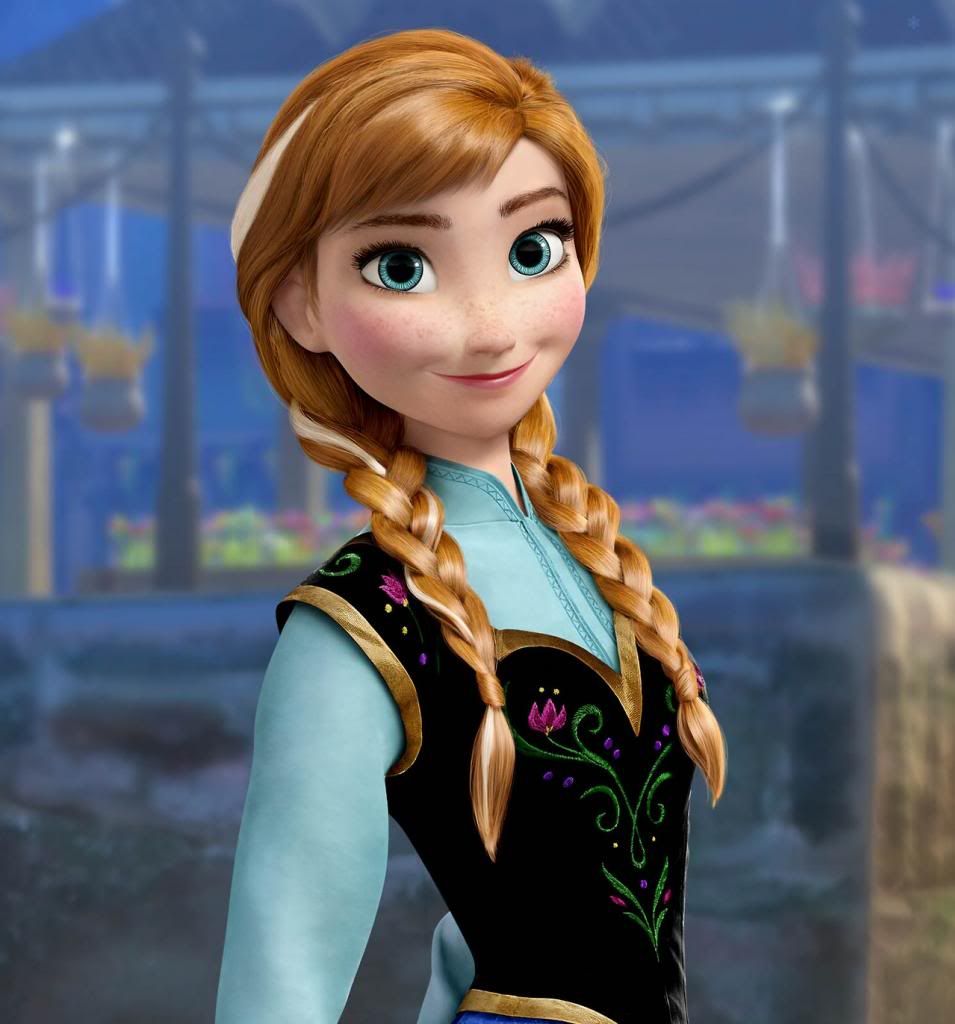
We begin with Anna, our plucky protagonist. As a child, she’s rather charming: an exuberant kid who clearly adores her sister and her powers, which she encourages Elsa to use when they play. The first misstep in her story occurs with the removal of the ice from her head. The head troll, Grand Pabbie, recommends that “we remove all magic, even memories of magic to be safe. But don’t worry, I’ll leave the fun.” What the film fails to highlight here is the fact that Anna is being brainwashed, having treasured memories altered without her consent ostensibly for her own good. Instead of allowing Anna the opportunity to decide how to respond to her near-death -- by acknowledging that it was an accident and continuing as before, or taking extra precautions to decrease the likelihood of it happening again, or even rejecting Elsa herself for her own protection -- two men in authority remove her agency. But don’t worry, it’s “for the best.”
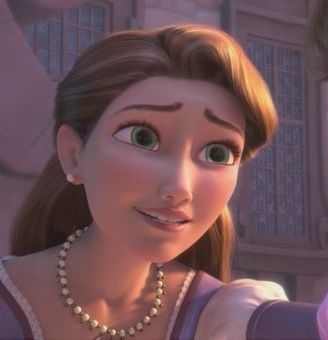
The denial of agency continues to dictate Anna’s story throughout the film. In fact, Anna is so sheltered that she isn’t even allowed to take the risk of being her own character; her resemblance to Rapunzel is the reason why I can’t stop calling Frozen Tangled on Ice. Like Rapunzel, Anna is kept inside one building for most of her life with very little opportunity to develop relationships with anyone outside of her parents and the skeleton staff that the king keeps on after the freezing incident. She’s desperate for human contact, unversed in social etiquette, and used to spending her time in the company of paintings. However, while Rapunzel was the one who did the painting (and the knitting and the guitar playing and the ventriloquy…), as far as I can tell, Anna doesn’t do much of anything. Rapunzel fills her time with a number of activities, while Anna’s hobbies seem to be limited to indoor cycling, dramatic posing with paintings, and begging her sister to spend time with her. Even locked up in a similar situation, Rapunzel displays more character depth than Anna.
Another point in Rapunzel’s favour is the focus of their respective “I want” songs. Rapunzel wants two things: to see the lanterns and to emerge from a long captivity to experience the world. Anna wants the latter, but her main goal is getting “a chance to find true love,” which she envisions as a man, “a beautiful stranger, tall and fair.” Whereas one might imagine that Anna would seek a replacement for the strong familial bond she once shared with her sister, the film depicts her as diving headfirst into dude-wrangling. She commits herself so completely to her task that she is engaged by the end of the night, to a visiting prince she’s known for a matter of hours. While several characters point out the foolishness of agreeing to marry someone with no indication of their personality save for a willingness to sing cheesy duets, it doesn’t really make up for the fact that Anna’s storyline revolves around the hunt for romantic love.
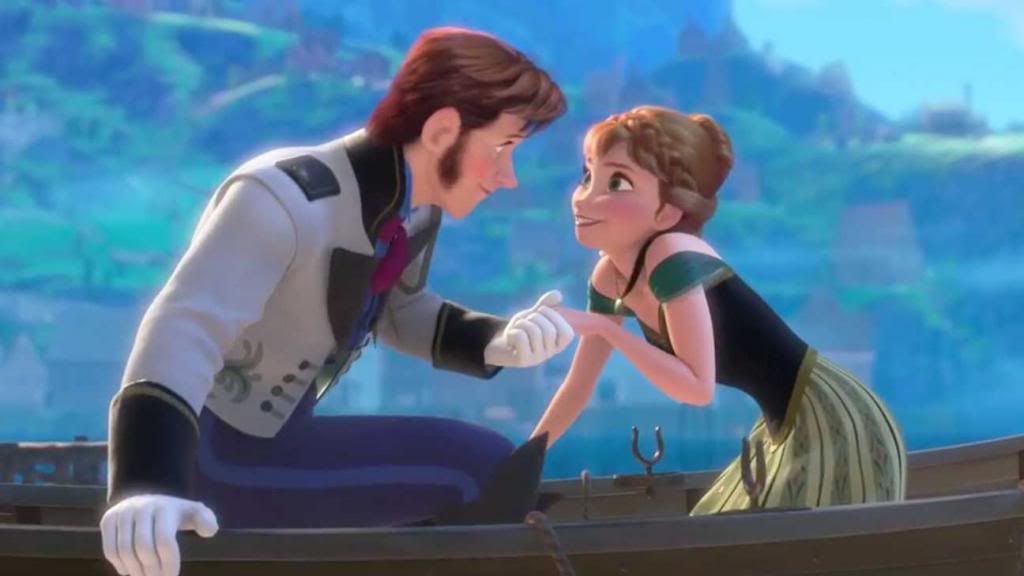
The first candidate for primary love interest is Hans, Anna’s princely fiancé. When Anna goes after the fleeing Elsa, she leaves Hans in charge of Arendelle. He immediately starts distributing cloaks and working to keep the population from freezing to death. When he believes that Anna might be hurt, he leads a search party for her. In response to accusations of Anna colluding with a sorceress whose powers may destroy everyone in the country, including the visiting dignitaries, Hans defends Anna’s decision. In addition to the care he shows for Arendelle, he appears genuinely to like and respect Anna. Yet, for reasons of lazy, nonsensical writing, he turns out to be the villain. He reveals that he faked his love and respect for Anna, using her desire for human contact in order to gain access to the throne. After he has been defeated in arguably the least climactic way possible, Anna punishes Hans by accusing him of having a frozen heart and punching him in the face. Keep in mind that this is the man who tried to kill both Anna and her beloved sister in order to steal their kingdom for himself. If the filmmakers wanted us to rejoice in a moment where Anna has gained power over the person who manipulated and belittled her, they should have shown her sending Hans off to prison herself. Instead, a male servant sends him back home to be punished by his brothers while Anna and Elsa get no mention whatsoever. Anna doesn’t defeat the bad guy; all she does is kick him when he’s down while the film practically flashes signs saying “Strong Female Character.”
The second candidate is Kristoff, the rugged mountain man who conveniently witnessed the trolls healing Anna thirteen years earlier. He’s rude, socially awkward, and condescending, but you know he’s the real love interest because he’s the one who journeys with her. Unlike Hans, who urges Anna not to sell herself short in their first meeting, Kristoff constantly belittles her. After hearing that she agreed to marry Hans on the day they met, he argues that he can’t trust her judgment. He agrees to accompany her to see Elsa not because he feels a moral imperative to fix a catastrophic situation, but because he won’t get a replacement for his demolished sled if Anna dies. Even the first indications of his fondness for her are condescending. In the scene in which Anna utterly fails to climb a mountain while Kristoff smugly looks on, the screenplay describes his reactions thusly: “Kristoff smiles, getting a kick out of her” and “Kristoff watches after her, digging her fearless pluck.” Add in the “Feisty Pants” nickname and his general inability to respect her personal space or decisions and Kristoff seems like the last person we should want Anna to end up with.
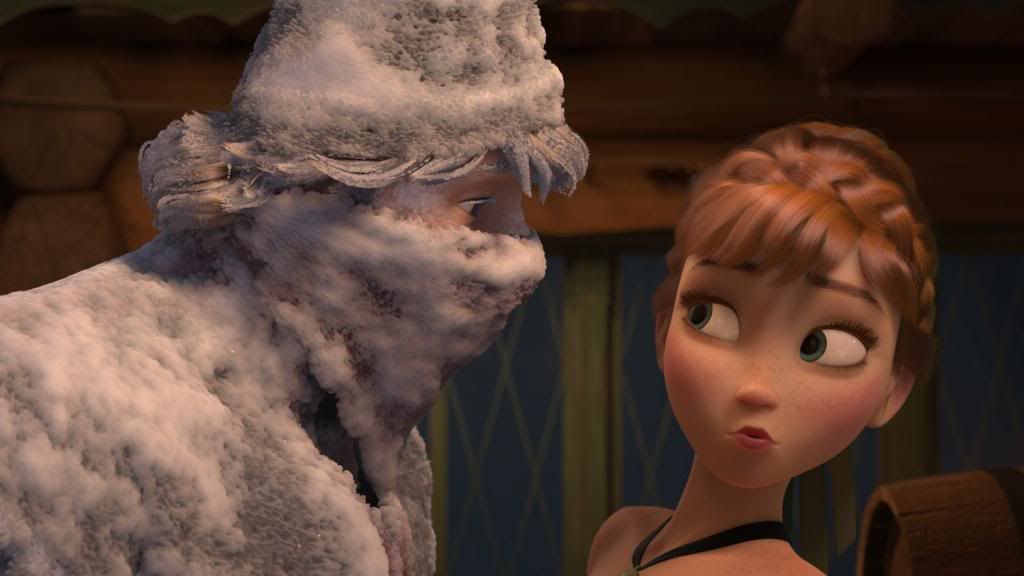
What makes this set-up even more problematic is the fact that both potential love interests follow in the king’s footsteps as men who exercise control over women. In Kristoff’s case, we are made complicit in this process, as the film’s framing encourages us to identify with him. He is introduced before the sisters, he witnesses their life-altering event, and he gets all of the action hero moments in the climax. With Hans, it’s troubling because on some level, it seems like the film is suggesting that he’s a better ruler than either of the two women. After all, he’s the one who takes care of the kingdom when Elsa abandons it and Anna leaves to look for her, neither one ensuring the well-being of their subjects. The fact that his villainous reveal comes so late in the film makes it less believable, so we are largely left with an image of two capable men who should control everything so the girls don’t have to worry their pretty little heads about it. To have Anna end up with either of these men denies her autonomy. While an empowering narrative may have had Anna confront the various violations of her agency, dating back to that initial decision to “keep the fun” and ditch the truth, the one we actually get frames just such a controlling relationship as true love.
As if this weren’t bad enough, even the supporting characters disrespect Anna and her decisions. The trolls initially treat her like livestock, Bulda observing, “Bright eyes. Working nose. Strong teeth. Yes, yes, yes. She’ll do nicely for our Kristoff.” During the song, “Fixer Upper,” the trolls dismiss her “quote ‘engagement’ [as] a flex arrangement” and attempt to wed Anna and Kristoff without their consent. Anna doesn’t get the opportunity to call the trolls out on their violation of her agency; instead, the film avoids giving her even this small shred of control over her own life, having her swoon to avoid presenting a confrontation. This gets even worse when the supporting character in question is Olaf, who informs Anna that Kristoff is in love with her. When she expresses surprise, he says, “Wow, you really don’t know anything about love, do you?” Keep in mind, by this point in the film, Olaf appears to have been alive for about a day and a half. Anna is more clueless than a character who was literally born yesterday. The final indignity is the fact that she actually listens to the talking snowman who was earlier pictured dreaming about suntanning, and therefore begins to consider Kristoff as a viable romantic option and probable true love.
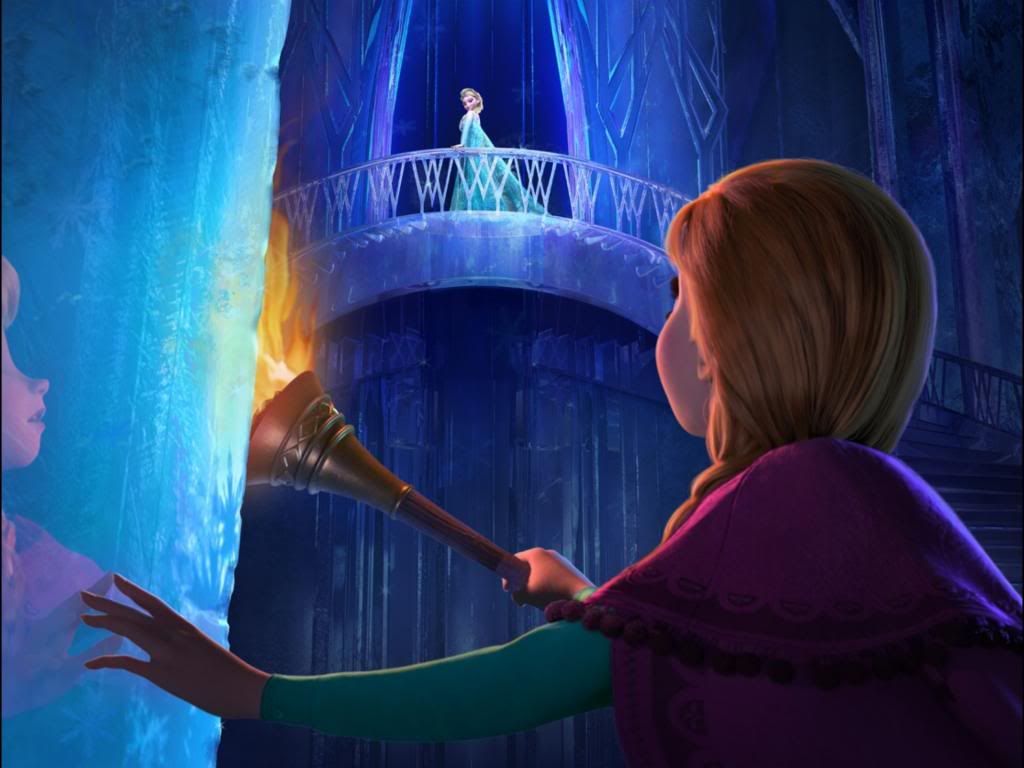
Although the film touts itself as a sister story, Anna’s relationship with Elsa is equally damaging for her character. If we look at the relationship from Anna’s perspective, it’s hardly the example of true love that the film claims it is. For the first five years of her life, Anna had a strong bond with her sister, but that suddenly ended when Elsa was moved to another room and stopped interacting with Anna at all. Because Anna’s memories of the freezing incident were removed, she doesn’t understand why Elsa has suddenly rejected her. Nevertheless, she spends years trying to get Elsa to talk to her, eventually giving up before their parents’ death drives her to try one more time. She begs Elsa to mourn with her and comfort her, but Elsa doesn’t answer, instead leaving Anna alone with her grief. When Anna informs Elsa that she’s started forming new interpersonal connections, Elsa lets her know that they will be returning to their lonely existence and lashes out at Anna with a wall of sharp icicles when Anna objects. When Anna appeals to her to fix the eternal winter, Elsa again uses her powers against Anna, this time piercing her heart with a lethal cold. Yet Anna still sacrifices herself in the name of the love that she has for her sister.
I take issue with the film’s positive portrayal of this scenario. Yes, sisterly love should get more focus in children’s films and yes, it is necessary for Disney to start interrogating its own restrictive definition of true love. However, Anna’s sacrifice for Elsa proves that she hasn’t learned anything from her experiences with Hans and Kristoff. She claims on several occasions that Elsa would never hurt her, but we know that she also thought Hans was a trustworthy person, and she had more interaction with him in one day than she had with her sister in thirteen years. She claims to know her sister, but she has no memory of the aspect of her sister that has dictated Elsa’s development for over a decade. All Anna has are childhood memories and an unconditional love to which she would, if she were a compelling, realistic character, have added some conditions.
This is ultimately the problem with the relationship on Anna’s end: it’s too perfect. Anna has every right not to trust Elsa, yet she blindly supports her. It’s as if the filmmakers were unwilling to devote more of the film to the sisters’ relationship, so they limited the damage to what they could try to repair in the half an hour or so that actually featured Anna and Elsa’s interactions. The depth of Anna’s sisterly devotion seems to be less an example of true familial love and more a cop-out to allow the film to spend more time developing Anna and Kristoff’s romance. Instead of subverting the heterosexual, romantic true love trope for which Disney is famous, it merely reinforces it.
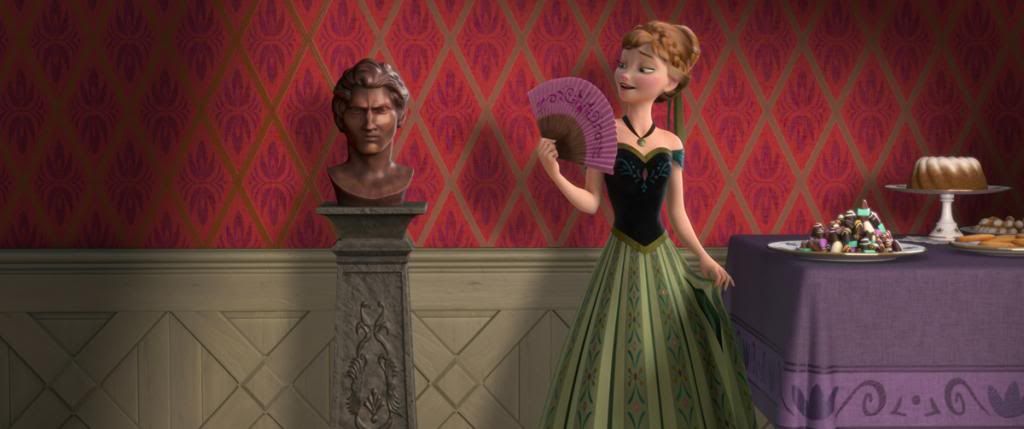
Finally, we come to the issue of Anna’s status as the protagonist. By all rights, Elsa should be the main character of Frozen. Both women are far more reactive than active, but Elsa at least attempts to take charge of her life. Elsa has the history of abuse and, while Anna was certainly neglected, she was not shamed into a ferocious self-loathing. Anna is marked by absence: she lacks memories, powers, knowledge, and agency. While it would have been fascinating to see her work to discover and regain these things, Frozen is obviously more interested in keeping her static. The men in her life -- including that freaking snowman -- make most of her decisions for her. She’s not allowed to have a truly broken relationship with her sister because fixing that relationship would require both of them to grow as people.
The only time that the film respects her decisions is when she sacrifices herself to save Elsa in an act of true love, and it’s difficult to ignore the implications of this moment. Anna temporarily becomes an ice sculpture, the pretty object that the film has subtly been transforming her into from the beginning. She sacrifices herself to save a person who has attempted -- accidentally or not -- to kill her on two occasions, yet the film still rewards her display of love for another person at the expense of the self. It is also always dubious to grant a female character agency only in situations where she is causing her own destruction, whether or not she ends up surviving. In choosing Anna as the protagonist over Elsa, Frozen privileges passivity over agency and posits an ideal princess who is little more than a bit player in a story that purports to be hers.
Verdict: Strong Female Character™

Elsa
Unfortunately, Elsa is equally problematic. In both the original story and early drafts of Frozen, the snow queen was the villain. For me, Elsa never entirely made the transition from the bad guy we’re supposed to root against to the good guy we’re supposed to root for, so we’re left with a sort of good guy that we’re just kind of ambivalent about.
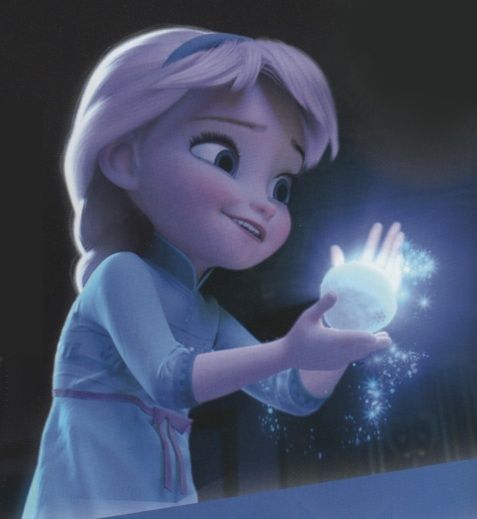
We meet Elsa on the night that defines the trajectory of her life, when her power transforms from a source of entertainment and enjoyment to a source of fear and shame. While Anna emerges from her near-death experience with no memory of the event, Elsa has it indelibly etched into her mind. After Elsa blasts Anna with her powers, the first thing her father does is blame her, asking “What have you done?” Grand Pabbie, the troll who wanted to preserve Anna’s memories of fun, has no such comfort for the eight-year-old Elsa; instead, he shows her frightening images of her magic causing other people to attack her. He claims that she will need to learn to control it, and that fear will be her enemy. Of course, he says this just after she lost control, and he gives her visual aids that are likely to scare the crap out of her.
The king’s method of controlling Anna is removing her knowledge, but in Elsa’s case, he makes her constantly aware of her dangerous difference. He takes her away from her supportive sister and the rest of the population, keeping her locked up in a room where she appears to do little else but stew in her guilt. He encourages her fear of her powers, teaching her a mantra -- “Conceal it. Don’t feel it.” -- designed to make her feel ashamed of this part of herself, even as it ostensibly encourages her to control it. When even these measures fail to neutralize her powers, he gives her gloves as a final piece of insulation from the world. She becomes entirely dependent on him, and he uses this dependence to encourage her self-loathing. While the film tries to gloss over the abuse by proclaiming the good intentions of her parents, the fact remains that Elsa arrives in the story’s present day a pretty broken person.
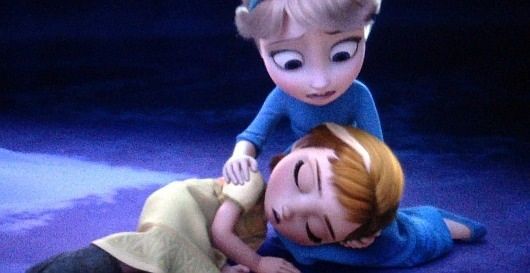
What is particularly troubling about this sequence is the fact that we learn absolutely nothing else about Elsa. We see how she is controlled, but we do not see how, or even if, she resists. Like Anna, we don’t see her do much of anything; still, even Anna does something. Literally all Elsa does is freeze things, feel guilty about freezing things, and refuse to touch anything because she’s afraid she’ll freeze it. If she finds consolation in reading, in creating art (ice sculpting, anyone?), or in imagining a normal life surrounded by people, we don’t get to see it. Because the film focuses more on Anna’s experience as collateral damage than on the systematic destruction of Elsa’s self-worth, we are denied the opportunity to identify and empathize with Elsa.
The first and only time that we’re encouraged to identify with Elsa is also the only time that she is allowed by the narrative to rejoice in her powers. When she accidentally reveals her magic at the party following her coronation, the guests turn on her. She runs from Arendelle, freezing the water beneath her feet and unknowingly bringing about a Narnia-style total winter. Even in this moment, we are aligned with Anna. However, in Elsa’s next scene, she has made her way into the mountains, where she promptly sets about rejecting the world that rejected her and claiming the mountains as her icy realm.
"Let It Go" constitutes the majority of Elsa’s character development. In the first part of the song, she repeats her father’s lessons: “Don’t let them in / Don’t let them see / Be the good girl you always have to be. / Conceal / Don’t feel / Don’t let them know.” This time, however, she realizes that “now they know” so she can “let it go.” At the same time, she removes her glove, the symbol of her shame and imprisonment. In the next verse, Elsa claims that “the fears that once controlled [her] can’t get to [her] at all.” Without this fear, she is free to “see what [she] can do / To test the limits and break through.” She further proclaims, “No right, no wrong, no rules for me… I’m free!” As she continues to sing about exploring her own undiscovered potential, she builds a massive castle out of ice. Then she gives herself a makeover, unwinding her hair and transforming her dress. In the final chorus, she triumphantly states that “that perfect girl is gone,” and shuts the audience out of her new home.

On the first viewing, “Let It Go” seems like an empowering song. It has shades of Idina Menzel’s iconic rendition of “Defying Gravity,” and, like that song, its primary message is “Screw you, I’m awesome.” Unfortunately, what and how she’s singing doesn’t match the visuals. As Bluandorange argues, “This isn’t a pop ballad, this isn’t shitty actress lipsyncing, this is a goddamn proclamation of self-acceptance and fuck all the haters. It isn’t something you sweetly coo to yourself.” Menzel’s performance is big and vibrant, whereas Elsa’s is cute and coy. She looks happy, yes, but not liberated or righteous or exhausted but accomplished. She’s just bland, and the act of raising a castle singlehandedly in the space of a minute becomes less impressive when it seems like she didn’t put any effort into it.
The first time I saw this sequence, something about the end felt terribly wrong, but I couldn’t quite explain it. Once again, Bluandorange hit the nail on the head: the filmmakers determined that they “can’t have her angry so let’s make her say her ‘fuck yous’ with bedroom eyes.” Every time that Elsa should look overtly emotional, it’s toned down in order to keep her looking attractive. After Elsa’s makeover, she not only wears a dress with a revealing slit up one leg, but walks with a pronounced sway in her hips. She speaks the song’s final line, “The cold never bothered me anyway,” directly to the camera, offering a come hither glance before she disappears into the castle. Most damning, however, is the image-lyric combination that involves Elsa proclaiming for the last time that “that perfect girl is gone” while the camera pans up her leg, revealed by the slit.
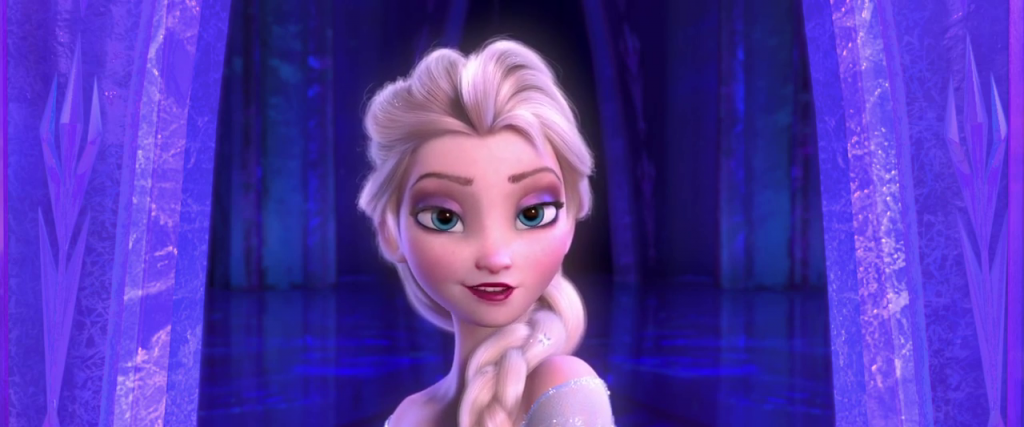
Dealing with the difference between the concept of the “good girl” or “perfect girl” and the reality of the actual woman could have provided the framework for Elsa’s development. The “good girl,” a term obviously used by her father many times over the years, is the perfect victim, a girl who submits to male authority, keeps her power hidden and useless, and polices her own actions to keep herself in line even years after her abuser’s death. With this definition of the “good girl” to overcome, Elsa might have emerged as a woman who embraces her power on her own terms. Instead, the “good girl” merely comes to represent one half of the tired, old virgin/whore dichotomy. If Elsa is no longer “good,” she must be “bad,” and that apparently requires her to get in touch with her sexual side. Even “free,” Elsa just swaps one kind of male control for another: her father’s shaming tactics for the objectifying force of the male gaze. The former encourages her to make herself small and insignificant; the latter locates her significance in her value as a sexual object. She is allowed to exercise her power as long as that power makes her attractive. Just once, I’d like to see a female character demonstrate her rejection of societal expectations by conjuring up a hoodie, a pair of jeans, and not a single toss about what others think of her.
Although it sails some pretty choppy waters in terms of unfortunate implications, “Let It Go” is ultimately sunk by its own irrelevance to the rest of the film. In another movie, the scene would have served as the first step in Elsa’s journey toward self-acceptance; this one spends the majority of its remaining time punishing Elsa for daring to think that she could have freedom or agency. The very next time we see Elsa, she learns that she has pulled an accidental Jadis and frozen her kingdom, and this knowledge drives her to admit that she can never be free of the negative consequences of her powers. The triumph of “Let It Go” is replaced with despair and panic, and this causes Elsa to lash out at Anna, striking her heart with an icy blast. Her power remains a lethal, uncontrollable force.
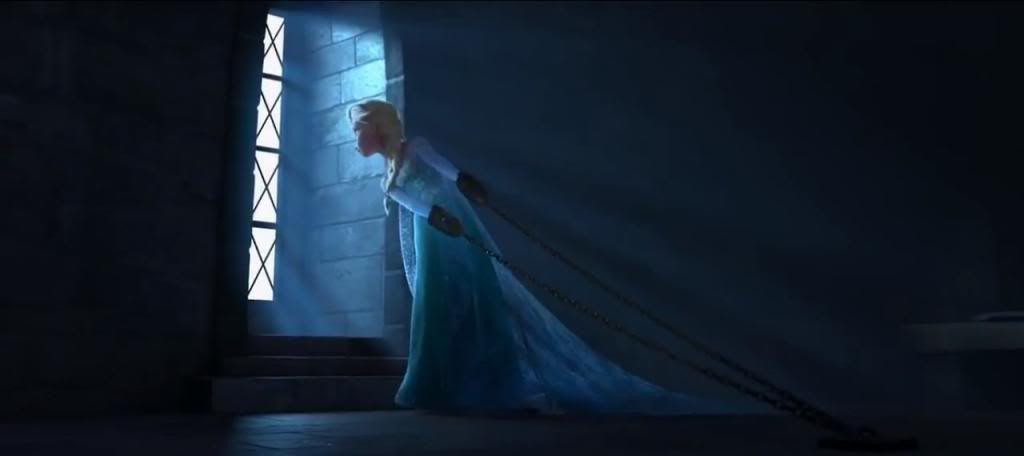
Not content with making Elsa relive the worst day of her life by having her nearly kill her sister for the second time, the film prepares more explicit punishment. Her fortress of solitude is invaded by two assassins whom she struggles to fight, despite the fact that she is surrounded by the one element that she can control. Hans prevents her from killing the men by appealing to her need not to be “the monster they fear you are.” At the same time, he redirects an arrow meant for Elsa to the ice chandelier above her head. With the help of yet another controlling man, the symbol of her power -- represented by a part of the castle formed at the height of her creative effort -- is turned against her. The ensuing crash somehow knocks her out, and she awakens chained up in her own dungeon, the gloves replaced by enclosed gauntlets and shackles. Instead of fighting back in order to reclaim her freedom, Elsa seeks release only to save Arendelle from the force of her magic. In her eyes, she is unworthy of freedom for her own sake. She is every bit the monster that they imagine her to be.
So how does one slay such a beast? With love, obviously.
Seriously. This happens.
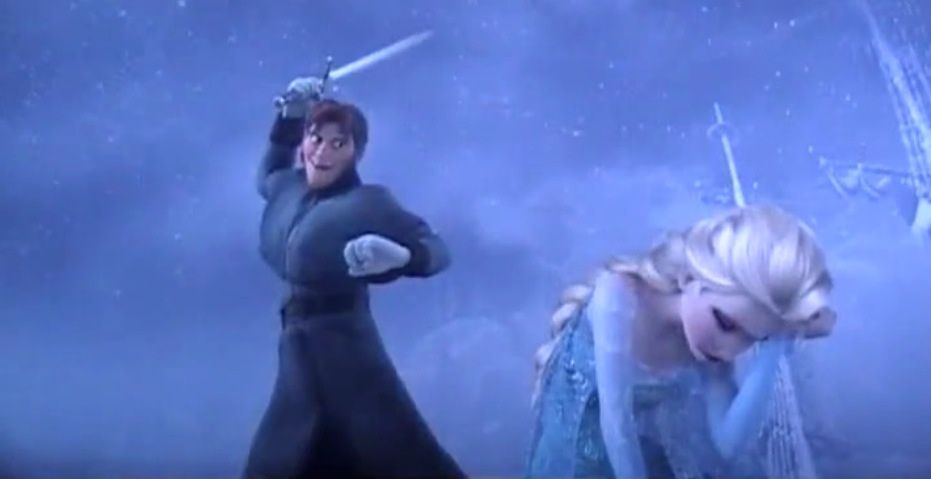
Elsa, somehow caught in the storm that she herself created, comes face to face with Hans. He tells her that Anna has died, and the storm is halted by the force of her grief. He raises his sword to deliver a blow that she is too distracted to block, and Anna sacrifices herself to save her sister’s life. In order to give Anna an opportunity to save herself, the film denies Elsa her one chance for redemption. Instead of harming Anna, Elsa could save her. Instead of freezing her by accident, she could thaw her deliberately. She could take control of her own power and find in herself the potential for positive magic. Elsa’s story would have received some form of resolution, and Anna’s unwavering faith in Elsa would have been validated. But, alas, this is not that movie. This is the kind of movie where the most important piece of character growth occurs as a result of the character in question overhearing everyone’s favourite half-baked snowman repeating a key phrase. “An act of true love will thaw a frozen heart,” so Elsa uses her love -- presumably for Anna; it’s never explicitly stated -- to restore summer to Arendelle. From this point on, she appears to have full control over her powers, and she only breaks them out to make instant skating rinks for her subjects to enjoy. And everyone lives happily ever after. Maybe. Possibly. Sort of?
The thing about this “happy” ending that we have to think about is who the film considers to be deserving of happiness, and this brings us back to the filmmakers’ choice of protagonist. While I personally dislike the resolution of Anna’s storyline, it’s clear that she gets everything she wants: friends, family, and a romantic true love. We are supposed to want Anna to succeed, so we support her friendship with a snowman whose narrative importance and screen time eclipse those of his creator. We sympathize with her need to spend time with her sister, even though every meeting results in her triggering Elsa because she doesn’t respect Elsa’s boundaries. We even back her choice of romantic partner, no matter how terrible he is for her, simply because she wanted true love and seems to think she has found it in Kristoff. So much of the film is dedicated to making the audience pro-Anna that it forgets to remind us to support Elsa, and the same goes for the ending.
Elsa ostensibly gets what she wants, but it comes at the cost of the freedom she truly desires. On the mountain, she could use her powers unhampered by the fear of hurting other people, restricted only by the limits of her imagination. In Arendelle, she must presumably spend the majority of her time focusing on her love for Anna to keep herself from freezing everything she touches. She can never get angry at Anna, even justifiably, because that emotion might counteract the effects of her love, just as her fear of her own power overwhelmed the love that kept her away from Anna in the first place. As if that weren’t enough, as far as we know, Elsa still doesn’t know how to control her powers; she learns how to thaw her ice after the fact, but there’s no indication that she ever figured out how to prevent the freezing in the first place. Considering the fact that her outbursts seem to be directly tied not only to her emotions, but to her self-worth, it’s unlikely that she’ll be able to control her powers completely until she improves her self-esteem. She needs to learn to love herself, but the film denies her this validation. Frozen could have told the story of an outsider who comes to embrace the parts of herself that society condemns in an act of self-affirmation; instead, it transforms the outsider into a dangerous Other, a threat to society that can only be neutralized by forcing her to adhere to the status quo.
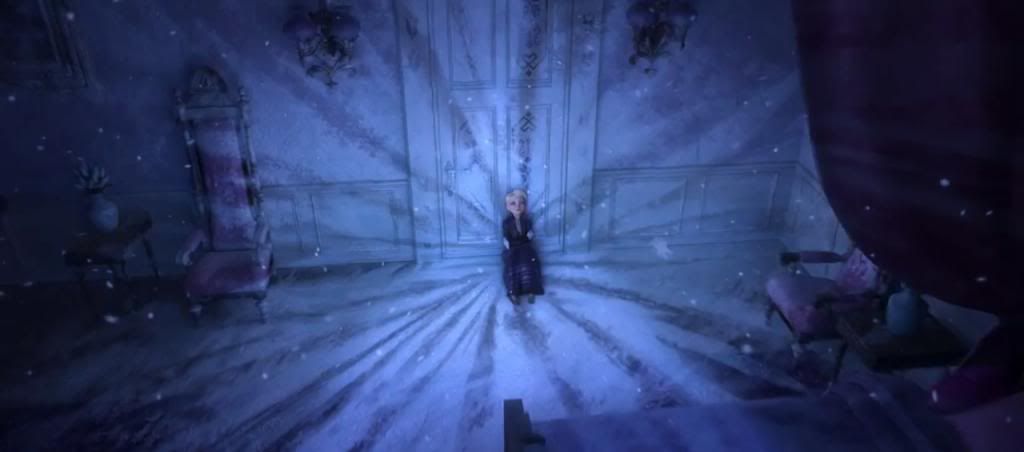
This is why I take issue with a common reading of the film that interprets Elsa’s ice powers as a metaphor for queerness. In this reading, Anna triggering the reveal of her magic would be analogous to her accidentally outing Elsa. The time she spent in her room would be the time spent in the closet, her father’s shaming a kind of conversion therapy, and her self-loathing the effect of internalized homophobia. Anna is the family member who gets painted with the same brush for supporting her sister, but is nevertheless willing to risk her own life to show Elsa that she is worthy of love. Finally, the ending shows that Elsa’s queerness can be not only accepted but valued by the society she was certain would reject her. Spelled out like this, Elsa’s storyline seems like a potential source of empowerment for many a subtext-savvy LGBTQ kid.
What that reading neglects to consider, however, is the overtly negative portrayal of Elsa’s powers. Grand Pabbie doesn’t just tell her that she has to worry about other people’s fear; he tells her that that fear is justified, because her magic is both beautiful and inherently dangerous. Her powers are explicitly lethal, and their primary target is the straight ally, whose approval she must receive before she can return to society. The citizens don’t turn against her simply because she has this queer magic, but because it starts to freeze people to death. Finally, it’s important to note that she is only accepted because her difference provides entertainment for the rest of the population; she’s safe as long as the “normal” people don’t feel threatened by her. Elsa’s story may be similar to the narratives of many LGBTQ people as well as a number of other marginalized groups, including people with disabilities and neuroatypical people. However, in every case, this similarity functions not to normalize these people, but to stigmatize them.
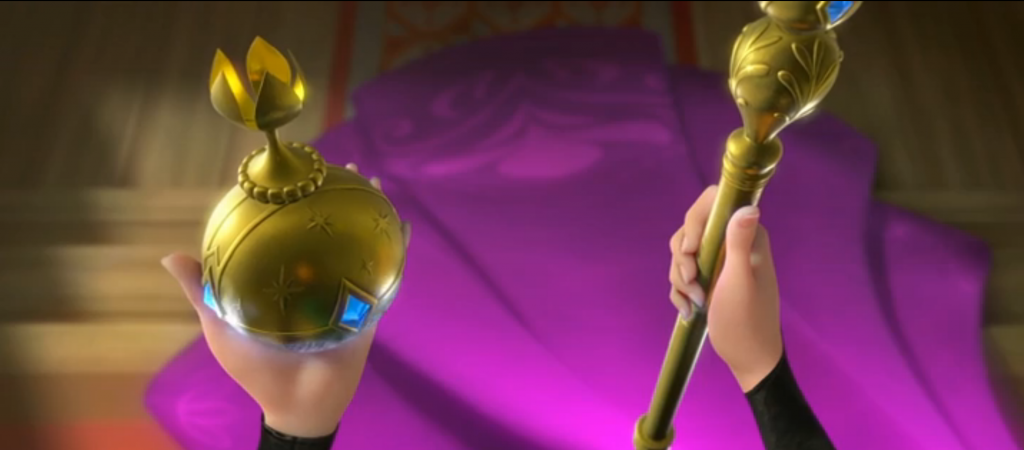
I think that the reason why so many people are turning to alternate readings of Elsa’s story is because they know on some level that it isn’t the progressive tale that it claims to be. Compare it to Brave, for instance. Like Elsa, Merida endangers both her kingdom and her family; however, the two differ in narrative treatment. Merida makes all of her own choices, while Elsa causes the central problem basically by existing and having the misfortune of being raised in an abusive household. Merida is rightfully shown to have messed up, but she fixes her mistake and is implied to become a better ruler as a result. Elsa is vilified throughout her film for an inborn trait that she can’t control or change. So, while Merida’s choice was wrong, Elsa herself is wrong. Ultimately, Brave views women’s power as a very positive thing, and its message is about using power wisely to benefit both one’s kingdom and oneself. Frozen, on the other hand, denigrates and demonizes women’s power at every opportunity, neutralizing its force by limiting its use to the creation of beauty and the demonstration of love. Hence an empowered Merida is figured as a hero, while an empowered Elsa is figured as something just short of a villain.
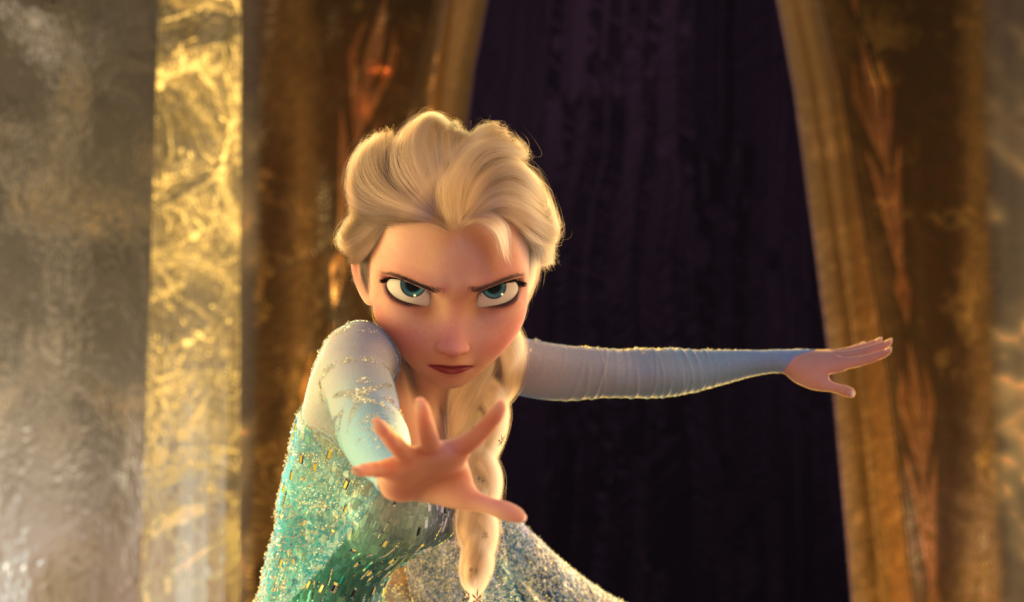
In many ways, I think that Elsa would be a more positive character, or at least a less insidiously negative one, if she were the film’s villain. Disney has a host of compelling female villains, from the Evil Queen to Maleficent, Ursula to Mother Gothel. Although these women are all eventually defeated, before that happens, every one of them enjoys significant agency and power. These stories arguably vilify women’s power, but at least they show its awesomeness before they strike it down. I mean, it’s difficult to ignore the troubling symbolism of a powerful woman being defeated as a result of impalement on the phallic prow of a ship, but seeing a leviathan of a sea witch make the sea do her bidding is still pretty cool. By contrast, Elsa is only cool in the literal sense, as she has her power undermined from the opening scene.
Frozen’s opening number shows a group of men harvesting ice while singing: “Cut through the heart, cold and clear / Strike for love and strike for fear / See the beauty, sharp and sheer / Split the ice apart / And break the frozen heart.” As Wingsandtails points out, the song is all about “destroying [the ice’s] natural shape and ‘taming’ it for human consumption” and, while the harvesters claim that the ice is “stronger than a hundred men,” they seem to hack it apart with little trouble. Because Elsa -- and, to a lesser extent, Anna -- is identified with ice, the song seems to foreshadow her disturbing narrative of disempowerment for the sake of fitting in. Even before she enters the story, her power is already being dismantled; instead of building her up, the entire narrative conspires to break her down.
Verdict: Strong Female Character™
Conclusion
While I was shopping in the Disney store the other day, I overheard a conversation between an employee and a customer who was looking for a toy for a young relative. The employee said, without a hint of irony, “I don’t have the hero right now, just the girl.” Easily the most problematic piece of marketing for Frozen was a trailer that posited several responses to its own question, “Who will save the day?” The ice guy, the nice guy, the snowman, or no man? These two examples speak volumes about the modern perception of heroism in children’s cinema, particularly in terms of who is denied the label of “hero”.
Because of its (ostensibly) central sister story and its two female (again ostensible) co-leads, Frozen would like to think of itself as subversive. But subversion isn’t pouring the same mould, colouring inside the same lines, and sticking to the same tropes, until you inexplicably veer off in another direction during the last act. It’s not undermining and demonizing women’s power until you realize that the end of the film is coming up and shove in a single scene showing this woman’s newfound societal acceptance. It’s not hyping the film as a sister story, only to focus on the romance while giving the sisters a few cursory scenes in which all they do is cause each other pain. It’s not making the female protagonist's one act of heroism an act of self-sacrifice while her male love interest gets to perform all the daring stunts. You are not shifting any paradigm when “no man” saves the day; the heroic norm is still being defined as a man, even and especially when it’s “no man.” All you’re doing is re-affirming the status quo, and this is what Frozen does best.
The first time I saw this film, I spent days trying to decide what the “real” problem is. It could be the screentime-stealing antics of the snowman, the awkward villain reveal, or the unequal power balance between the two romantic leads. It could be the glorification of an unhealthy sisterly relationship as true love, or the demonization of women’s power and agency. It could be any of the problems that I’ve discussed in this analysis, or any one of the myriad issues I didn’t touch on. But the real problem with Frozen is that it made a massive amount of money in its opening weekend, so we’ll be seeing its influence in animated films, Disney and otherwise, for years.
related article: