Jumat, 15 Maret 2013

Once There Was a Hushpuppy


“When it all goes quiet behind my eyes, I see everything that made me, flying around in invisible pieces. When I look too hard, it goes away. And when it all goes quiet, I see they’re right here. I see that I’m a little piece of a big, big universe, and that makes things right. When I die, the scientists of the future? They’re gonna find it all. They’re gonna know: Once there was a Hushpuppy, and she lived with her daddy in the Bathtub.”
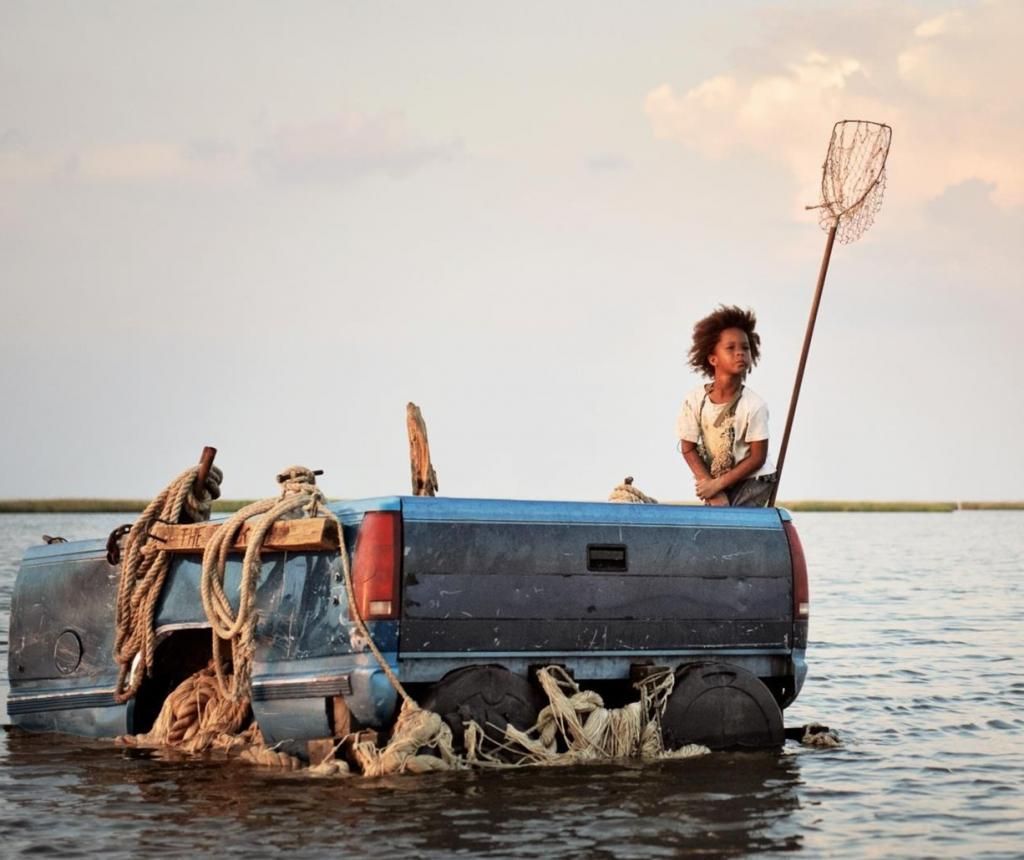
Beasts of the Southern Wild begins at the end of the world. The people of the Bathtub, segregated from society by an extensive levee, have adopted a lifestyle that emphasizes survival above all else. The Bathtub is an atypical riff on the pop cultural image of a post-apocalyptic landscape, a community where children eat their fill of whole chickens before tossing the carcass to the animals, fathers build boats out of truck beds, and everyone waits for a flood that will destroy their very way of life. It’s a portrait of a community that has learned to become self-reliant, facing the ultimate test of their ability to survive.

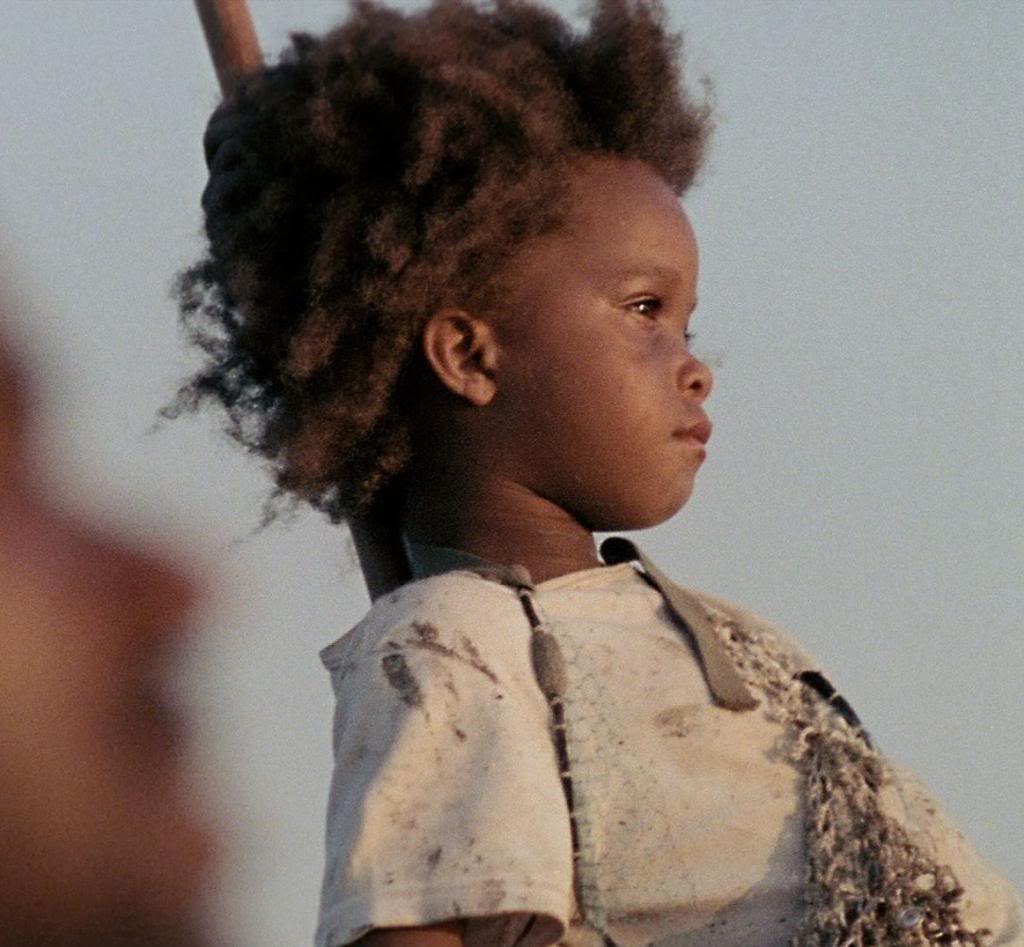
It is also the portrait of Hushpuppy, a very young girl who exemplifies the group’s irrepressible spirit. There are some things that we should establish about Hushpuppy right off the bat. Although she does live with her father, she technically lives in a separate building. As a six-year-old living in her own house, Hushpuppy must often fend for herself, and this includes preparing meals. In one memorable scene, faced with the need to heat her food, she turns on the gas, dons a football helmet, and lights the element with a flamethrower. Task complete, she returns her tools to the freezer.

What I’m establishing, of course, is that Hushpuppy is a badass. This isn’t what sets her apart from other characters, however; many films are filled to bursting with characters intent on showing us just how awesome they are. What makes Hushpuppy stand out is the fact that her awesomeness is so effortless and practical. She needs a fire, so she makes one. Later in the film, she needs to swim across a vast expanse of water, so she does. Her badassery is just a matter of fact.
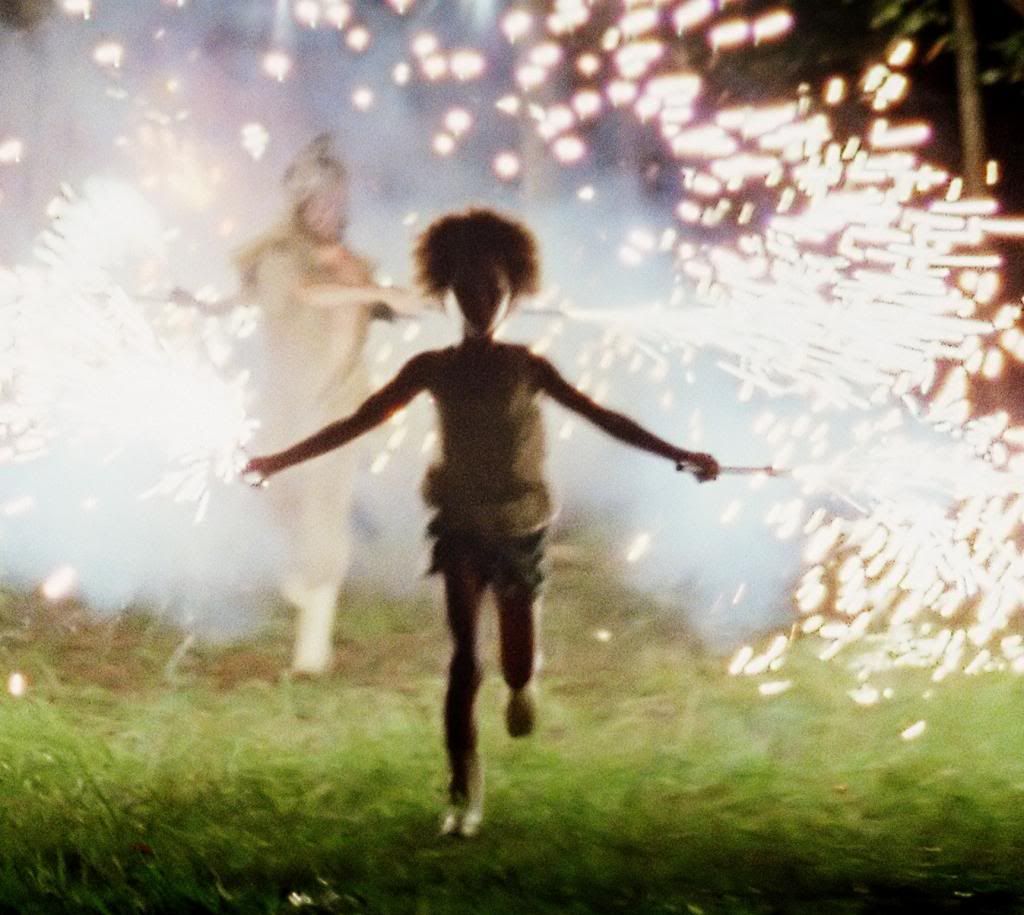
 
Still, such sincere excellence deserves to be deconstructed, and I think it’s only right that we allow Hushpuppy’s own words to be our guide. To that end, we begin by discussing “everything that made her” and, more specifically, the influence of her parents.

For the majority of the film, Hushpuppy’s mother is a conspicuous absence. Hushpuppy tells us that her mother “swam away,” and that she keeps everything her mother left behind in her house. She makes herself into a caretaker of her mother’s memory, hanging her basketball jersey on the wall beneath a drawing of her smiling face. When Hushpuppy burns her house down, her mother’s jersey is the only thing she saves. When the floods come, she keeps it safe in her grasp. Clinging to her jersey represents Hushpuppy’s only acknowledgement of her own need for comfort in the face of her father’s short temper and difficult moods. Faced with her father’s impending death, she seeks out her mother; in the flesh, the woman can only offer temporary comfort, as Hushpuppy seems to realize that hiding in her mother’s arms won’t solve anything.

In this tale, Mama is the chief magical presence and it may be because of this that she can’t stay. She is so beautiful that the stove lights itself in her presence and so fearless that she takes on alligators in her underwear, armed with a shotgun. Hushpuppy’s encounter with the woman who might be her mother echoes the meeting between an ancient Greek hero and his divine father, allowing her to acknowledge her roots and decide, at the same time, that Mount Olympus is not the place for her. The fact that the club where her mother works is called “Elysian Fields” only strengthens this mythological connection. It also suggests an alternative reading: that Hushpuppy crosses the River Styx and visits her mother in the Underworld, only to return to her father when it is his time to cross over. In place of a pomegranate, she offers fried alligator; instead of Charon’s ferry, he travels in his own truck bed boat.

The end of the world narrative that consumes Hushpuppy’s imagination has its roots not only in the global warming-induced flooding of her home, but in her father’s illness. Hushpuppy’s father, Wink, is the most important figure in her life; when she discusses the realities of existence, it is almost always in the context of what her daddy says. Because he has played an integral part in establishing her conceptualization of reality, she comes to believe that his death will be her own end. She only accepts that she can live beyond her father when he assures her of the fact.

This doesn’t mean that Hushpuppy is in any way passive or weak; it’s just a reminder that she is a six-year-old kid, and at that age “everything that made you” is still working on it. It also doesn’t mean that she never defies her father or rejects his version of events. Indeed, many of her defining moments occur in scenes where she does just that.
After Wink leaves Hushpuppy alone for a matter of days to go to the hospital, she burns down her house to get his attention. He chases her down and demands that she approach him to receive her punishment. When she refuses, he hits her and tells her that looking after her is killing him. Her response? A verbal lashing -- “I hope you die. And after you die, I’ll go to your grave and eat birthday cake all by myself” -- and a punch delivered right to her father’s heart. He falls to the ground, and his pained convulsions are interspliced with shots of melting ice caps, linking Hushpuppy’s violent actions to the coming apocalypse. This link is solidified -- at least in Hushpuppy’s mind -- when she finds the population of the Bathtub in full evacuation mode following the announcement that the storm is coming. She observes in her voice-over, “Mama, I think I broke something.”

So begins Hushpuppy’s quest to save the universe. Convinced that the universe is comprised of carefully arranged pieces and that “if one piece busts, even the smallest piece, the entire universe will get busted,” she seeks some way to undo the damage for which she feels responsible. To this end, she blows a hole in the levee and releases the flood waters, pulling the plug from the Bathtub. At the same time, she learns that there are some things that cannot be remedied, and her father’s illness is one of them. We’ve spoken before about narratives like Brave, in which the protagonist makes a mistake and must then correct it. What makes Beasts of the Southern Wild particularly fascinating is that it appears to be just this kind of film; in this mythical environment, the daughter of a magical woman should be able to fix her mistakes. However, that is not the case. Instead, Hushpuppy must learn to accept that there are things she can’t change, even as she is also discovering the extent of her ability to affect the world around her.

While learning when to accept your powerlessness may be a fascinating -- and often ignored -- lesson, what is more compelling is Hushpuppy’s journey to self-reliance. Faced with his own mortality, Wink makes it his job to teach Hushpuppy how to survive without him. He shows her how to fend for herself in practical ways, at one point teaching her how to catch fish with her bare hands. More importantly, though, he instills in her a tremendous sense of self-worth and faith in her own abilities. He refers to her throughout the film by the nickname “Boss Lady,” verbally placing her in a position of power. When he sees someone else teaching her how to pry apart a crab with a knife, he turns the task into a test of her survival ability. He tells her to “beast” it, to tear it apart and break the dorsal shell with her bare hands. What’s more, he turns it into a rite of passage, recruiting the rest of the remaining Bathtub inhabitants to chant along with him. When Hushpuppy manages to break the shell, taking to the table to flex her muscles and give a primal scream, she has earned her moment of glory.
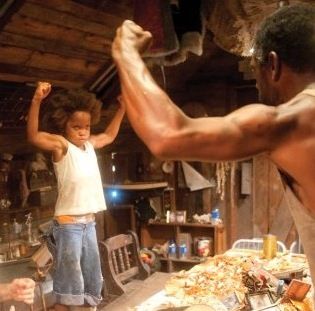
This typically masculine display fits into Wink’s larger project of making Hushpuppy into the king of the Bathtub. In a way, this highly public feat becomes Hushpuppy’s introduction to her subjects, a demonstration of her suitability to lead them. However, this is complicated by the fact that many of Hushpuppy’s accomplishments, by virtue of being part of this kingship narrative, are cast in terms of a triumph of masculinity. The most telling example of this occurs after Hushpuppy tries to confront her father about his illness and her own mortality. In order to force his way past a moment of emotional vulnerability, Wink challenges his daughter to an arm wrestling match. She wins, and responds to his question of who’s the man with “I’m the man! I’m the man!” Again, in a moment of triumph, she asserts her masculinity.

It’s a troubling aspect of the film, if only for the fact that it reminds us that a female character’s strength is often measured in terms of how well she adheres to traditional standards of masculinity. To my mind, what makes the film’s treatment of this issue slightly less problematic is the presence of two women who espouse a similar self-reliance. While Wink figures his survival lessons as, basically, passing on the lessons of manhood, both Miss Bathsheba and the Cook (who might be Hushpuppy’s mother) emphasize the necessity of being able to take care of yourself. However, Miss Bathsheba expands this definition of survival to include looking out for people who are weaker than you, building on Wink’s more selfish approach. The Cook, who serves as Hushpuppy’s third model of behaviour, brings these two ideas together by verbally instructing Hushpuppy to be responsible for her own life and, if she is the girl’s mother, physically protecting Wink from the alligator. In neither case is she seen as anything but feminine.

One of the themes of the film is finding your place in the world. While figuring out how to negotiate the dicey waters of socially constructed gender roles is part of that, the film focuses on a different aspect of relating to the universe. The first time we meet Hushpuppy, she holds a bird up to her ear and listens to its heartbeat. She then goes around to all the animals on her property doing the same thing, accompanied by her own voice-over: “All the time, everywhere, everything’s heart’s are beating and squirting and talking to each other the ways I can’t understand. Most of the time, they probably be saying, ‘I’m hungry,’ ‘I gotta poop,’ but sometimes they be talking in codes.” While she feels cut off from the meaning of these messages, she doesn’t stop trying to translate them. She even seems to have some success, discovering the source of her father’s illness in his heart.
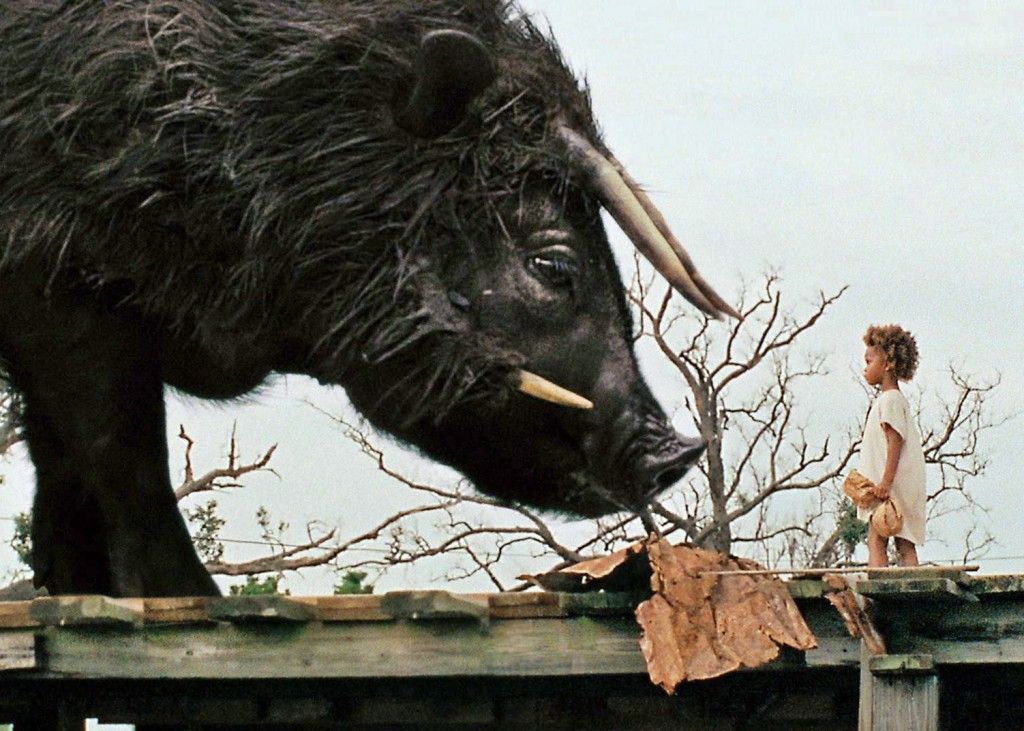
Her most impressive act of translation, however, is the one she performs with the aurochs. When the aurochs are first introduced, it is as predators who would make the deliciously named Hushpuppy their lunch. Over the course of the story, however, she comes to identify with them, evidenced by the connection she forges between the aurochs and her family members through the linguistic link of their description as “animals.” In the climactic scene, as the other girls run to get away from the aurochs, Hushpuppy’s steps remain measured and determined. She turns to face them and they bow before her. She acknowledges their offered truce, stating, “You’re my friend, kind of.” It is an incredibly powerful image: a six-year-old girl standing, unflinching, before a prehistoric giant as they come to a mutual understanding of one another.

Benh Zeitlin, the director and co-writer of Beasts of the Southern Wild, sums up the scene quite nicely:
“What interested me is that you have these two animals on the verge of extinction that are designed by nature—one is supposed to eat the other, and the other one is supposed to kill its predator in order to stay alive. But both creatures are these wise, honorable animals that understand at the end of the film that the greatest sin you can commit is to kill an animal on the verge of extinction—to kill the last of a kind. So it’s not just about your own survival. It’s about allowing each other to go on.”
Unlike a typical fairy tale narrative, in which the prince or knight slays the monster in order to prove his worth, the film allows both king and beast, prey and predator, to go on, finding its message in the continuance of life instead of its end.

This message finds its most potent expression in Hushpuppy’s self-narrativization, as she makes a point of ensuring her own immortality. She takes to painting images of her life on beds, floors, and cardboard boxes, echoing the early humans who drew aurochs on their cave walls. In this way, too, she resembles the creatures that emerged from the ice, though her survival will be less literal than theirs. By telling her own story, she seeks to make a place for herself, her father, and the people of the Bathtub in the historical record.

There is something truly epic about her assertion that people will know her name hundreds or thousands of years into the future. She is precisely the kind of person that history forgets: an impoverished Black girl living on the margins of society. Still, she speaks directly to us, expresses her experiences in art, and has faith that she will play an important role in the story of civilization. That’s plenty of reason to remember her.

Verdict: Actual strong female character

Senin, 11 Maret 2013

Miscellaneous Mondays: ECCC Round-up Part 1

After four years of attending the same comic convention, even one that is growing as quickly as ECCC, you have a pretty good idea of what to expect on the show floor. There’s the artist alley, the clothing retailers, the publishers’ booths, the creators’ tables, and the specialty stores. Because the convention organizers regularly update their site with news of special guests and displays, you may know for months in advance whose panel you’re going to attend. There aren’t many surprises.

That’s why my favourite part of the build-up to ECCC is the release of the programming schedule: it’s where you encounter the unexpected. I knew I would find things like Sir Patrick Stewart’s panel closing out the con (and knew, too, that I would be willing to weather the mass exodus afterwards because, come on, it’s Jean-Luc Picard). I did not know that I would find a two-night film festival featuring short films made by women. (I also did not know that finding such a thing in the program did not necessarily mean that I would find it at the convention, but more on that in the next Monday post...) I didn’t know that I would find two panels perfectly tailored to the interests of this blog, but there they were.

The first of these panels was one focusing on the progression of characters, both male and female, “from victim to hero.” As you can imagine, the majority of the time was spent discussing the “rape as backstory” trope, but the panelists brought up some interesting points. The four panelists -- Scott Allie, Editor in Chief of Dark Horse Comics, Mike Oeming, the artist of Powers, Kelly Sue DeConnick, the writer of Captain Marvel, and Christos Gage, a writer for Marvel who has also written for Law & Order: SVU -- all argued against the use of sexual assault as the sole means to build a female character. Oeming summarized the ‘80s and ‘90s use of rape in comics as “a catalyst to unleash mayhem and violence and craziness and stuff.” It was not about a woman coping with the physical and psychological effects of sexual assault, but about finding a way to set them off on a rampage.

The panel further discusses topics such as the treatment of the sexual assault of male characters and the differences between writing a female character as a woman and writing her as merely “a dude who just happens to have breasts.”

While I would strongly recommend that you shell out the fifteen bucks to get access to this panel (and tons of other worthwhile videos), I would also like to share with you two of my highlights, of the panel and of the convention, both provided by Kelly Sue DeConnick. When the panel discussion turned to the question of whether sexual assault is a lazy writing tool, DeConnick offered this response: “I would not be sad if we were to call a moratorium on rape, at least in superhero comics, for a few years, just to see if we could do it, you know?”

Her other comment is basically perfection and, while I’m glad that the last part of it is making the rounds on Tumblr, I think it needs to be appreciated in all its glory. Speaking about the proper way to write female characters, Kelly Sue DeConnick said this:

“I don’t require that your female characters be upstanding individuals; I’m kind of a bitch. I am wildly imperfect. I don’t require that all of the female characters that people write be role models -- I don’t want them to be. What I do require is that you allow them to be the protagonists in their own stories, and when you include women in your other books -- magically, just like men -- they need to be there as individuals with agency, with their own motivations and their own desires and their own lives. [She goes on to explain the Bechdel Test.] The Bechdel Test has plusses and minuses, like basically, for me, it boils down to what I call the “Sexy Lamp Test,” which is if I can take your female character out and put a sexy lamp in their place, you’re a fucking hack.”
Best moment of the entire convention? I think so.

Jumat, 08 Maret 2013

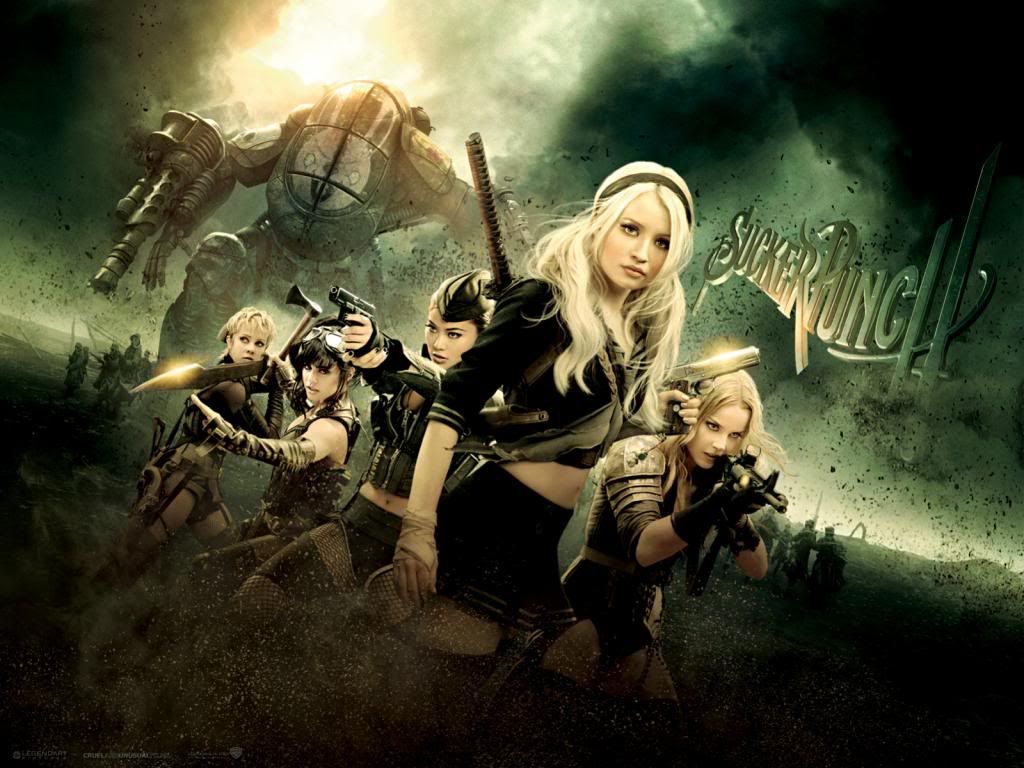
Sucker Punch


Back in November, we received a request to analyze Zack Snyder’s somewhat infamous 2011 film, Sucker Punch. It and another request, this time for a post about Hushpuppy, the main character of Beasts of the Southern Wild (coming next week), inspired the idea of a reader appreciation month, in which we put aside our carefully planned schedule for a few weeks and let you tell us what you want to see. With any luck, it would be something we’d like to see too.

Luck was not on my side this week. Don’t get me wrong; Sucker Punch is an important film and an interesting one, though only partially for the reasons the director and writers intended. It is precisely the kind of media that we need to discuss and exactly the kind of thing that I never need to see again.

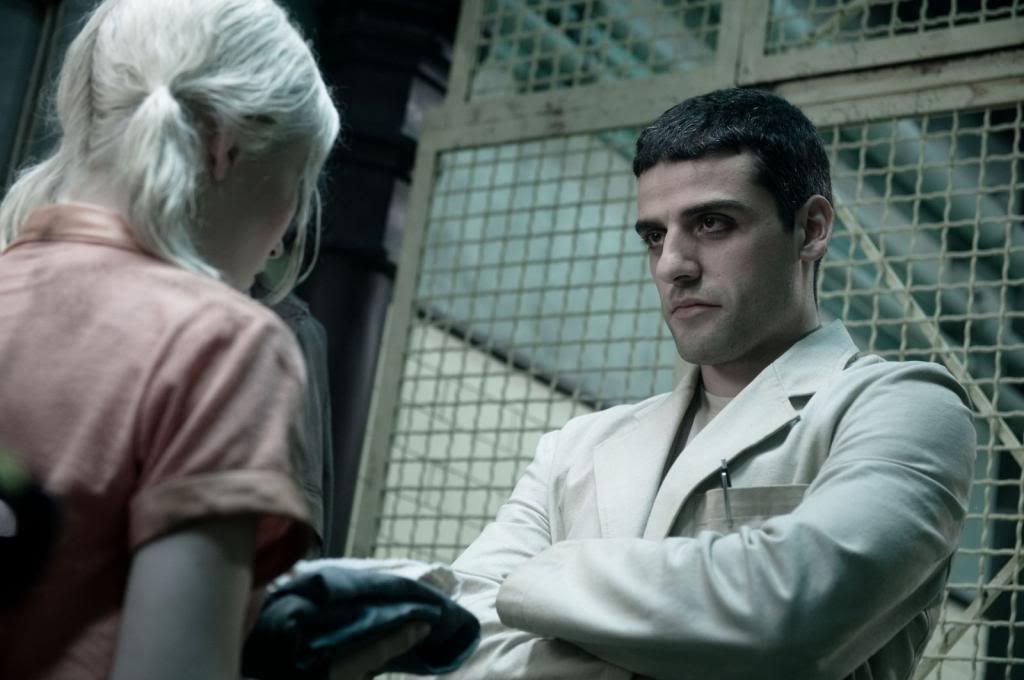
We begin with a short synopsis. Babydoll, a young woman whose real name we never learn, loses her younger sister when her abusive stepfather kills her in a fit of rage. (Or maybe Babydoll accidentally shoots her? It's weird and unbelievable and doesn't matter in the long run.) After he blames her for the crime, he has her committed to an institution for “mentally insane” women and prepared for a lobotomy within the week. When Babydoll goes under the orbitoclast, she is suddenly transported to another world, where the asylum has become a brothel, and she herself has been replaced by an actor. The actor in question, as well as all the other girls onstage, are prostitutes who put on performances in order to entice men back to the rooms for the evening. In this world, Babydoll is an orphan brought in to please a man known only as “the High Roller,” who will be arriving in five days. Faced with the necessity of perfecting her dance moves to reel said man in, Babydoll finds herself unable to perform until she imagines herself in a completely different world. Here, her dance is replaced with a video game-style action sequence and a conversation with a wise man who informs her that she must find four items in order to obtain her freedom.

Returning to the brothel world, she recruits four other women -- Amber, Blondie, Sugar Pea, and Sugar Pea’s sister, Rocket -- to help her carry out the escape plan. From that point on, the other women are included in her video game fantasies, where they form a crack team of pseudo-military operatives to retrieve the objects within the fantasy world while simultaneously recovering them in the real world, all while Babydoll dances her hypnotizing sex dance for the men they wish to dupe.

Like the triplicate world of the film, any analysis of Sucker Punch should have a few layers. First, I’d like to get into the power balance of these three worlds. In the asylum world, everything is ultimately controlled by the men. Babydoll’s stepfather controls her narrative, telling everyone that she went insane following her mother’s death and killed her sister, and filling out her commitment paperwork to describe her as a person unfit for life in society. The orderly forges the sole female doctor’s signature to order the lobotomy, promising that Babydoll won’t remember her own name after he’s done with her. In this way, he not only usurps the doctor’s authority, but seeks to annihilate Babydoll’s selfhood.

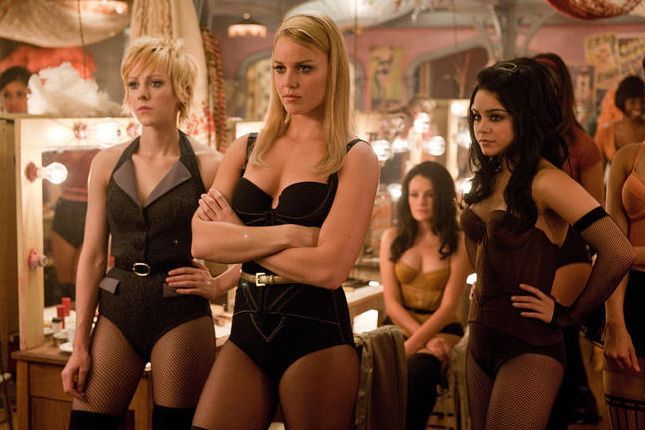
The brothel world is no better. The women’s explicitly stated purpose in the club is to bring in business, and their appearance is tailored to suit the taste of the male patrons. The orderly, now the club owner, Blue, keeps the women (including Dr. Gorski, now the dance instructor) in what is essentially indentured servitude; he further considers them to be his belongings, at one point sexually assaulting Babydoll because he doesn’t want anyone else “playing with his toys.” Any escape attempt is punishable by death, and no one has successfully avoided detection and execution.

The fantasy world is just that: the escape denied the women in their real life in the brothel. Here they find themselves with weapons and destructive power, the ability to destroy the men who threaten and control them. Their missions, which really break down to nothing more than distracting men with a performance so sexy they can’t look away while the other women pick their pockets or loot their offices, become a series of clear-cut objectives. Finishing the mission is basically a matter of completing a level. Unfortunately, even this fantasy realm is strangely presided over by a male presence, in this case an all-knowing man who gives directions at the beginning of each mission, topped off with lovely little adages like “Remember, don’t ever write a cheque with your mouth you can’t cash with your ass.” He even shows up at the end of the film to remind us that, even outside of these three environments -- asylum, brothel, and fantasy world -- women still rely on men, even to save them.

As if these power imbalances weren’t enough, this world retains the relative value system that Hollywood tends to use when it comes to the storylines of minorities. When the women suffer a sort of Pyrrhic victory during their third mission, losing Rocket even as they secure the knife, the white, blonde Rocket has a death scene in which she ties up the loose ends of her admittedly lacklustre backstory. She tells her older sister to send a message to their mother, with whom she had cut all ties when she ran away. When Amber, played by Korean-American Jamie Chung, dies, she has had no character development. All we know about her is that she seems to be nice, and in the fantasy world, she’s one of those people who can drive or fly anything. She also dies to punish Blondie for being a snitch. When Blondie, played by Filipino-American Vanessa Hudgens, dies, only a few seconds later, it is to punish Babydoll for her actions as the ringleader of the group. All we know about Blondie is that she is both slightly less nice and stupid enough to think that telling Blue all about their plan would convince him to let them live. Women of colour are implied to be less than their white counterparts.

What is less obvious is the function of the video game-style fantasy world. On the one hand, this aspect of the film could be viewed positively as an acknowledgement of the universality of power fantasies across genders, as well as a reminder that women form a significant portion of the gaming community. The fact that this is explicitly figured as Babydoll’s imaginative space suggests that the enjoyment of violence and explosions is not limited to men. On the other hand, the bland, static characters seem more like video game avatars than real people, and this results in these scenes often feeling a bit like playing a game like Tomb Raider: the women are not the players, but rather the onscreen characters male gamers ogle while playing.

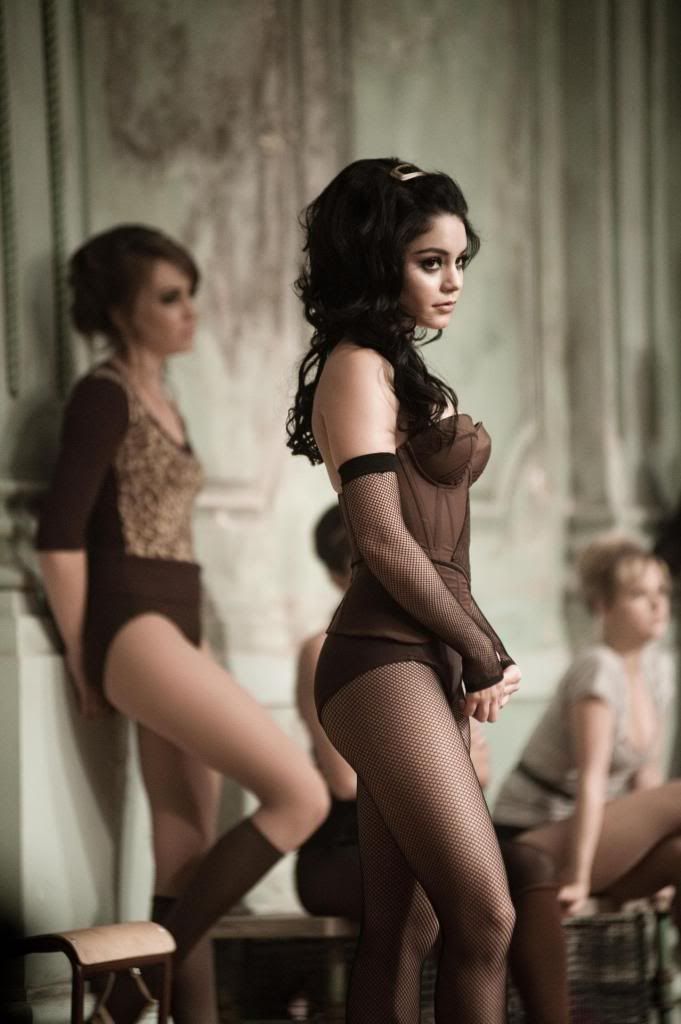
This brings us to what is perhaps the most obvious issue any representation-obsessed blogger might have with Sucker Punch: sexual objectification. In both the brothel and fantasy worlds, the women wear very revealing clothing, using the same outfits for dancing, doing chores, and kicking ass. When the film first came out, director and co-writer Zack Snyder argued in an interview with Film School Rejects that his characters’ lack of clothing coverage was a major part of his subversive project. The interviewer suggests that the film was intended as a response to the male fans at conventions who make inappropriate comments about the women cast members and to the sexism that runs rampant in geek culture. Snyder agrees, stating “Yeah! 100%. They don’t know how to be around it. It’s funny because someone asked me about why I dressed the girls like that, and I said, ‘Do you not get the metaphor there? The girls are in a brothel performing for men in the dark. In the fantasy sequences, the men in the dark are us. The men in the dark are basically me; dorky sci-fi kids.’” The film is intended to call out the audience on their voyeurism.

The problem is that, while it may have been Snyder’s intention to critique the sexist attitudes of his fellow fans, that doesn’t really come across in the final product. The glamourization of violence in the fantasy sequences becomes tied to the ridiculous outfits the women are wearing while they fight. One recurring image involves Babydoll’s high-heeled leg moving through the air as she jumps toward her enemy. Another repeated image features Babydoll in her midriff-baring schoolgirl get-up, casually walking away from explosions and collapsing buildings. If the women were wearing less revealing -- and less bizarrely infantile -- clothing in the fantasy world, I could see how this would help Snyder to make his point. The women would see themselves in more practical clothing, suitable for dangerous missions, while the men in the brothel only saw them in the costumes they used to entice customers.

But that doesn’t happen. The women remain in their work clothing even in Babydoll’s mind. This isn’t inherently sexist; a woman being a complete badass while showing some skin could quite easily be the content of a woman’s power fantasy. The fact remains, though, that it isn’t. It is a film written and directed by men, and the women operate in the way they do in order to call men out on their objectifying gaze. As J. Shea argues about this kind of situation in his post, “How to Write Empowering Female Characters,” “In such a scenario, the character's agency - even if it exists in-universe - is unpleasantly overtaken by the author's control. A female character who kicks ass and chews bubblegum and does a billion slow-mo kills in a slinky nightgown or catsuit (Aeon Flux, Resident Evil, Ultraviolet, etc) is not traditionally thought of as empowering because behind that concept is the lurking terror of a creepy, objectifying male writer or director. Even though "the writer" or "the director" don't [sic] exist in-universe, their presence is felt strongly enough that it's nearly impossible to think of such characters as being "a woman exhibiting agency". When a female character wears immodest clothing, or has large breasts, or is attractive, it's attributed to a male designer.” The fact that Snyder so explicitly frames the events of the film as a performance -- opening the film with a curtain pulling back, featuring a show in the club -- makes his presence even more heavily felt. It may be Babydoll’s fantasy, but it’s one that she shares with her creator.

The film is also incredibly confused about its message. This seems to be a necessary result of Snyder’s own conflicted ideas, perhaps best expressed in his response to another question from the same interview. Having established the purpose of his film’s sexual objectification as drawing attention to a pervasive and harmful problem in geek culture, one might think that he would suggest that Sucker Punch could open up a dialogue about this issue and hopefully lead to a more respectful portrayal of women in media, as well as a more equal relationship between men and women at conventions. Instead, he answers a question about whether it’s wrong to enjoy seeing Babydoll in her schoolgirl outfit as follows: “I have no problem with this dichotomy as to why she is in the outfit. You can say what you want about the movie, but I did not shoot the girls in an exploitative way. They might be dressed sexually, but I didn’t shoot the movie to exploit their sexuality. There’s no close-ups of cleavage, or stuff like that. I really wanted it to be up to the viewer to feel those feelings or not.” When the interviewer asks if it’s a guilty pleasure, Snyder says that “as long as you’re self-aware about it, then you’re okay.”

Leaving aside the fact that I would argue that the film is shot in an exploitative way, the fact that Snyder leaves it up to the viewer to decide whether to feel precisely the feelings he needs to produce in order to make his point seems strange. In order to point out the viewer’s complicity in this objectification, he has to make the viewer complicit. To suggest that the viewer should be allowed to continue objectifying the women, so long as they’re “self-aware about it,” contradicts his stated goal.

So it should be no wonder that the voiceover that opens and closes the film, that seems to exist in order to clarify the film’s message, merely muddies the waters. The opening portion is a rumination about guardian angels and saving ourselves, and it suggests that guardian angels are responsible for “reminding us that it’s us, it’s every one of us who holds the power of the worlds we create.” They’re like celestial cheerleaders, empowering us by reminding us how much power we already possess through our ability to imagine. The power of imagination will set you free. This lesson is fine, if a bit naïve, especially considering the fact that it is Babydoll’s mind and her mental function that suffer a brutal attack.

I’ve transcribed the final voiceover here because it really is quite something. Madam/Dr. Gorski’s voice, sans accent, states, “And finally, this question: the mystery of whose story it will be, of who draws the curtain. Who is it that chooses our steps in the dance? Who drives us mad, lashes us with whips and crowns us with victory when we survive the impossible? Who is it that tells all these things?” She continues over a scene in which Sweet Pea manages to make her getaway on a bus driven by the wise man: “Who honours those we love with the very life we live? Who sends monsters to kill us, and at the same time sings that we’ll never die? Who teaches us what’s real, and how to laugh at lies? Who decides why we live and what we’ll die to defend? Who claims us, and who holds the key that can set us free? It’s you. You have all the weapons you need. Now fight.”

On the face of it, this seems like an empowering message; you determine the way your life will go. You have tremendous agency, and it is therefore you who decides whether you will suffer and how you will become happy. You belong to yourself, and you can therefore find your own way to freedom. What this reading ignores is that all of these questions can also be answered with “the writer”. For fictional characters, it is the writer who determines all of these things, and it is dangerous to forget that characters act according to the directions of a higher will than their own. What comes across as a personal choice is actually an authorial one.

In addition to this metatextual consideration, we should remember that this voiceover is meant to reflect back on the film we just watched. Interpreted in this light, it’s actually quite disturbing. Having spent an entire film demonstrating a bunch of ways in which the patriarchy screws over women, including but not limited to sexual objectification, sexual slavery, and a long history of easy commitment to asylums by male relatives, the writers argue that everything that happens to you is determined, in some way, by you. It’s not the man who just drove an ice pick into your brain that “drove you mad,” it’s not the abusive stepfather who “lashes you with whips,” and it’s not the violent, controlling orderly who is, himself, a “monster sent to kill you.” It’s you. And if that doesn’t sound like victim blaming, I don’t know what does.

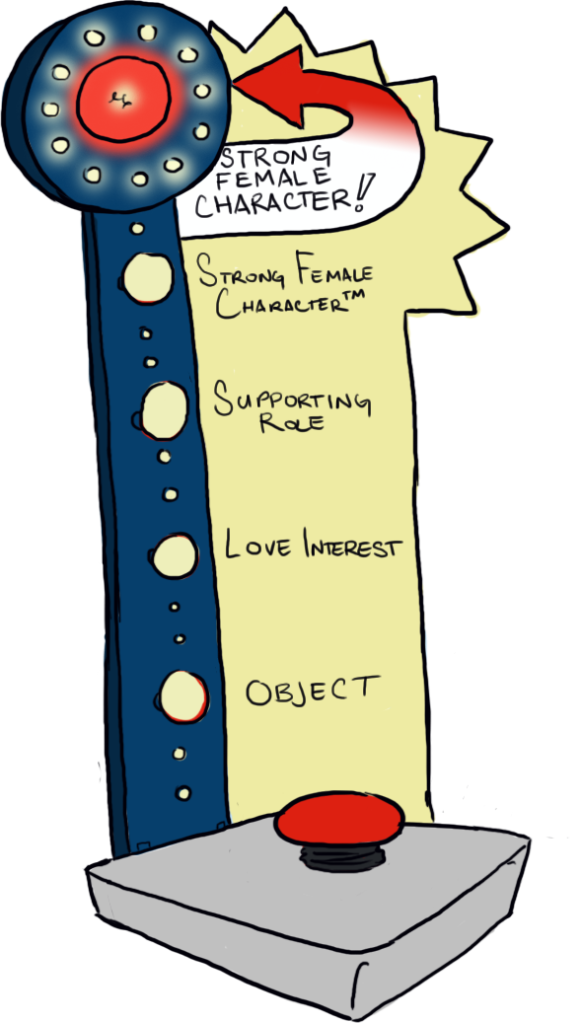
Verdict (for Babydoll et al.): The appearance of a Strong Female Character™, the soul of a Supporting Character


Senin, 04 Maret 2013

Miscellaneous Mondays: Cover Me

 
Back in December, we included a link to the Hawkeye Initiative in our comics recommendations post. The goal of that blog is to make apparent the ridiculous double standard in the visual representation of men and women in comics. While men are portrayed in powerful poses that emphasize their strength, women are depicted in the “sexiest” way possible. Here, “sexy” tends to translate as “improbable at best, impossible at worst, and always awkward.” The women on comic covers are rarely ready for the battle they are ostensibly fighting; it’s a wonder they can avoid evisceration or evade capture in their revealing costumes and stilettos.

Although it would be nice to think that this phenomenon was limited to comics, a quick perusal of any general bookstore will reveal that this is not the case. The worst offenders are found in the fantasy/science fiction genre, and up until recently, these covers have received far less attention than those of comics. Since January 2012, however, one man has taken it upon himself to prove that you can judge a book by its cover.

The man in the picture at the top of this post is fantasy author Jim C. Hines. He provides a real, physical demonstration of the ridiculousness of the poses prevalent on the covers of his genre’s books. To emphasize his point, he replicates these images using things such as Nerf guns in place of firearms; he is very much in the act of playing dress-up. That’s the point: none of the things on these covers are real. Neither men nor women can really pose like that, and if they could, they wouldn’t be able to hold it for very long. If they could, by some miracle, hold the pose, they certainly couldn’t move afterward. In fact, part of the fantasy may be the reader’s temporary belief in the character’s proficiency in contortion.

As Hines states, the problem is precisely that most people cannot see the bizarre nature of these covers without his intentionally awful reproductions: “The way women are portrayed is just so ridiculous, so often, you just stop seeing it... I think posing has made people see it again - you see how ridiculous it is when a 38-year-old fantasy writer is doing it.” The article is well worth a read, for Hines’ take on the issue (which he discussed on his own blog here) as well as the expert opinions of two women, the creative director for Tor Books and an advocate for diversity in the representation of women on book covers. If that doesn’t convince you, consider reading it for its mention of a study that proves that sex doesn’t always sell. What, a truism on which the whole entertainment industry is based may in fact be false? Perish the thought.

Minggu, 03 Maret 2013

DC Women Kicking Ass

DC Women Kicking Ass is the blog I use to get all my DC news. When I need to know how soon we’re getting a Wonder Woman movie (never), or when my favourite characters are coming back from being benched (also never), or at what point DC will finally admit that appealing to women could save the comics industry (not any time soon), I check out DCWKA. Although the blog offers a host of interesting topics and features, from a Valentine’s couples tournament to the visibility campaign that is Women Read Comics in Public Day, it is the blogger’s dogged optimism that is most appealing. To be able to keep advocating for change in an industry that sometimes seems hell-bent on maintaining the status quo is admirable; to do so in a way that makes others feel that there’s hope is downright heroic.

Sabtu, 02 Maret 2013

Escher Girls

Escher Girls is a blog whose mission statement is “to archive and showcase the prevalence of certain ways women are depicted in illustrated pop media, specifically how women are posed, drawn, distorted, and sexualized out of context, often in ridiculous, impossible or disturbing ways that sacrifice storytelling.” In other words, it’s the blog you feel like creating every time you visit the local comic shop or the graphic novel section of a brick and mortar bookstore and see what passes for anatomical accuracy on the covers. It isolates in concise snippets of snark the disturbing attitude toward women that pervades the comics industry. It won't make you feel better about the state of comics, but it will make you laugh.

Jumat, 01 Maret 2013

Reader Submission: She-Hulk!

To kick off our Reader Appreciation Month we have a submission from Jai (resident artist and all-around excellent person), extolling the virtues of She-Hulk:
Art by Adi Granov.

SHE-HULK. As Jen Walters, she's a really smart, well educated lawyer, but she's always been in the background of everything; once she gets a blood transfusion from her cousin Bruce Banner, she becomes She-Hulk - which affords her the chance to finally be the centre of attention!

I started reading She-Hulk is when there was a revival of her solo series; I bought (and still buy, when I have the money) the trades. At that point in Marvel 'verse, she was part of the Avengers. We're introduced to her through a party - a really big party - and then her waking up with a random dude the next morning. She's large and in charge and she takes every advantage of it; but the rest of the Avengers are worried it's taking a toll on her Superhero-ing. So they tell her they're worried about her, and think she should take some time off. The dude she was sleeping with tells her she's shallow. (He's an underwear model.)
Around the same time, she gets an offer at a Law firm - apparently one of the best in New York. So, given the suggestions of her teammates and this new opportunity, she decides to go for it. But there's a catch: she can't do it as She-Hulk. She has to do it as Jen.

For the most part that's played super well - it's about her learning to have confidence in herself and her awesomeness and the fact that she's a really good lawyer, even when she's not this super hot super strong super hero babe.
To top it all off, the law firm she ends up working for has a specific division of its company they want her for: the Super Human Law division. Where people who've just gained super-human powers can sue the companies that left the radioactive waste just out and about. Or villains can sue heroes for excessive force. It's pretty great, and doesn't take itself too seriously at all. The best story in the first trade (I think it's in the first trade) is when Spider-Man decides to sue J. Jonah Jameson for slander. Jameson eventually ends up saying "Well, shouldn't you be including Peter Parker in on this?! He's the one who sells me the photos!" And so Spider-Man (who is Peter Parker, of course) can't realistically say "Nah I don't wanna sue that guy, just you," without giving a really good reason. So he settles out of court.

What they end up settling on?

J. Jonah Jameson and Peter Parker have to stand right outside the Daily Bugle offices holding signs saying (I think) “I'm Sorry” and handing out leaflets about how they were wrong.
While wearing Chicken Suits.

The series does have its serious spots, as well, but overall it's a super well crafted fun romp with a really strong female lead learning to love herself FOR HERSELF and no one else, it's got lovable background characters who have character arcs of their own, the stories and well written, the art is great... All in all, I'm pretty in love with it.