Tampilkan postingan dengan label zack snyder. Tampilkan semua postingan

Senin, 24 Juni 2013

Why We Don’t Need a Wonder Woman Movie (Yet)

Aaron Lopresti and Hi-Fi

(Note: Contains spoilers for Man of Steel and the Dark Knight trilogy.)

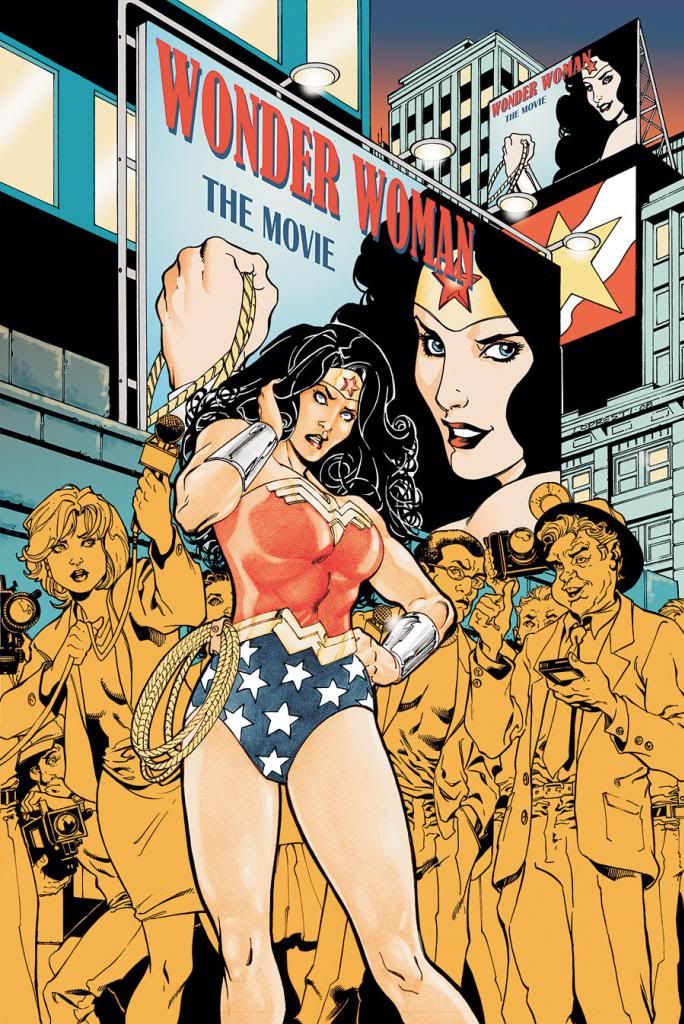
Every time a new superhero film comes out, someone will inevitably publish an article asking why a live-action Wonder Woman film has never been made. With the recent release of Man of Steel, this question has again been raised, and this time, some vague answers have actually been given.

For the most part, these answers have been as promising as vague, noncommittal, unofficial assurances can be. David S. Goyer, the screenwriter responsible for Man of Steel and all three of Christopher Nolan’s Batman films, was recently asked about rounding out his portfolio with the third member of DC’s Trinity: “I think Wonder Woman is a very difficult character to crack. More difficult than Superman, who is also more difficult than Batman. Also, a lot of people in Hollywood believe that it’s hard to do a big action movie with a female lead. I happen to disagree with that. But that tends to be the prevailing wisdom. Hopefully that’ll change in the next few years.” A few days ago, The Wrap reported that Warner Bros. is planning to make Wonder Woman the focus of a film following the release of the fabled Justice League movie. There is also further evidence of the studio’s interest in getting a Wonder Woman-focused project off the ground in their repeated attempts to make the character work in a television show. While the 2011 attempt proved disastrous, plans are still in the works to prepare a series for the CW, whose president, Mark Pedowitz, has stated, “We do not want to produce something that doesn’t work for that particular character -- it is the trickiest of all the DC characters to get done.”

That’s precisely the problem: it’s hard to get Wonder Woman right, particularly when there are hundreds of millions of dollars on the line. My solution? Don’t try.
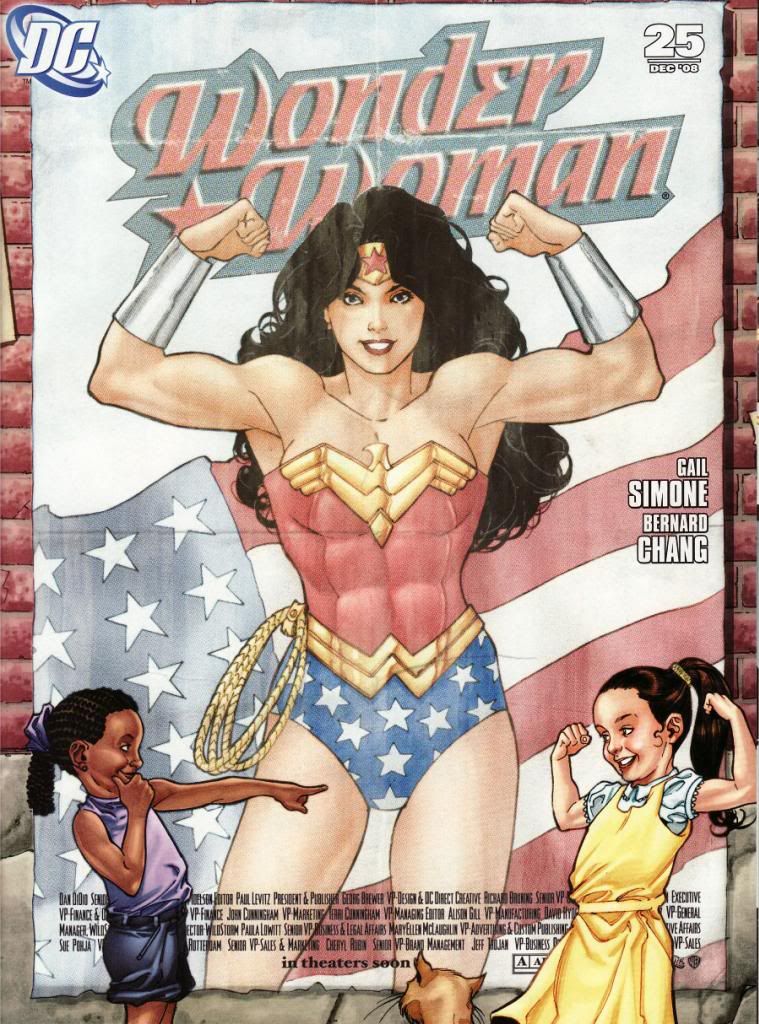
Aaron Lopresti
This may seem like a shocking assertion to be made by a comics fan who runs a blog all about strong female characters. By all rights, I should be the first person in line for a Wonder Woman film, bracers on my forearms and the double W emblazoned on my chest. And I will be, when the right time comes, but now is not that time. (Neither is 2017, which is the earliest we can hope to see the film released.) In fact, while this may be a good time for Diana of Themyscira to take another crack at television, it is the worst possible time for her to break into the Man’s World that is mainstream Hollywood cinema.

Before you pelt me with fruit and force me to perform my own version of bullets and bracelets, let me explain.

Reason #1: This is not the creative team we are looking for.

Christopher Nolan, the director of the Dark Knight trilogy and producer of Man of Steel, makes dark, overly realistic superhero films with fairly flat, lacklustre female characters. He’s all about the male “lonely god” figure. Wonder Woman, by contrast, is both a complex woman and a character of community.

Zack Snyder, who directed Superman’s latest foray, previously made Watchmen, which suffered from being an almost too accurate adaptation. He made up for that dedication to getting things right by getting Superman all wrong, namely by advocating for Kal-El to murder Zod, despite the fact that this goes against everything that the character stands for. Snyder also wrote and directed Sucker Punch, which is enough reason to keep him far, far away from Diana.

As the writer of all four of the aforementioned Batman and Superman films, David S. Goyer is both clearly not the person we want to write the Wonder Woman movie, and the person who will ultimately get tapped for the job (if it doesn’t go to the writers of the Green Lantern movie that flopped). This is beyond concerning, considering the fact that Goyer said himself that Wonder Woman is more difficult to write than Superman. Keep in mind that Goyer gave us a Superman who snaps his enemies’ necks, willingly fights said enemies in densely populated areas with no concern for the humans he purports to want to save, and, perhaps worst of all, doesn’t engage in witty, sarcastic banter with Lois Lane (who knows his identity almost from the outset). It was bad enough when Goyer and Nolan ignored decades of sidekicks to make Batman the hero who works alone, but completely disregarding fundamental aspects of Superman’s character is unforgivable.

If this is what they do to Superman, imagine what they would do to Wonder Woman, who snapped a man’s neck in the same issue where she was punched from outer space to Earth, and prayed not for her own safety, but for a landing that caused no human casualties. The complexities of her character would be lost on a creative team that fails to grasp even the basics of the Big Blue Boy Scout.
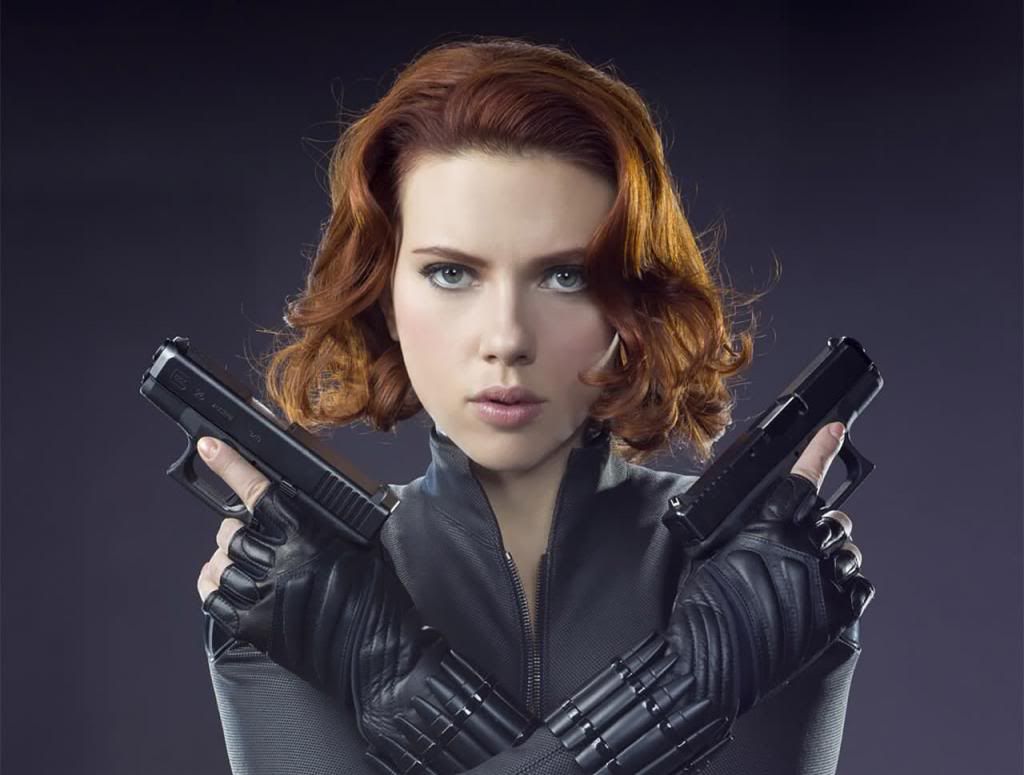
Reason #2: A failure will put female superhero films on hold for years, if not decades.

If you go to a multiplex this summer, you will see ample evidence that Hollywood doesn’t need an excuse not to make a film about women. Consider the fact that, following the release of The Avengers and the near universal praise of the Black Widow character, Marvel and Disney decided to make sequels to all of their male superhero franchises, as well as a Guardians of the Galaxy film, instead of going with the more obvious choice of What Happened in Budapest Or, Why Natasha Romanoff is More Compelling Than Yet Another White Dude. Because of a (very short) string of terrible woman-led superhero movies, including Catwoman and Elektra (nine and ten percent on Rotten Tomatoes, respectively), we need an unqualified hit to show that superheroic women can sell tickets, and a stand-out in an ensemble film apparently isn’t enough.

What complicates the situation further is the fact that Wonder Woman is the female superhero. When you ask a person who doesn’t read comics to name a woman superhero, Diana’s is likely the first name that will come up. She’s just about the only woman familiar to the masses whose alter ego isn’t a riff on a previously established male hero. She’s the one woman who has to be on the Justice League roster for the general audience to consider it complete. Because of this, she is also the greatest risk.

If a poorly made film featuring a minor female superhero is a box office flop, Hollywood executives will claim that audiences don’t want to see women donning capes and tights and fighting crime. We will know better, and dozens of articles will be written explaining the real reasons behind the failure. Eventually, someone might try again. However, if a Wonder Woman movie fails, especially one made by the current “dream team,” executives will have a more legitimate reason to shy away from super-powered ladies. If even the biggest name can’t draw in the crowds, why try?

It’s not terribly sound logic, but it’s the logic that will likely be applied.

Solution

I had initially planned to provide more reasons, but it really does boil down to those two: a failure to do Wonder Woman well would have disastrous results, and the creative team most likely to be assigned the job seems to lack the capacity to do the character well.

Kano and Stefano Gaudiano
This brings me to my proposed solution: DC/Warner Bros. and Marvel/Disney should make a bunch of superhero movies starring women, using creative teams that know, love, and understand the characters. If the studios are concerned that they won’t make enough money, they should make the first few films with smaller budgets and let the audience prove that they are willing to pay. In the age of Kickstarter and the Facebook campaign to get people to see Bridesmaids, we are well aware that our dollars act as votes in favour of the production of similar content. If enough of us pay to see movies about female superheroes and let executives know that we saw those movies specifically for those women, we make making those films worth their while.

I also think that the studios should capitalize on the franchises they already have, not by adding sequels starring Yet Another Straight White Guy, but by fleshing out the universe. Marvel has already grasped this idea, and DC should follow their lead. Christopher Nolan is done with Batman, but that doesn’t mean that his Gotham can’t be used to tell the stories of people like Helena Bertinelli or Cass Cain. The presence of an already established Commissioner Gordon gives Warner Bros. the opportunity to create two new franchises: Batgirl and Gotham Central.

Although The Dark Knight suggests that Gordon’s son was more profoundly affected by the family’s encounter with Batman, it wouldn’t take much to show how the same event influenced his daughter, Barbara, the Gordon offspring we already know and love. In a film trilogy, we could follow her from the beginning of her career as Batgirl, through the shooting that left her partially paralyzed, and finish with the establishment of the Birds of Prey.

Like Agents of S.H.I.E.L.D., Gotham Central would be a television spin-off of a successful franchise. The series could take place just after the events of The Dark Knight Rises, when Batman’s sudden absence drives the GCPD to shift the Major Crime Unit’s focus exclusively to the criminal activities of the Caped Crusader’s rogues gallery. We would see Robin finding his footing from the perspective of the officers who knew his predecessor, and we would watch Renee Montoya’s development from a police officer to a superhero over the course of the show.
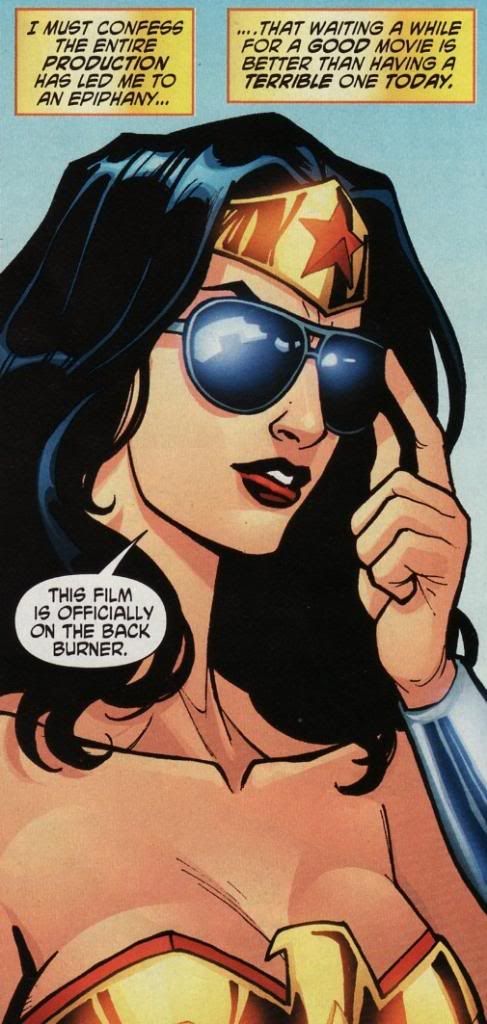
Bernard Chang
My last suggestion is to tell diverse stories in order to attract diverse audiences. An indie-style film about Batwoman -- a gay, Jewish former West Point cadet kicked out under DADT -- would sell very well, and it wouldn’t require the entire population of the United States to see it to make money. The Marvel comic, Runaways, featuring a teenaged cast full of racial and sexual diversity -- not to mention four girls in its original line-up -- was on its way to being made a few years ago, and it’s time for it to get the Hollywood treatment (sans the usual whitewashing and fetishization of queerness). A white, male, cisgender, heterosexual hero may have a whole host of abilities, but he doesn’t have the power to satisfy every kind of viewer.

So, no, I don’t think we need a Wonder Woman movie yet. I think that we need to prove to the Hollywood money-making machine that people want to see women saving the world while wearing slightly ridiculous outfits. I think we need to show every naysayer that women are capable of being more than love interests who play second fiddle to their saviour boyfriends. And then, when we have proven that women are every bit as heroic as men, that’s when we make Wonder Woman, because that’s when we’ll be ready to tell her story right.

Jumat, 08 Maret 2013

Sucker Punch


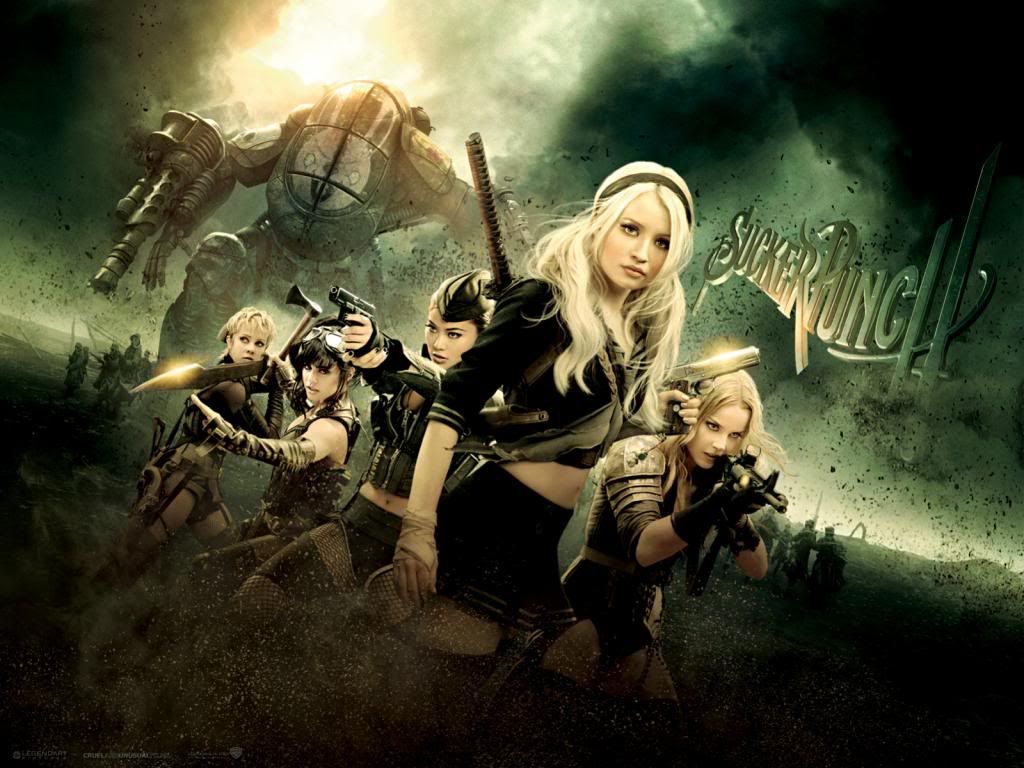
Back in November, we received a request to analyze Zack Snyder’s somewhat infamous 2011 film, Sucker Punch. It and another request, this time for a post about Hushpuppy, the main character of Beasts of the Southern Wild (coming next week), inspired the idea of a reader appreciation month, in which we put aside our carefully planned schedule for a few weeks and let you tell us what you want to see. With any luck, it would be something we’d like to see too.

Luck was not on my side this week. Don’t get me wrong; Sucker Punch is an important film and an interesting one, though only partially for the reasons the director and writers intended. It is precisely the kind of media that we need to discuss and exactly the kind of thing that I never need to see again.

We begin with a short synopsis. Babydoll, a young woman whose real name we never learn, loses her younger sister when her abusive stepfather kills her in a fit of rage. (Or maybe Babydoll accidentally shoots her? It's weird and unbelievable and doesn't matter in the long run.) After he blames her for the crime, he has her committed to an institution for “mentally insane” women and prepared for a lobotomy within the week. When Babydoll goes under the orbitoclast, she is suddenly transported to another world, where the asylum has become a brothel, and she herself has been replaced by an actor. The actor in question, as well as all the other girls onstage, are prostitutes who put on performances in order to entice men back to the rooms for the evening. In this world, Babydoll is an orphan brought in to please a man known only as “the High Roller,” who will be arriving in five days. Faced with the necessity of perfecting her dance moves to reel said man in, Babydoll finds herself unable to perform until she imagines herself in a completely different world. Here, her dance is replaced with a video game-style action sequence and a conversation with a wise man who informs her that she must find four items in order to obtain her freedom.

Returning to the brothel world, she recruits four other women -- Amber, Blondie, Sugar Pea, and Sugar Pea’s sister, Rocket -- to help her carry out the escape plan. From that point on, the other women are included in her video game fantasies, where they form a crack team of pseudo-military operatives to retrieve the objects within the fantasy world while simultaneously recovering them in the real world, all while Babydoll dances her hypnotizing sex dance for the men they wish to dupe.

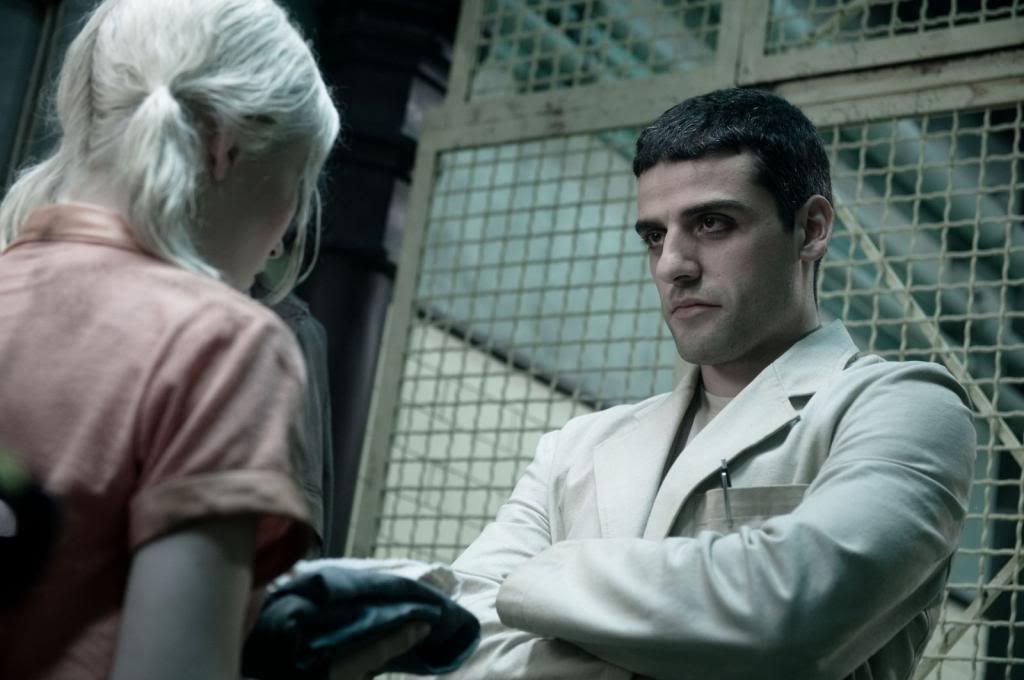
Like the triplicate world of the film, any analysis of Sucker Punch should have a few layers. First, I’d like to get into the power balance of these three worlds. In the asylum world, everything is ultimately controlled by the men. Babydoll’s stepfather controls her narrative, telling everyone that she went insane following her mother’s death and killed her sister, and filling out her commitment paperwork to describe her as a person unfit for life in society. The orderly forges the sole female doctor’s signature to order the lobotomy, promising that Babydoll won’t remember her own name after he’s done with her. In this way, he not only usurps the doctor’s authority, but seeks to annihilate Babydoll’s selfhood.

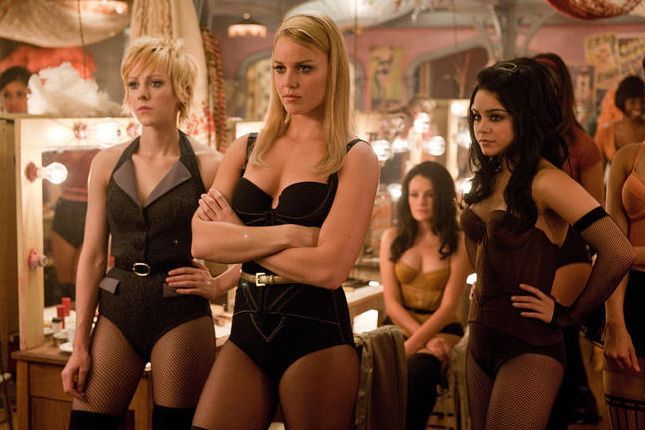
The brothel world is no better. The women’s explicitly stated purpose in the club is to bring in business, and their appearance is tailored to suit the taste of the male patrons. The orderly, now the club owner, Blue, keeps the women (including Dr. Gorski, now the dance instructor) in what is essentially indentured servitude; he further considers them to be his belongings, at one point sexually assaulting Babydoll because he doesn’t want anyone else “playing with his toys.” Any escape attempt is punishable by death, and no one has successfully avoided detection and execution.

The fantasy world is just that: the escape denied the women in their real life in the brothel. Here they find themselves with weapons and destructive power, the ability to destroy the men who threaten and control them. Their missions, which really break down to nothing more than distracting men with a performance so sexy they can’t look away while the other women pick their pockets or loot their offices, become a series of clear-cut objectives. Finishing the mission is basically a matter of completing a level. Unfortunately, even this fantasy realm is strangely presided over by a male presence, in this case an all-knowing man who gives directions at the beginning of each mission, topped off with lovely little adages like “Remember, don’t ever write a cheque with your mouth you can’t cash with your ass.” He even shows up at the end of the film to remind us that, even outside of these three environments -- asylum, brothel, and fantasy world -- women still rely on men, even to save them.

As if these power imbalances weren’t enough, this world retains the relative value system that Hollywood tends to use when it comes to the storylines of minorities. When the women suffer a sort of Pyrrhic victory during their third mission, losing Rocket even as they secure the knife, the white, blonde Rocket has a death scene in which she ties up the loose ends of her admittedly lacklustre backstory. She tells her older sister to send a message to their mother, with whom she had cut all ties when she ran away. When Amber, played by Korean-American Jamie Chung, dies, she has had no character development. All we know about her is that she seems to be nice, and in the fantasy world, she’s one of those people who can drive or fly anything. She also dies to punish Blondie for being a snitch. When Blondie, played by Filipino-American Vanessa Hudgens, dies, only a few seconds later, it is to punish Babydoll for her actions as the ringleader of the group. All we know about Blondie is that she is both slightly less nice and stupid enough to think that telling Blue all about their plan would convince him to let them live. Women of colour are implied to be less than their white counterparts.

What is less obvious is the function of the video game-style fantasy world. On the one hand, this aspect of the film could be viewed positively as an acknowledgement of the universality of power fantasies across genders, as well as a reminder that women form a significant portion of the gaming community. The fact that this is explicitly figured as Babydoll’s imaginative space suggests that the enjoyment of violence and explosions is not limited to men. On the other hand, the bland, static characters seem more like video game avatars than real people, and this results in these scenes often feeling a bit like playing a game like Tomb Raider: the women are not the players, but rather the onscreen characters male gamers ogle while playing.

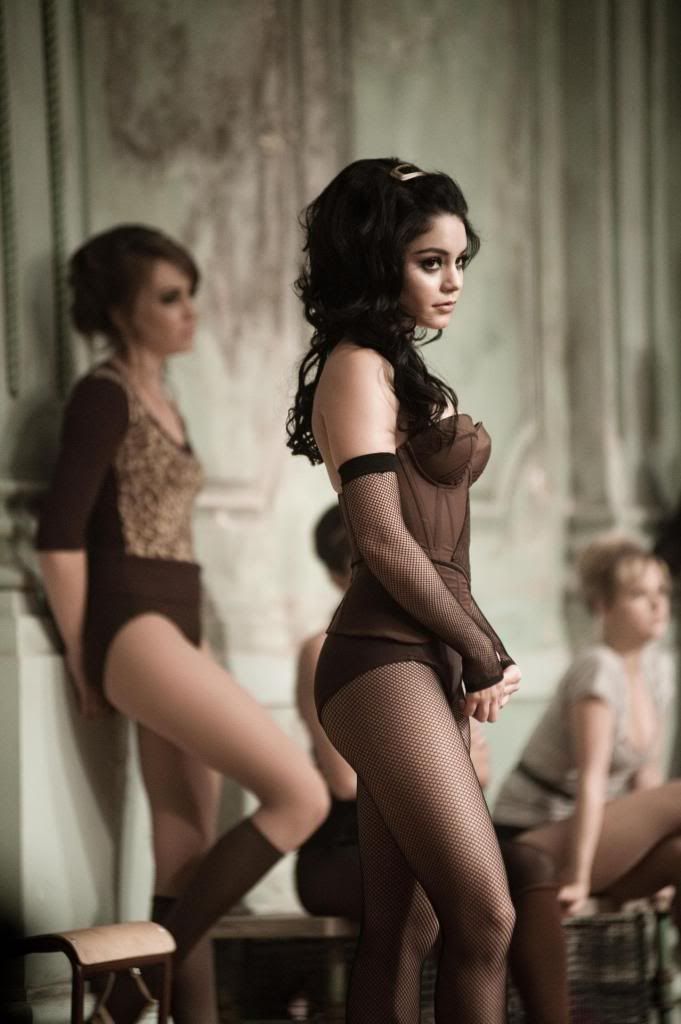
This brings us to what is perhaps the most obvious issue any representation-obsessed blogger might have with Sucker Punch: sexual objectification. In both the brothel and fantasy worlds, the women wear very revealing clothing, using the same outfits for dancing, doing chores, and kicking ass. When the film first came out, director and co-writer Zack Snyder argued in an interview with Film School Rejects that his characters’ lack of clothing coverage was a major part of his subversive project. The interviewer suggests that the film was intended as a response to the male fans at conventions who make inappropriate comments about the women cast members and to the sexism that runs rampant in geek culture. Snyder agrees, stating “Yeah! 100%. They don’t know how to be around it. It’s funny because someone asked me about why I dressed the girls like that, and I said, ‘Do you not get the metaphor there? The girls are in a brothel performing for men in the dark. In the fantasy sequences, the men in the dark are us. The men in the dark are basically me; dorky sci-fi kids.’” The film is intended to call out the audience on their voyeurism.

The problem is that, while it may have been Snyder’s intention to critique the sexist attitudes of his fellow fans, that doesn’t really come across in the final product. The glamourization of violence in the fantasy sequences becomes tied to the ridiculous outfits the women are wearing while they fight. One recurring image involves Babydoll’s high-heeled leg moving through the air as she jumps toward her enemy. Another repeated image features Babydoll in her midriff-baring schoolgirl get-up, casually walking away from explosions and collapsing buildings. If the women were wearing less revealing -- and less bizarrely infantile -- clothing in the fantasy world, I could see how this would help Snyder to make his point. The women would see themselves in more practical clothing, suitable for dangerous missions, while the men in the brothel only saw them in the costumes they used to entice customers.

But that doesn’t happen. The women remain in their work clothing even in Babydoll’s mind. This isn’t inherently sexist; a woman being a complete badass while showing some skin could quite easily be the content of a woman’s power fantasy. The fact remains, though, that it isn’t. It is a film written and directed by men, and the women operate in the way they do in order to call men out on their objectifying gaze. As J. Shea argues about this kind of situation in his post, “How to Write Empowering Female Characters,” “In such a scenario, the character's agency - even if it exists in-universe - is unpleasantly overtaken by the author's control. A female character who kicks ass and chews bubblegum and does a billion slow-mo kills in a slinky nightgown or catsuit (Aeon Flux, Resident Evil, Ultraviolet, etc) is not traditionally thought of as empowering because behind that concept is the lurking terror of a creepy, objectifying male writer or director. Even though "the writer" or "the director" don't [sic] exist in-universe, their presence is felt strongly enough that it's nearly impossible to think of such characters as being "a woman exhibiting agency". When a female character wears immodest clothing, or has large breasts, or is attractive, it's attributed to a male designer.” The fact that Snyder so explicitly frames the events of the film as a performance -- opening the film with a curtain pulling back, featuring a show in the club -- makes his presence even more heavily felt. It may be Babydoll’s fantasy, but it’s one that she shares with her creator.

The film is also incredibly confused about its message. This seems to be a necessary result of Snyder’s own conflicted ideas, perhaps best expressed in his response to another question from the same interview. Having established the purpose of his film’s sexual objectification as drawing attention to a pervasive and harmful problem in geek culture, one might think that he would suggest that Sucker Punch could open up a dialogue about this issue and hopefully lead to a more respectful portrayal of women in media, as well as a more equal relationship between men and women at conventions. Instead, he answers a question about whether it’s wrong to enjoy seeing Babydoll in her schoolgirl outfit as follows: “I have no problem with this dichotomy as to why she is in the outfit. You can say what you want about the movie, but I did not shoot the girls in an exploitative way. They might be dressed sexually, but I didn’t shoot the movie to exploit their sexuality. There’s no close-ups of cleavage, or stuff like that. I really wanted it to be up to the viewer to feel those feelings or not.” When the interviewer asks if it’s a guilty pleasure, Snyder says that “as long as you’re self-aware about it, then you’re okay.”

Leaving aside the fact that I would argue that the film is shot in an exploitative way, the fact that Snyder leaves it up to the viewer to decide whether to feel precisely the feelings he needs to produce in order to make his point seems strange. In order to point out the viewer’s complicity in this objectification, he has to make the viewer complicit. To suggest that the viewer should be allowed to continue objectifying the women, so long as they’re “self-aware about it,” contradicts his stated goal.

So it should be no wonder that the voiceover that opens and closes the film, that seems to exist in order to clarify the film’s message, merely muddies the waters. The opening portion is a rumination about guardian angels and saving ourselves, and it suggests that guardian angels are responsible for “reminding us that it’s us, it’s every one of us who holds the power of the worlds we create.” They’re like celestial cheerleaders, empowering us by reminding us how much power we already possess through our ability to imagine. The power of imagination will set you free. This lesson is fine, if a bit naïve, especially considering the fact that it is Babydoll’s mind and her mental function that suffer a brutal attack.

I’ve transcribed the final voiceover here because it really is quite something. Madam/Dr. Gorski’s voice, sans accent, states, “And finally, this question: the mystery of whose story it will be, of who draws the curtain. Who is it that chooses our steps in the dance? Who drives us mad, lashes us with whips and crowns us with victory when we survive the impossible? Who is it that tells all these things?” She continues over a scene in which Sweet Pea manages to make her getaway on a bus driven by the wise man: “Who honours those we love with the very life we live? Who sends monsters to kill us, and at the same time sings that we’ll never die? Who teaches us what’s real, and how to laugh at lies? Who decides why we live and what we’ll die to defend? Who claims us, and who holds the key that can set us free? It’s you. You have all the weapons you need. Now fight.”

On the face of it, this seems like an empowering message; you determine the way your life will go. You have tremendous agency, and it is therefore you who decides whether you will suffer and how you will become happy. You belong to yourself, and you can therefore find your own way to freedom. What this reading ignores is that all of these questions can also be answered with “the writer”. For fictional characters, it is the writer who determines all of these things, and it is dangerous to forget that characters act according to the directions of a higher will than their own. What comes across as a personal choice is actually an authorial one.

In addition to this metatextual consideration, we should remember that this voiceover is meant to reflect back on the film we just watched. Interpreted in this light, it’s actually quite disturbing. Having spent an entire film demonstrating a bunch of ways in which the patriarchy screws over women, including but not limited to sexual objectification, sexual slavery, and a long history of easy commitment to asylums by male relatives, the writers argue that everything that happens to you is determined, in some way, by you. It’s not the man who just drove an ice pick into your brain that “drove you mad,” it’s not the abusive stepfather who “lashes you with whips,” and it’s not the violent, controlling orderly who is, himself, a “monster sent to kill you.” It’s you. And if that doesn’t sound like victim blaming, I don’t know what does.

Verdict (for Babydoll et al.): The appearance of a Strong Female Character™, the soul of a Supporting Character