Senin, 10 Juni 2013

Miscellaneous Mondays: The Clone Wars

On June 1st, the BBC announced that Matt Smith would be leaving Doctor Who, paving the way for another actor to don the bow tie (or another ostensibly “cool” accessory). Immediately, suggestions began pouring in, and many of them called for the Beeb to take this opportunity to make some real changes. The show has been deservedly criticized for its sexism and racism, and a number of disenchanted fans want to see the white, male Doctor regenerate into a woman, a person of colour, or both. (My vote is for Lenora Crichlow.) WhatCulture! even posted a half decent, half gimmicky list of women who could play the part.

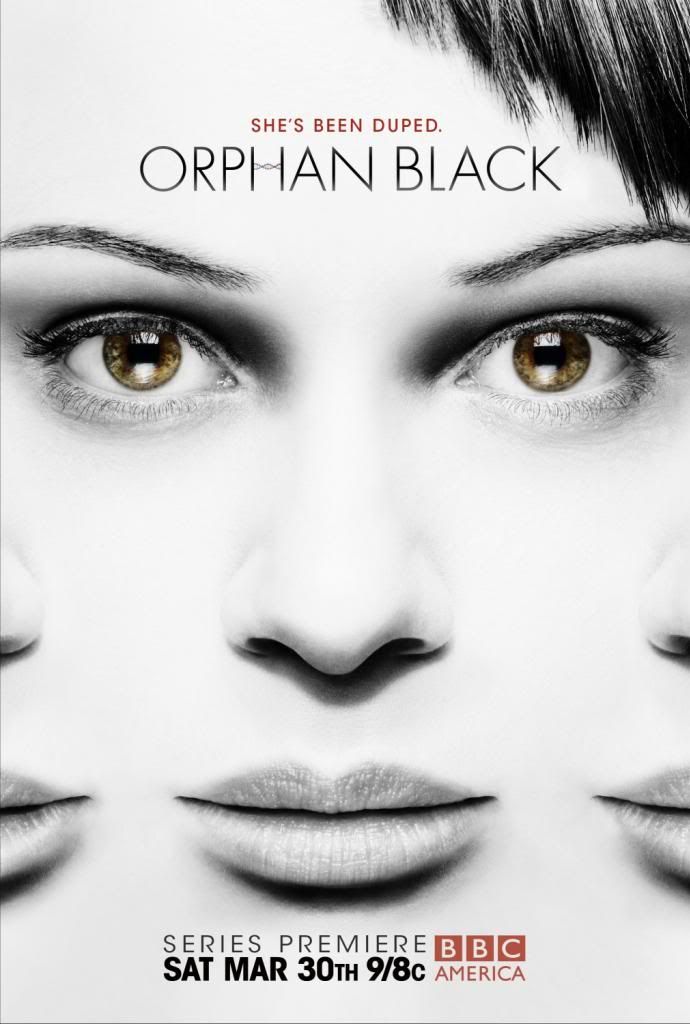
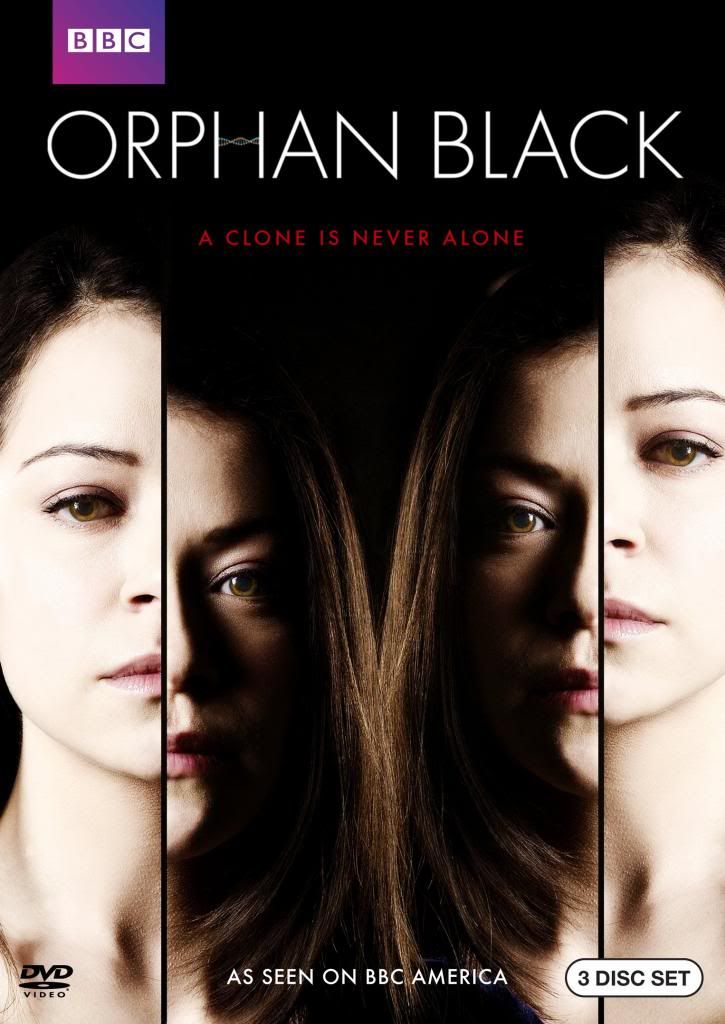
The best suggestion, however, came from Tumblr user Spiffymuffin, who joked that Tatiana Maslany should play the twelfth Doctor... and the companion... and the aliens... and the audience. Maslany, who plays multiple roles on the BBC America/Space joint production, Orphan Black, has become the subject of a meme the likes of which the Internet hasn’t seen since we learned the facts about Chuck Norris. Where once we asserted that “Chuck Norris doesn’t sleep. He waits,” now we claim that, while “factory workers worry about being replaced by machines, actors worry about being replaced by Tatiana Maslany.” However, the show is worth watching for so much more than Maslany’s masterful performance(s).

Orphan Black tells the story of Sarah Manning, a small-time criminal who steals the identity of a woman whose suicide she witnessed. Because the recently deceased Beth Childs looks just like her, Sarah slips into her life nearly undetected, only to find herself having to deal with the problems Beth killed herself to escape. As if that weren’t enough, Sarah quickly learns that there is a reason why she and Beth are identical: they, and at least seven other women, are clones.

It’s not difficult to see why Doctor Who fans who are tired of the show’s sexist shenanigans would want to borrow a little of Orphan Black’s feminist magic. While the first episode is a bit dude-heavy, the introduction of a whole host of clones, as well as several other women not played by Tatiana Maslany, quickly turns the show into an oasis of complex female characterization. In an interview about the show, Maslany points to the quality of the women’s roles as what drew her to the project:
The wonderful thing about this show is that each of the clones has their own voice. They’re not just cannon fodder. They’re not just expendable. They’re completely their own human being. And so, for me, I was salivating at the challenge to get to play all these characters and define each of these women because each of them are so well written. You could have a series about each of them. They’re so complex and human and funny and dark.
While other shows struggle to represent even one or two women as complex, flawed human beings, Orphan Black makes the complexity, the flaws, and the humanity of its female characters the focus of the show.

There’s a lot more to say about the show’s portrayal of women and women’s issues, but, as one poorly written female character on Doctor Who would say, “Spoilers.” What I will say, however, is that Orphan Black is well worth your time. Even if Tatiana Maslany can’t play every character on every show, it would be wonderful to see Orphan Black’s approach to female characters replicated across both individual shows and entire networks.

Jumat, 07 Juni 2013

The Last Survivor of the Nostromo


(Note: For this analysis, I will be referring to the 2003 Director’s Cut of Alien.)

In the past nine months, we’ve talked about a lot of characters. There are some we’ve devoted whole posts to, while others were forced to share space with one, two, or, in the case of the Disney mothers analysis, a dozen or so other people. But there are some characters too big, too important, and too iconic to be contained in one post. For that reason, we’re introducing the Heavy Hitters, month-long discussions of the most influential female characters in pop culture.

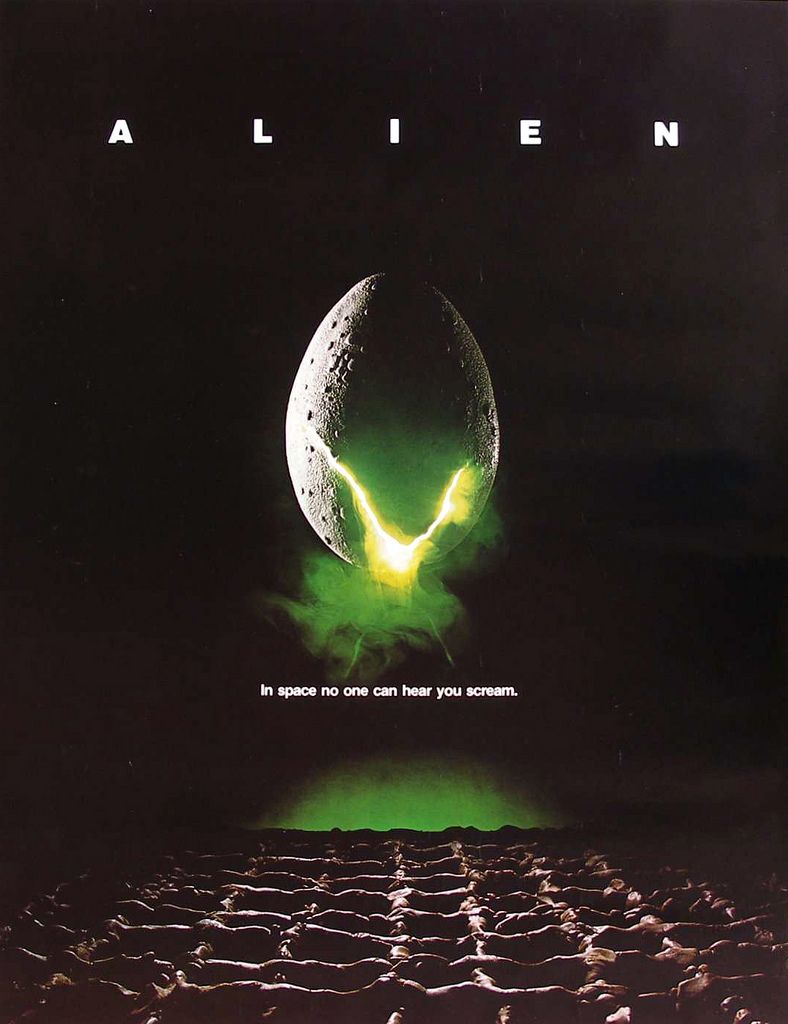
We begin with Lt. Ellen Ripley, who, in her debut in Alien, is the third officer of the commercial towing vehicle Nostromo, the sole survivor of said spaceship, and an all-around badass. For those who have never seen the film, here’s a quick summary. The crew of the Nostromo wakes up from cryogenic sleep only to find that the ship has been re-routed far from its usual territory. Already a little thrown off their game, the crew faces further strangeness when they receive a transmission from a small planetoid that they assume to be an SOS. They descend to the planetoid, where the scouting party discovers a ship full of eggs; one hatches, and the creature inside attaches itself to the face of the executive officer. Ignoring the company’s quarantine rules, they bring the alien parasite onboard, where it bides its time before emerging as a human-sized nightmare and killing everyone but Ripley, who shoots it into space.

The first significant point to discuss in terms of Ripley’s portrayal is the fact that she was not originally intended to be a woman. In the original script by Dan O’Bannon and Ronald Shusett, they specify that, while the sole survivor, then called Martin Roby, was written as a man, “the crew is unisex and all parts are interchangeable for men or women.” Still, it’s a pretty safe bet that they weren’t planning to be part of the genesis of one of the first female action heroes.

The concept of ostensibly gender-neutral casting is something of a thorny issue. Is a strong female character really a strong female character if she was originally intended to be a man? Is there more to writing women than merely taking a male character and having him be played by a woman (the so-called “man with tits” writing method)? Can male writers write female characters as complex people without initially envisioning them as men? Is there such a thing as a major “unisex” role? Should there be?

What I’m trying to get at is the simple fact that a person’s gender necessarily affects the way they experience the social world around them, and this is particularly true of Ellen Ripley. Before she defeats the alien Xenomorph, she has to confront the patriarchal power structure that allowed it to get onto the ship in the first place. After the Facehugger attaches itself to the executive officer, Kane, the scouting team returns to the ship, desperate to move their colleague into the infirmary. Ripley, left in charge during the absence of both Captain Dallas and his second-in-command, refuses them entry on the grounds that they could infect the rest of the crew. Dallas, who should know the quarantine procedure, disagrees with her assertion that they would do the same thing in her position. He is fine with the possibility of saving one person, even if it means jeopardizing the group.

Ripley’s struggle with Dallas takes on some heavy metatextual meaning over the course of the film (at least the part he lives to see). Although the film initially refuses to reveal its protagonist, focusing in turn on every crew member as part of the group, the most likely candidate that emerges is Dallas. He’s a white man in a position of authority; he’s Hollywood’s second favourite heroic type, after the white, male underdog who rises to a position of power. He is, however, not much of a hero. He proves himself an ineffectual leader when he chooses to risk the entire crew in order to save one person, and when he blindly follows the Company’s orders and cedes responsibility over the alien to the science officer, Ash. In both cases, Ripley defies him.

Their conflict reaches its climax when Dallas outlines a plan to kill the alien that involves one person flushing it out of the air ducts. Ripley volunteers, but Dallas takes the job for himself, as if he was somehow misinformed and thought that he was starring in a typical Hollywood action flick where he was the lead. At this point, there still remains the slightest possibility that he could be right, at least until he fails to use his flamethrower and gets taken by the alien. His capture and probable death leaves Ripley in charge, of both the Nostromo and the narrative. With the typical male action hero not only weakened, but removed from the story entirely (save for a brief scene in which Dallas, entombed in an alien nest, begs Ripley to end his life, acknowledging both her agency and his lack of it), Ripley is free to take her rightful place as the film’s protagonist.

Because Dallas is ultimately so ineffectual, the real battle between Ripley and the patriarchy is the one she fights against Ash. Dallas argues against the quarantine, but Ash is the one who opens the airlock. From this point on, he becomes Ripley’s primary antagonist. When she confronts him about the violation of quarantine procedure, she does so by reminding him that she was the senior officer and that, as a science officer, he should know to enforce certain rules. She reminds him that she did her job, even as he failed to do his. After Dallas is captured, she confronts Ash from her newly inherited position of power, telling him that he can continue to do nothing. She observes that she now has access to Mother -- the MU-TH-UR 6000 computer mainframe that operates the Nostromo -- and states, “I’ll get my own answers, thank you.”

Unfortunately, the answers are not what she had hoped they would be. The Company wants the Nostromo to bring the alien back to Earth, and they have deemed the crew expendable. Ash already knew about this, and, when Ripley attacks him in rage and desperation, we find out that the reason why he was okay with human loss is because he isn’t human himself. Suddenly, instead of woman vs. man, it’s woman vs. robot and woman vs. Company, and his strength quickly overcomes hers.


This is arguably Ripley’s darkest moment. In addition to the psychological blow of learning that she and her crew have been sacrificed by their employer, she suffers a physical beating at Ash’s hands. Then, to cap it off, he performs a sort of attempted rape by rolling up a pornographic magazine and forcing it into Ripley’s mouth. In an article entitled “The Rise of Ripley: Gender and ‘Alien,’ Part 1,” Jordan Poast describes the symbolism of this event:
This assault bears a dual offense to Ripley’s feminist thrust. Firstly, as an act of male dominance against an independent woman, Ash’s attack is akin to an oral sexual violation because he tries to oppress her by forcing her to swallow (or submit to) the images of female subservience. Secondly, the act silences Ripley, depriving her of the authority that she typically asserts through her voice.
What also strikes me about this scene is its potential critical function. The audience sees a complex woman, the character who serves as our point of identification, quite literally having the sexual objectification of women shoved down her throat by a machine that acts as the tool of a corporation. Intentional or not, it reads as a powerful condemnation of the standard Hollywood practice of portraying women as objects of male sexual fantasy and, by positioning the audience firmly in Ripley’s perspective, it shows these images to cause harm to those who consume them.

Once Ash is defeated, it’s time for the remaining crew to turn their attention back to the problem of the alien. Ripley decides to blow up the Nostromo, while she and her two remaining crew members escape in the shuttle. As one might expect, the alien kills both of them while they’re gathering supplies, and Ripley is left alone. She manages to make it to the shuttle just in time to watch the destruction of the Nostromo, an explosion that should serve as proof that she successfully saved Earth from the alien threat. She says as much when she observes, “I got you, you son of a bitch.”

Except she didn’t. Here’s where things get really interesting. Ripley strips down, in what must be a conscious moment of sexualization on the part of the filmmakers, considering the fact that Ripley has spent the rest of the film wearing multiple layers, including coveralls. At the same time, her decision to get undressed makes narrative sense; she’s preparing for hypersleep, and she’s shedding the uniform of the company that signed her death warrant. It is also at this most vulnerable moment that she spots the alien hiding on the shuttle.

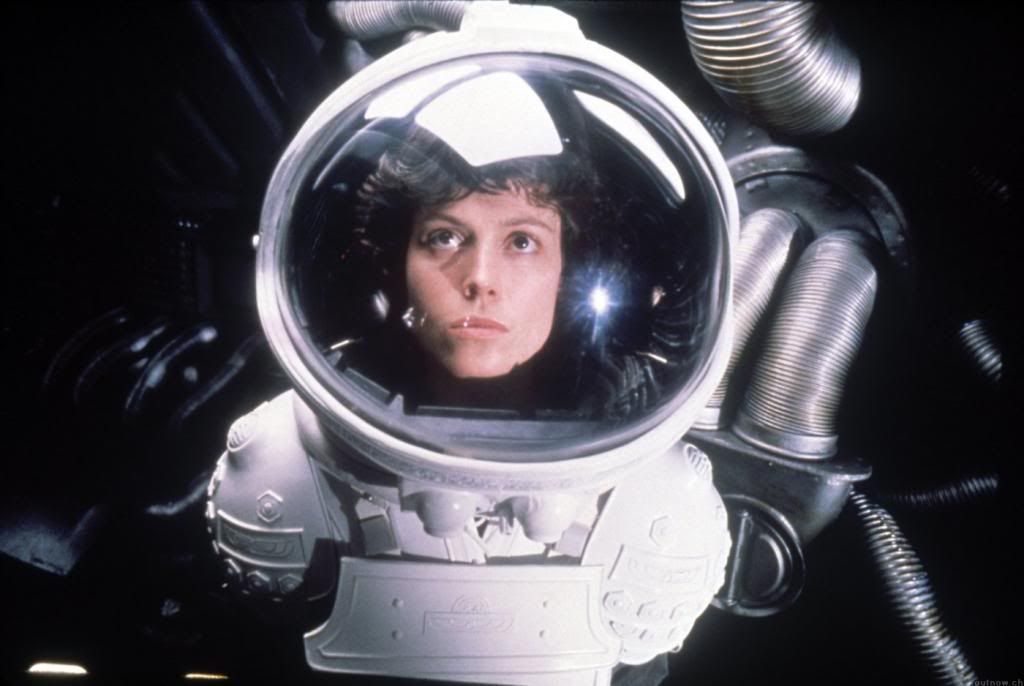
In the final scene, we see Ripley become a tactician. While she has already displayed courage, intelligence, and determination, this is where we see the resourcefulness and planning that come to define her character in the second film. She quickly and quietly dons a space suit that resembles a suit of armour, transforming herself from the damsel in distress into a knight. She fills the cabin with gasses to flush the alien out of its hiding place, blasts it out of the airlock and, when it holds on to the hull, shoots it with a harpoon gun. When it still refuses to die, she fires up the engines and blasts it with heat, then watches as it floats off into the vacuum of space. Finally, she settles into her hypersleep pod, ready to return to the civilization she has saved.

Before taking her well-deserved rest, she makes a final report, concluding it with “This is Ripley, last survivor of the Nostromo, signing off.” There’s a lot of meaning embedded in this statement. Applying a “survival of the fittest” reading to the film, which is clearly supported by the film itself, we can argue that Alien is asserting the superiority of its heroine over the rest of the crew of the Nostromo. They died because they lacked her caution, her courage, and her adaptability.

The real accomplishment, however, is out-living the alien. We know from Ash’s analysis that the aliens are almost perfect organisms, able to withstand harsh conditions. We see, in the way that the alien so easily hunts its human prey, that it is an efficient killer. Ash describes it as “a survivor, unclouded by conscience, remorse, or delusions of morality,” but, while he attributes its survival to the lack of these traits, the film suggests that Ripley’s survival is made possible by her possession of them. Her initial refusal to let the alien onto the ship was motivated by concern for the rest of the crew. She argues with Dallas because he blindly obeys the Company’s orders instead of doing what is right. Even when the ship is about to explode, she spends precious minutes saving Jones the cat and ending Dallas’ suffering. She destroys the alien not just to save herself, but because she knows she needs to keep it from reaching Earth. She survives -- and is worthy of survival -- because she is interested in more than mere self-preservation.

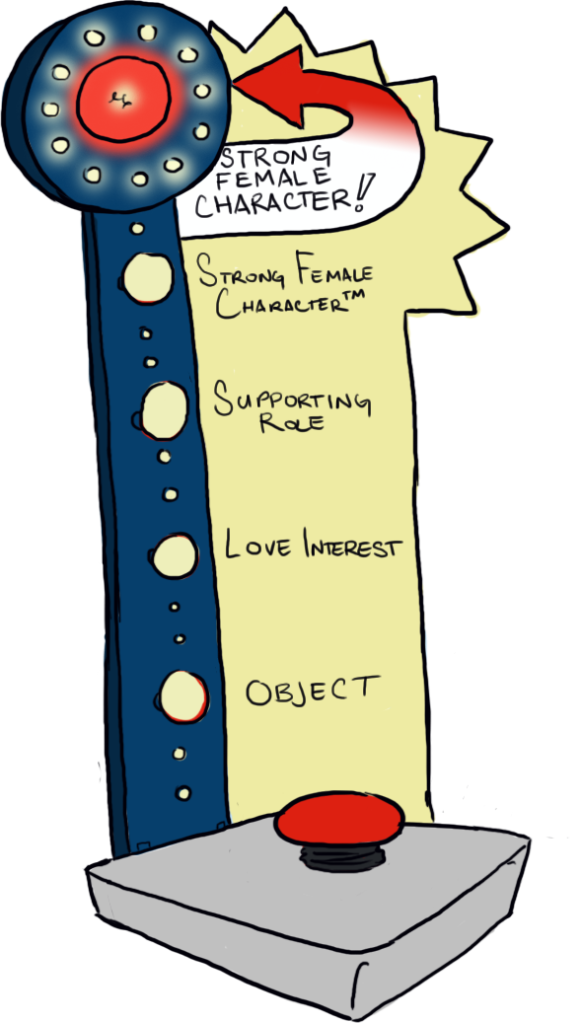
Verdict: Actual strong female character

Senin, 03 Juni 2013

Miscellaneous Mondays: Tropes vs. Women in Video Games


Back in January, we recommended that you check out Anita Sarkeesian’s Feminist Frequency series on YouTube, specifically her analysis of the gender segregation of LEGO’s marketing. Today, we’re suggesting that you pay her channel another visit, in order to see the first two installments of her highly anticipated (and hotly debated) critique of sexist tropes in video games. Whether or not you entirely agree with Sarkeesian’s points, the videos make for interesting viewing and serve as excellent starting points for discussion (such as this commentary on the absence of women of colour in the damsel in distress role). Finally, if you’re wondering who Anita Sarkeesian is or why these videos are such a big deal, feel free to do a Google search, but prepare yourself to lose a significant amount of your faith in humanity.

Jumat, 31 Mei 2013

Pinkie Pie

MyLittleVisuals

In our original plan, there was going to be a Glee month in either May or June. That was before the fourth season aired, and a show that had been going downhill made it its mission to burrow deep into the Earth’s mantle. We were left to ask what deserves our attention more: an offensive mess that insults its viewers’ intelligence and makes all the wrong decisions while thumbing its nose at the right ones, or technicolour ponies. Do you choose the show that makes you happy, or the show that got picked up for two more seasons and will therefore still be there when you’re feeling particularly vitriolic and need a deserving punching bag? It wasn’t exactly a dilemma.

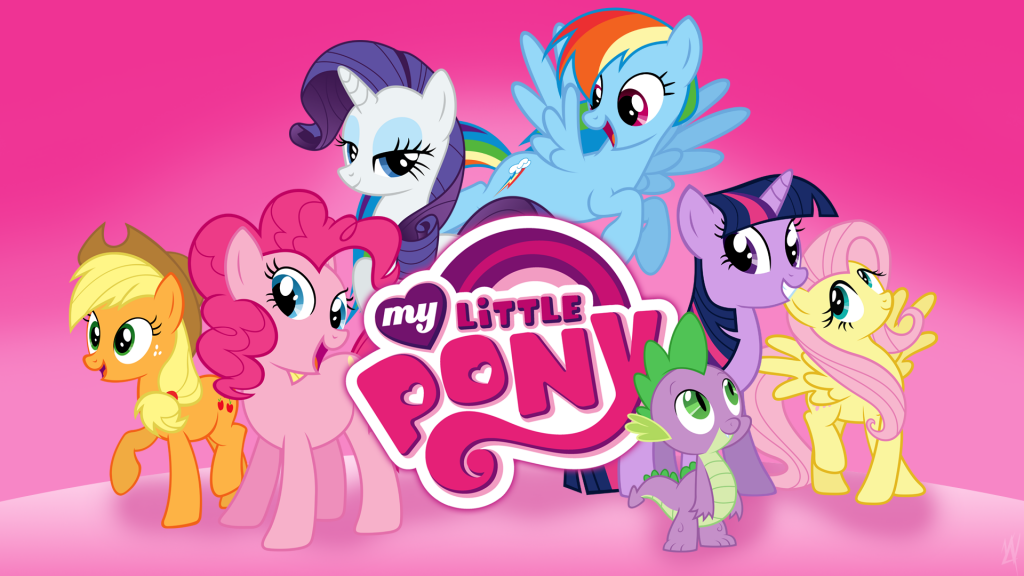
The choice became even easier when I was reminded of Glee’s ostensible mission statement, that glee, by its very definition, is about opening yourself up to joy. While the eponymous show has well and truly failed in this mission, My Little Pony: Friendship is Magic hasn’t. In fact, MLP features a character who has made it her mission to bring joy into other ponies’ lives.

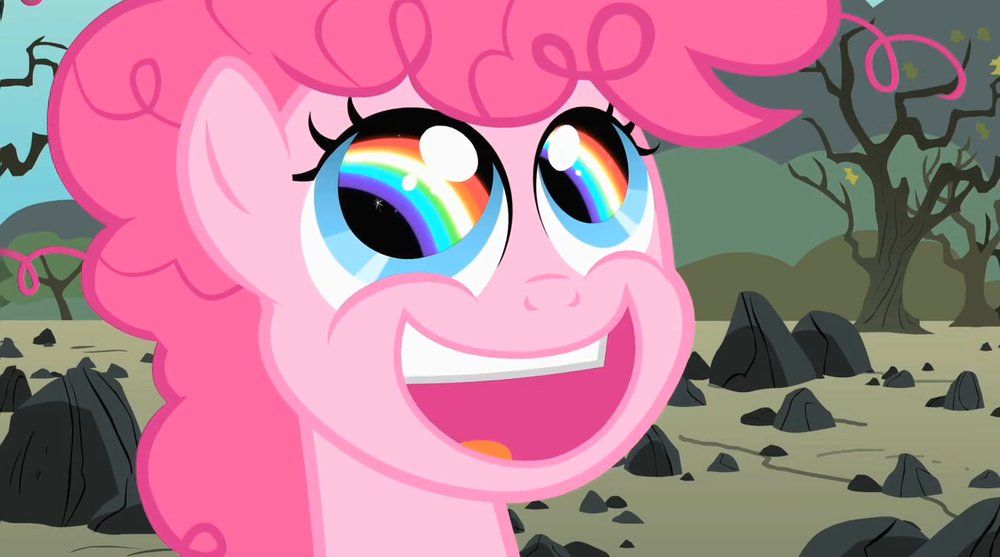
Pinkie Pie is the ultimate people pleaser. As we see in the story of how she got her Cutie Mark, she spent her early years on a rock farm grayer than Dorothy’s Kansas. She and her family never smiled, and life in general was about as dismal as it could get. One day, while moving rocks from one field to another, she spotted a rainbow that infused her world with colour and joy (and her hair with volumizing products). The intense joy she felt convinced her not only to make a habit of smiling herself, but to make a lifelong mission out of getting others to smile. To this end, she throws a party for her family, and the joy she receives from their consequent smiles causes her Cutie Mark to form.

Pleasing others is so fundamental to Pinkie Pie’s character that her Element of Harmony is laughter. When she and the other members of the Mane Six find themselves in the Everfree Forest in the second episode, she weaponizes laughter and basically Riddikuluses a set of terrifying trees back to their original form. What the show never mentions, however, is that laughter doesn’t really fit in with the other Elements. Loyalty, kindness, generosity, and honesty -- the other constitutive elements of friendship, which, as we all know, is magic -- are qualities, while laughter is an action. On the face of it, it seems like humour might be a more suitable descriptor for the concept embodied by Pinkie Pie.

At the same time, I would posit that “laughter,” by virtue of being the odd one out, was actually very specifically chosen. While the other Elements represent qualities that are exemplified through actions, Pinkie’s is an action unto itself. For a pony who explicitly states that she wants to bring joy to others, the active aspect of inciting laughter seems fitting. I also wonder if the writers intended for Pinkie’s Element to be the most limited and limiting.

I know that that sounds a bit nebulous, so I’ll explain what I mean. For the rest of the Mane Six, their respective Elements represent one aspect of their personalities. While Twilight nurtures her magical ability, she also cultivates her analytical mind, hones her leadership skills, and learns to cope with her sometimes crippling anxiety. Applejack is honest, but she is also hard-working, competitive, and heroic. Fluttershy’s kindness is an integral part of her personality, but the show focuses more on her shyness and her efforts to overcome traumatic experiences from her childhood. Rainbow Dash and Rarity actually undergo a lot of character development that directly relates to the seeming inconsistencies between their self-centeredness and their respective Elements of loyalty and generosity.

And then there’s Pinkie Pie. Her episodes focus on the Element of laughter, of fun, of pleasing and entertaining others. The show suggests, on numerous occasions, that there’s not a lot more to Pinkie Pie than her smile-spreading quest. At the same time, however, it shows Pinkie Pie fighting this very assumption. In “Baby Cakes,” for example, she sets out to prove that she can be a responsible person by babysitting the Cakes’ two children. This requires her to learn that babies need more than a playmate, and that she needs to be able to do things that aren’t fun.

The best example, however, occurs in “Too Many Pinkie Pies.” In this episode, Pinkie Pie struggles to accept the fact that she can only take part in one fun activity at a time. Realizing that she lives in a world where frogs can be transformed into oranges, she quite understandably goes looking for a magical solution, which she finds in the Mirror Pool. Using this pool, Pinkie Pie duplicates herself, creating a double obsessed with fun to the detriment of sustaining actual relationships. When two Pinkie Pies can’t experience all the fun in Ponyville, they create two more, who duplicate themselves into a herd of Pinkie Pies. The clones terrorize Ponyville in their single-minded search for fun, destroying all the things they were created to enjoy.

The original Pinkie, meanwhile, is caught in the grip of an existential crisis. Unlike other duplication storylines, in which the doubled character fiercely asserts their original status, Pinkie Pie accepts that there is no way to tell her apart from the clones. Even she, despite knowing that they lack her memories of her friends and, really, any higher brain function than that required to process “fun”, comes to think that she is just another double. Instead of joining her other selves, she becomes depressed. When Spike observes this, he suggests that this might be the original Pinkie Pie; Twilight responds that the real Pinkie “never sat that long in one place her whole life.”

To my mind, this is where the episode takes a turn for the tragic. On a show about the power of friendship, one would hope that one of Pinkie’s friends would realize that she was the original. Maybe they could have tested the Pinkies’ knowledge of their adventures or of the Mane Six themselves; after all, Pinkie Pie prides herself on her preternaturally good memory for her friends’ personal information. Instead, Pinkie Pie herself comes up with a solution: give the clones a challenge, to do something that is not fun at all, and the real Pinkie will be the one who most wants to stay with her friends, despite the fact that they couldn’t tell her apart from an army of fun-obsessed robots. Pinkie is expected to prove that her love for her friends is greater than her love of fun (and, perhaps, greater than the ADHD she might very well have), while her friends don’t have to prove a thing. The problem is that we know that Pinkie is devoted to them -- the brief delusional episode she suffers in “Party of One” when she thinks her best friends are kicking her out of the group is ample proof -- but we rarely see any of her friends showing a similar devotion to Pinkie Pie.

In fact, in several of the Pinkie Pie-focused episodes, we actually see her become something of an unwitting nemesis for Twilight Sparkle. This begins in “Feeling Pinkie Keen,” when Twilight learns about her friend’s “Pinkie sense” -- a form of extrasensory perception that manifests in uncontrollable muscle spasms -- and immediately dismisses it as hogwash. Pinkie argues that a magician has no leg to stand on when it comes to rejecting scientifically impossible things, but Twilight literally gets on a soapbox to defend the inherent logic of magic. Nevertheless, as all of Pinkie’s premonitions prove accurate, Twilight must concede that there are some things that have to believed whether or not they can be explained.

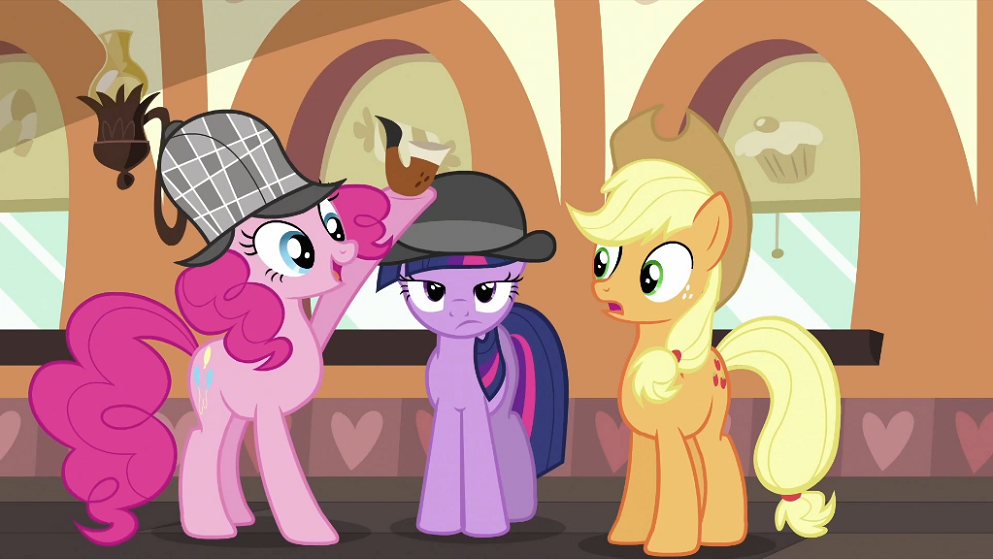
The conflict between logic and intuition continues in “MMMystery on the Friendship Express,” in which Pinkie Pie, who has failed to protect the Cakes’ entry in a dessert competition from hungry vandals, takes it upon herself to identify the perpetrators. Unfortunately, she is more interested in accusation than investigation, and Twilight promptly takes over as Chief Investigator (and Wearer of the Deerstalker) on the strength of her long mystery-reading career. Only after Twilight has solved one mystery does she let Pinkie try her hand at playing Sherlock, using the deduction methods Twilight employed. One of the reasons why Pinkie Pie appears to be so strange may simply be because we often see her actions filtered through the lens of Twilight’s perception, and Twilight simply doesn’t get her.

Then again, neither does anyone else. Pinkie Pie’s a tough nut to crack, partly because she’s so open. In “Griffon the Brush-off,” Rainbow Dash calls Pinkie Pie random, but I’d argue that there’s more to it than that. Sure, Pinkie plays ten instruments at once, stores balls around Ponyville in case of ball shortages, and agonizes over calling her culinary invention a chimicherry or a cherrychanga, but most of her actions make sense in a roundabout way. Most of the time, Pinkie Pie herself is willing to walk people around that roundabout, verbalizing the mental processes that took her from Point A to Point Q. Usually, what leads her to make her least overtly logical leaps is a literal or lexical connection. She understands words exactly as they are, and, while other ponies grasp the connotations that make figures of speech make sense, Pinkie Pie must try to connect them as best she can.

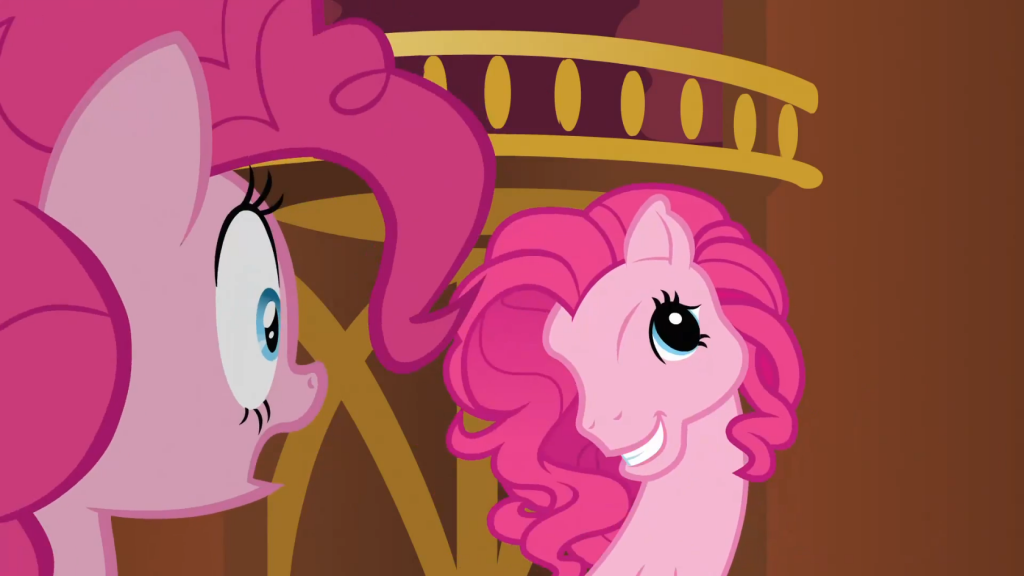
In light of her literal understanding of language, it’s a little strange that Pinkie Pie has such a liberated view of the world in which she lives. Pinkie Pie possesses the ability to manipulate the world around her, allowing her to defy the laws of physics and logic. On several occasions, she beats pegasi to locations to which they had to fly, with no explanation as to how she got there. Her internal monologue takes the form of felt stop motion animation. When she explains her theories about the identity of the cake vandals, she envisions them in the style of a silent film, a James Bond movie, and a Japanese ninja flick. In “Too Many Pinkie Pies,” one of the clones rearranges her face into that of a G3 My Little Pony, saying, “Bet ya can’t make a face crazier than this!” On some level, Pinkie Pie seems to realize that she is in a cartoon, and she is making the most of it.

Verdict: Pinkie Pie defies categorization

Senin, 27 Mei 2013

Miscellaneous Mondays: The Geena Davis Institute on Gender in Media


If you’re anything like me, you’ve probably had more than your fair share of arguments with people who refuse to see the blatant inequality of gender representation in mainstream media. These are the people who think that everything’s fine because “Black Widow was the best part of The Avengers” and “The Hunger Games made a ton of money.” “I mean, come on, even Pixar made a girl movie; isn’t that enough?” And let’s not forget that old favourite: “It’s only a movie. Lighten up.”

Now, thanks to the Geena Davis Institute on Gender in Media (and, in the video above, Geena Davis herself), you can fight back with the power of facts. The institute’s website provides data on women’s involvement both in front of and behind the camera, linking the often disappointing quantity and quality of female characters to the dearth of women writers and directors. They pay particular attention to children’s media and the insidious messages that people internalize during their formative years. The studies make for fascinating reading, even if you don’t intend to memorize some of the more disturbing figures for use in verbal smackdowns.

Sabtu, 25 Mei 2013

Rainbow Dash

MyLittleVisuals

Brace yourselves -- this blog is about to become 20% cooler. Or 20% awesomer. Or maybe 20% radical-er? Like Twilight Sparkle, I’m not sure what the difference is, nor do I particularly care.

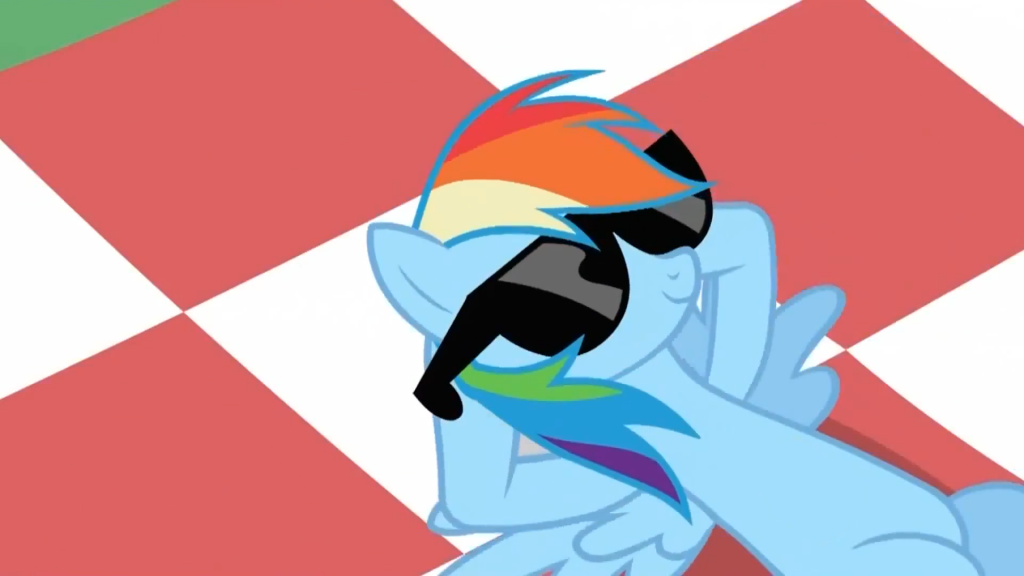
However, I do care about a character who not only knows the difference, but probably defined it. Rainbow Dash is the self-proclaimed coolest pony in Ponyville, a pegasus whose weather-regulating duties and enormous ego place her both literally and figuratively above the rest of the population. While the other ponies explicitly recognize her positive qualities on several occasions, she’s her own best cheerleader; as Applejack observes, she has a habit of “tootin’ her own horn louder than the brass section of a marching band.” Taking the opportunity to describe herself in a single word, she chooses “super-ultra-extreme-awesomazing.” According to Rainbow Dash, the world revolves around her; it’s no surprise, then, that most Rainbow Dash-focused episodes revolve around her need to be the best.

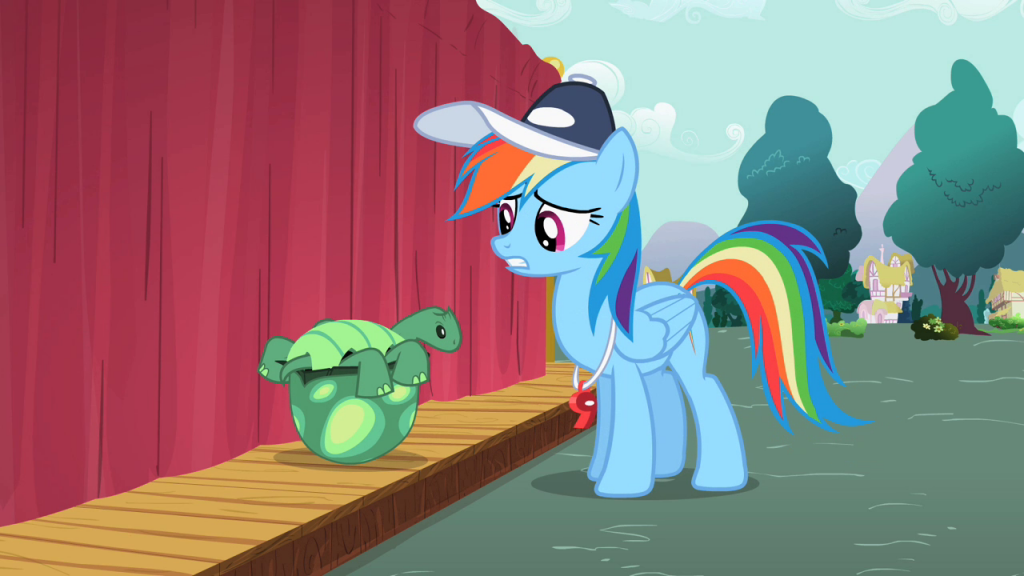
Rainbow Dash has built her identity on her presumed superiority, and there’s no better way to prove it than in competition. This is why she goes up against Applejack in the Iron Pony competition, and why she stoops to cheating: her self-perception depends on her victory. When she decides to get a pet, she pits the top candidates against each other in a series of tests of their athleticism and personality. It doesn’t occur to her that this might be a strange way to find a companion until she is saved by an animal that seems to be the least suitable pet for a lightning fast flier: a tortoise. She comes to understand that tenacity and faithfulness trump speed, agility, and radicalness.

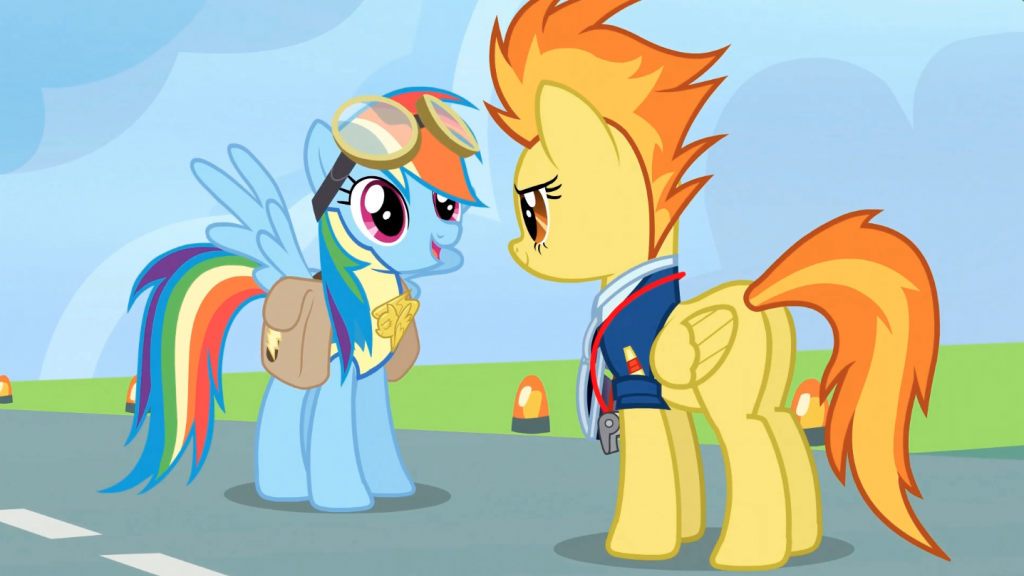
This is a particularly interesting lesson for one reason: Rainbow Dash’s Element of Harmony is loyalty. The first time she demonstrates this quality is in the first two-part episode, when she is forced to choose between helping her friends and joining an elite flying team. Since her only dream is to become a Wonderbolt, the latter represents a real temptation. This becomes even more apparent with further viewing, as we come to realize that, this early in the show, Rainbow Dash finds Pinkie Pie irritating, thinks that Fluttershy is largely useless, and hasn’t had a chance to get to know Twilight Sparkle. It’s hard to imagine any scenario in which she would have spent time with Rarity, and her relationship with Applejack seems to be based on a shared competitiveness. She owes these people her loyalty only because they’ve been stuck together by circumstance. Still, she chooses them over her dream, and saving Equestria over satisfying her own self-interest. Like Rarity, whose Element of generosity seems more than a little at odds with her overtly selfish nature, Rainbow Dash must overcome negative aspects of her own personality to bring positive aspects to light.

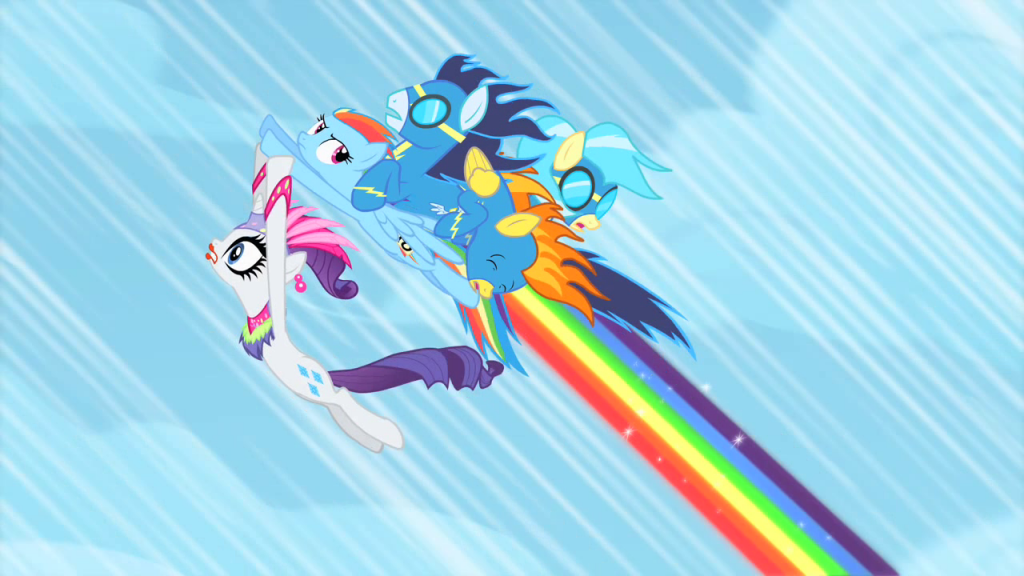
This leads us to an interesting path of inquiry, as we have to wonder what produces an ego the size of a small planet in a pony who is supposed to be the embodiment of devotion to others. I’d like to posit a couple of theories, suggested by the events of “Sonic Rainboom” and “The Cutie Mark Chronicles.” The first is that Rainbow Dash was something of a flying prodigy, a fact which she discovered the first time she successfully performed a sonic rainboom, a feat so rare that it’s usually dismissed as an “old mares’ tale.” Rainbow Dash herself describes the experience as the time that she “made the impossible happen.” Knowing that you can do something that everyone else can only dream of is bound to go to your head.

The second theory draws its inspiration from the evidence that Rainbow Dash was bullied. Their shared experience with bullying connects Rainbow Dash and Fluttershy as foils. Fluttershy’s response to bullying was to withdraw even further into herself, and her experiences cause her to have panic attacks brought on by flashbacks. By contrast, Rainbow Dash responds directly to her bullies, parrying their threat that she’s going down with a jab of “In history, maybe.” She stands up to them when they tease Fluttershy, and she explicitly frames this confrontation and the ensuing race to prove herself against the bullies as a situation in which she “stood alone against all odds to defend Fluttershy’s honour.” She builds herself up, and it makes me wonder if it was an attempt to prevent them from breaking her down. Initially, it’s possible that she developed her self-confidence as a shield against barbed insults.

There are moments when her self-confidence flags and she is left vulnerable. This occurs most obviously in “Sonic Rainboom,” in which Rainbow Dash suffers a blow, finding that she can no longer create a sonic rainboom. In this episode, all of her bluster becomes just so much hot air, as she tries not to show her friends that she doubts her abilities. The problem with knowing that you’re the best is that you are inevitably faced with situations that could prove you wrong. This early in Rainbow Dash’s character arc, however, she is far too fragile to face a fact that would undermine her entire worldview. She emerges from the competition as the winner, but her confidence has nevertheless been shaken by the very idea that she could fail.

In the second season, Rainbow Dash is once again confronted with the possibility that she is not, as Wolverine might say, the best there is at what she does. This occurs in one of my favourite episodes, “The Mysterious Mare Do Well.” In this episode, Rainbow Dash becomes addicted to the attention she receives for performing heroic, life-saving deeds. As one might expect, the extra accolades turn the already egotistical pegasus into the kind of person who waits until she has finished signing autographs to save ponies in imminent danger. Just when it seems like Rainbow Dash’s ego has grown to the point that it needs its own punny, equine town name (may I suggest Naneighmo?), a new hero bursts onto the scene. A combination of Batman and Darkwing Duck, the Mysterious Mare Do Well quickly proves herself more powerful, more perceptive, more effective, more modest, and more popular than Your Friendly Neighbourhood Rainbow Dash. Feeling threatened, Rainbow Dash seeks to expose Mare Do Well’s identity, only to learn that her rival was actually her friends, working together to teach her to act with grace and humility.

In the third season, we see how well this lesson took. “Wonderbolts Academy” takes Rainbow Dash to the eponymous training camp, where she has the opportunity to prove her mettle and impress her idols. There she meets Lightning Dust, a pegasus who shares her need to be the best. When the trainees are paired off, Lightning Dust and Rainbow Dash become a team, the former as lead, the latter as wing pony. Rainbow Dash protests her placement, but the instructors inform her that Lightning Dust is willing to push herself harder. The problem is that, while she is pushing herself, she pays no mind to the ponies she’s pushing out of her way. Finally, after a cyclone Lightning Dust created almost kills the other members of the Mane Six, Rainbow Dash gives the instructor a report of her partner’s dangerous antics. Interpreting the instructor’s silence as tacit approval of Lightning Dust’s methods, Rainbow Dash quits.

This is Rainbow Dash’s defining moment and the zenith of her character arc thus far. Lightning Dust can be read as the embodiment of Rainbow Dash’s reckless ambition or, perhaps, a reflection of what she might have been had she not had the mellowing influence of her friends. By turning her in, Rainbow Dash rejects this part of herself. While she still wants to be the best and yearns for a spot on the Wonderbolts, if the only way to achieve these goals is to endanger other people, she is willing to let these dreams go. Rainbow Dash’s reward for this action is a kind of anagnorisis, as she realizes that being decent is more important than being the best. The fact that the instructor kicks Lightning Dust out, reinstates Rainbow Dash as a lead pony, and praises her for sticking to her principles is just a bonus.

Last week, I argued that the show’s treatment of Fluttershy and Rarity demonstrates a commitment to rehabilitating girliness as a positive concept. This week, I’d like to suggest that Rainbow Dash’s characterization as an arrogant jock, a role usually reserved for male characters, represents another part of the show’s pro-woman project. Before I get into the specifics of Rainbow Dash’s treatment, I’d like to discuss a subtle linguistic shift that the show employs that affects the ponies more generally. In Equestria, all-female groups are never called “guys -- in fact, if I’m not mistaken, otherwise all-female groups that include Spike are also never described using this masculine terminology. Instead, the Mane Six address their group as “ladies” or “girls.” Female, not male, operates as the assumed norm.

This is why it’s important to incorporate a well-known male character type into a group of girls; MLP’s target audience is growing up in a media environment that shows them time and time again that there is one set of activities and behaviours for girls and another, much larger, much more well-regarded set of activities and behaviours for boys. By making Rainbow Dash an athlete, the show suggests that sports should not be considered an inherently masculine pursuit. By giving her a massive ego, the show affords itself the opportunity to teach girls how to act with grace and humility without having to stay silent about the full extent of their awesomeness. By having her discover a love of reading, the show lets its young viewers know that brawn and brains aren’t mutually exclusive, and that girls should be proud of having both. Finally, by not drawing attention to its subversion of the stereotypical male jock character, My Little Pony: Friendship is Magic normalizes the idea of the self-confident, athletic girl. I’ll be honest: that kind of critical work makes the show about 20% cooler all on its own.

Verdict: Actual strong female character
Jumat, 24 Mei 2013

Message from Your Friendly Neighbourhood Blogger

Dear readers,

I'd like to extend my apologies for this week's late Friday (soon to be Saturday) post. It's in the works, and it will be posted on the 25th, but I just need a little more time to make it as awesome as the object of its focus deserves. Expect us to return to our regular Thursday night posting schedule next week. (If we don't, feel free to bug us with some disapproving comments.)

Sincerely,
                        
                               The Management